Quick Facts
Quick Facts
Marx was exiled from Prussia, France, and Belgium before settling in London.
He worked as a journalist but his newspapers were shut down by the government.
He spent most of his time writing theoretical works that did not pay well.
He borrowed money constantly from Engels, who was a successful factory manager.
His son Edgar died at age 8. His daughter Francisca died at age 1. A third child died shortly after birth.
Visual answer
The Financial Life of Karl Marx
Why the critic of capitalism could not manage money.
Exile
Marx was expelled from multiple countries. He could not hold a steady job. Radicals are not employable.
Bad Investments
Marx invested in risky schemes. He lost money. He tried to play the stock market. He failed.
Poor Spending
He spent more than he earned. He bought expensive books. He entertained friends. He could not say no.
Engels's Support
Engels sent money regularly. Without Engels, Marx would have starved. He almost did anyway.
Story in brief
Story in Brief
1840s
Marx works as a journalist in Cologne. His newspaper is shut down. He is exiled.
He loses his income. He will never have a steady job again.
1849
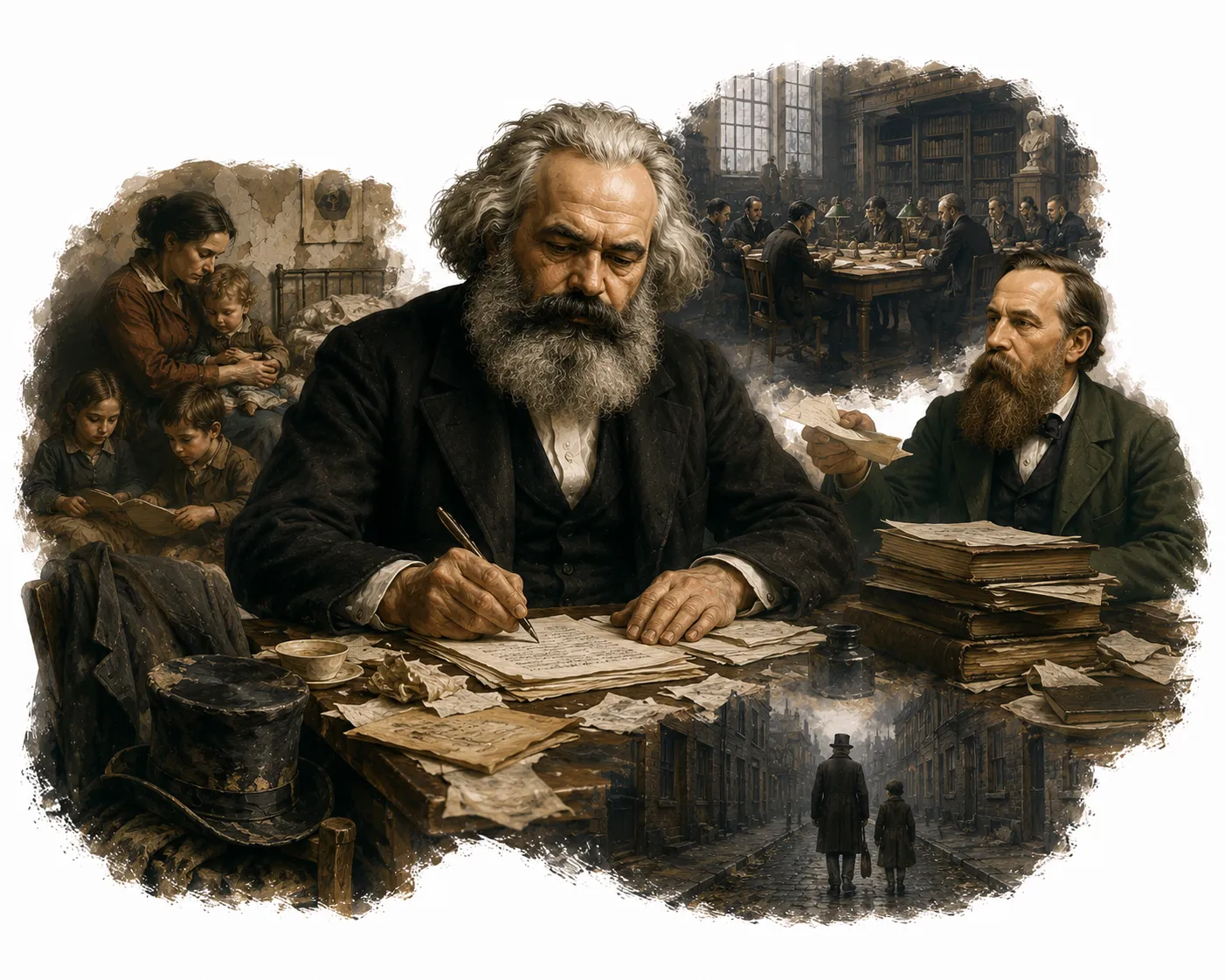
Marx moves to London. He lives in a two room apartment in Soho. The family is crowded and poor.
London is his final exile. He stays there for the rest of his life.
1850s
Marx's children die of malnutrition and disease. His wife, Jenny, is distraught. Marx borrows money from Engels for funerals.
The poverty is not just uncomfortable. It is deadly.
1860s
Engels sends regular payments. Marx is still poor but no longer starving. He works on 'Das Kapital.'
The book takes decades to write. It pays nothing.
1883
Marx dies. He is buried in a modest grave. Engels pays for the funeral.
Even in death, Marx needed Engels's money.
The Story
How the Critic of Capitalism Could Not Manage Money
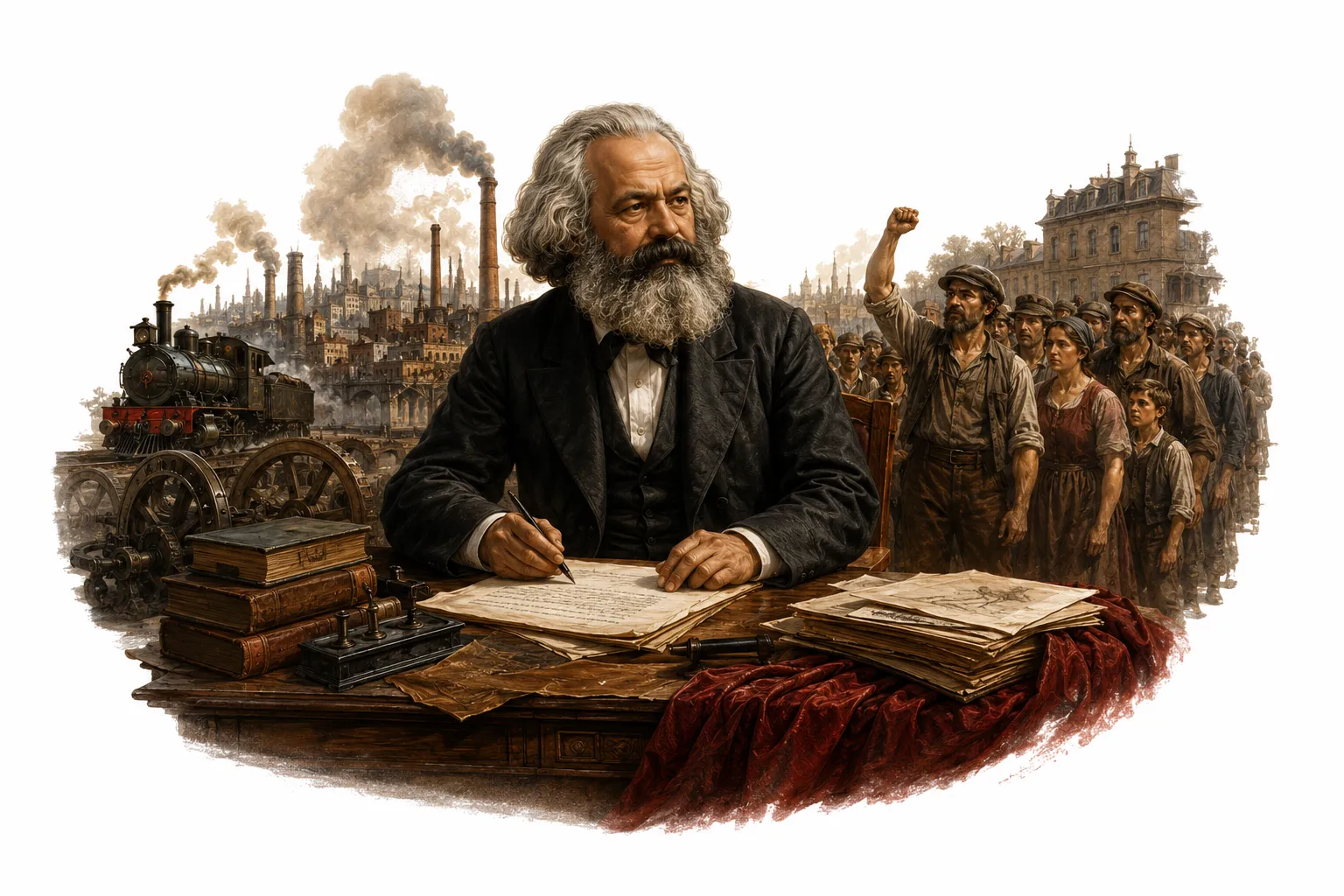
Karl Marx was a genius. He was also a financial disaster. He could not hold a job. He could not budget. He could not save. He borrowed money from friends and did not pay it back. He invested in risky schemes and lost. He spent what he did not have.
His radical politics were partly to blame. He was exiled from Prussia, France, and Belgium. Employers did not want to hire a revolutionary. But his personality was also to blame. He was disorganized. He procrastinated. He preferred writing about capitalism to participating in it.
His saving grace was Friedrich Engels. Engels was a factory manager. He was rich. He sent Marx money regularly. Without Engels, Marx and his family would have starved. Even with Engels, three of Marx's children died of malnutrition and disease. The man who wrote about the exploitation of workers could not keep his own family alive.
From a Letter
"I have been living for eight weeks on bread and potatoes. My wife has been ill. I have pawned everything except the children's clothes."
, Karl Marx, letter to Friedrich Engels
This is not a metaphor. Marx literally pawned his family's possessions to buy food. He was desperate. He was also brilliant. The two facts coexisted.
Evidence
Why Marx Was Poor
He was exiled from multiple countries and could not hold a steady job.
StrongHe was terrible with money. He spent more than he earned.
StrongHe made poor investments and lost money.
ModerateHe devoted most of his time to writing theoretical works that did not pay.
StrongHis children died of malnutrition. The poverty was real and deadly.
StrongKey Points
Key Points So Far
Marx was exiled from multiple countries and could not hold a steady job.
He was terrible with money. He spent more than he earned.
He relied on financial support from Friedrich Engels.
Three of his children died of malnutrition and disease.
He was a brilliant theorist but a terrible manager of his own finances.
Analogy
Like a Cobbler with No Shoes
The familiar part
There is an old saying: the cobbler's children have no shoes. The person who makes shoes for others cannot afford shoes for his own family.
How it applies
Marx was that cobbler. He wrote about capitalism. He could not survive under it. He understood the system intellectually. He could not navigate it practically.
Where the analogy breaks
Cobblers usually make shoes. Marx made theories. Theories do not pay the rent.
Curiosity Notes
Details Most People Miss
Why this still matters
Why This Still Matters
The irony of Marx's poverty is that it makes him human. He was not a god. He was not a demon. He was a man who could not manage his own money. He was brilliant. He was flawed. He was right about many things. He was wrong about many things. And he died poor, buried in a modest grave, paid for by his rich friend. That is not a tragedy. That is just life.
Key Findings
- ✓Core findingMarx was exiled from multiple countries and could not hold a steady job.
- ✓Strong evidenceHe was terrible with money. He spent more than he earned.
- ⚠Main consequenceHe relied on financial support from Friedrich Engels.
- ✓Wider legacyThree of his children died of malnutrition and disease.
- ★Bottom lineHis poverty fueled his revolutionary anger.
Final insight
A Last Thought
Karl Marx was poor because he chose to be. He chose revolution over respectability. He chose writing over working. He chose ideas over income. He was brilliant. He was also foolish. His children died because of his choices. That is the uncomfortable truth about Marx. He criticized capitalism while his family starved. He was right about the system. He was wrong about his priorities. The two truths coexist. That is the complexity of history.
Quick answers
Common questions
Was Marx rich or poor? +
Poor. He lived most of his adult life in poverty. He relied on Engels for financial support.
Why did Marx not get a job? +
He was a political radical. Employers did not want to hire him. He also preferred writing to working. He thought manual labor was beneath him.