What we know
Was Isaac Newton married? What the historical record actually says
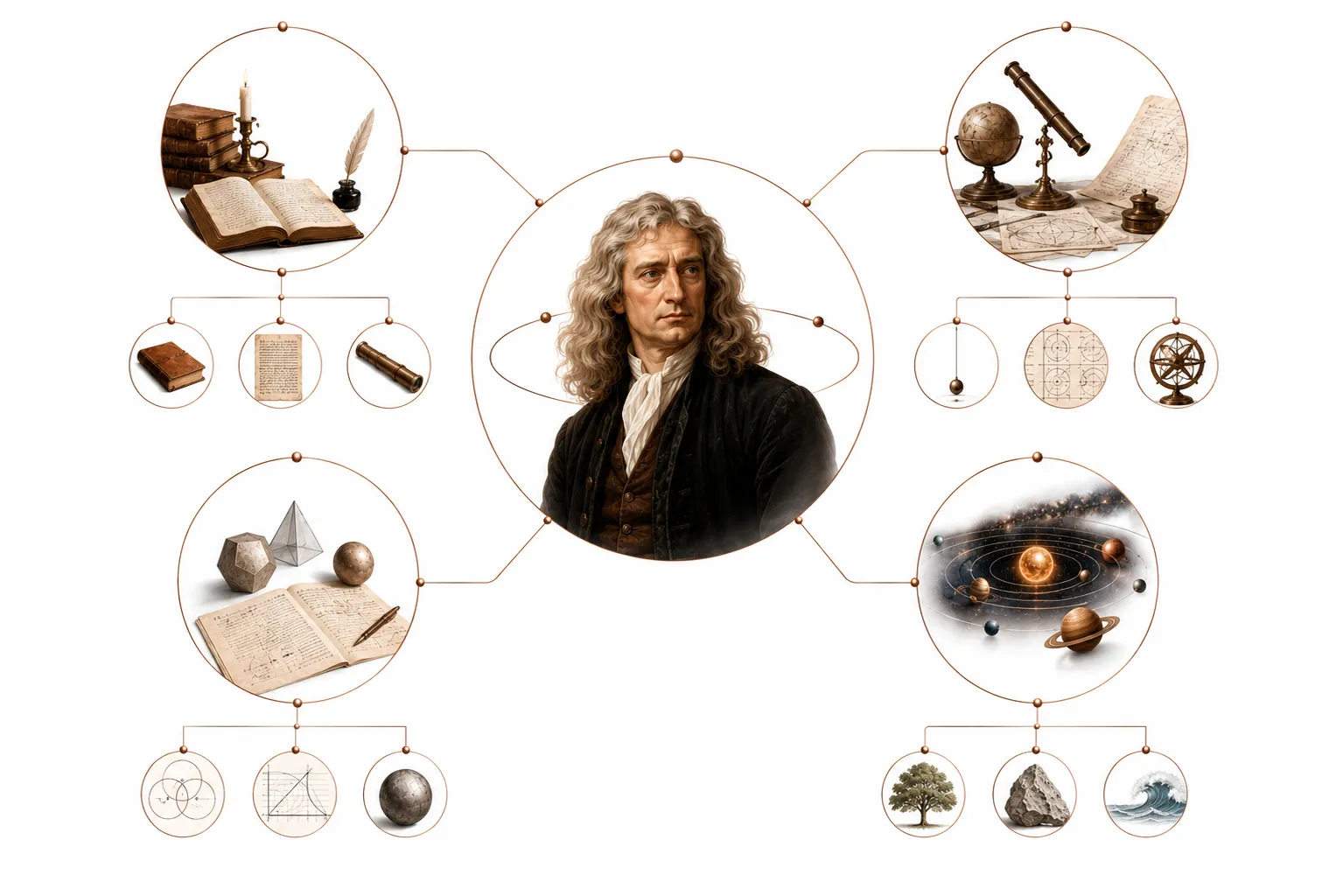
Newton was not married. That much is certain. He lived for 84 years and left behind an enormous archive millions of words of correspondence, notebooks, and manuscripts and not one line of it contains anything resembling a romantic attachment. No love letters. No broken engagements. No references to a woman (or anyone else) in tones that suggest anything beyond professional or collegial regard.
There is one partial exception. A niece of Newton's, Catherine Barton, lived with him in London for many years and was reportedly the mistress of Charles Montagu, Earl of Halifax, who was Newton's patron. Whether Newton approved, arranged, or was simply indifferent to this arrangement tells you something about his relationship with conventional social life, though historians disagree about what exactly.
The closest thing to a biographical account comes from William Stukeley, who interviewed Newton in his old age and recorded various recollections including the apple story. Stukeley describes Newton as retiring and solitary but does not dwell on his romantic life, perhaps because there was nothing to dwell on.
The speculation
Was Isaac Newton gay, asexual, or autistic?
What people think
We can say confidently what Newton's sexuality or neurology was
Various popular accounts claim Newton was definitely gay, or definitely asexual, or definitely autistic stated with a certainty that makes for tidy biography.
What actually happens
Historians are careful here and the evidence doesn't support confident conclusions
The honest position is that we don't know. Newton left no direct evidence about his sexuality and no diagnosis of any kind is possible across three centuries. Some historians, including Simon Baron-Cohen, have suggested Newton showed traits consistent with what we now call autism spectrum conditions intense focus, social difficulty, rigid routines, difficulty with personal relationships. This is plausible and interesting but not provable. The gay hypothesis rests primarily on the Fatio friendship and the absence of relationships with women neither of which is conclusive. Asexuality has been proposed as the simplest explanation. All of these are reasonable inferences. None of them is a fact.
Devotion to work
Did Newton simply not have time for marriage?
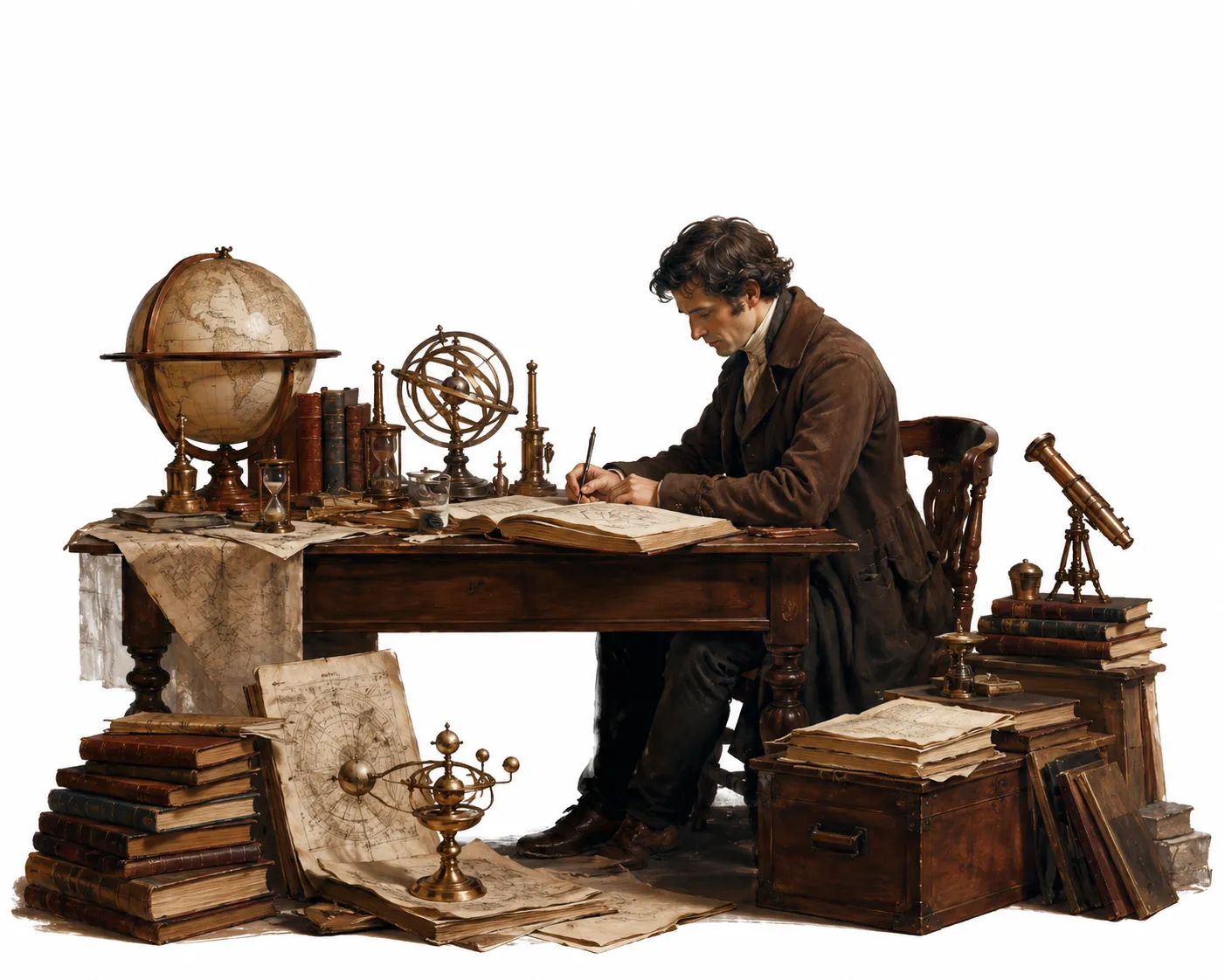
There is a version of this story where the explanation is simply: Newton was too busy. He worked extraordinary hours, rarely left his rooms, and during his most productive periods allegedly forgot to eat. His colleague Humphrey Newton (no relation) observed that he 'seldom went to bed till two or three of the clock, sometimes not till five or six.' A man on that schedule is not attending many dinner parties.
But 'too busy' is probably too simple. Plenty of scientists have been devoted to their work and still managed marriages Hooke, Boyle, Halley all had social lives of varying complexity. Newton's solitude goes beyond a scheduling problem. It reads more like a fundamental preference: he found the company of ideas more congenial than the company of people, and he organised his life accordingly.
What we can say with confidence is that Newton never expressed regret about his unmarried state in any document that survives. He also never expressed contentment about it. Like most things in his inner life, he kept it entirely to himself.
Final insight
Some people find the universe more interesting than other people
Newton was not, as far as we can tell, unhappy. He was solitary, difficult, and consumed by his work but there is no evidence that he experienced his unmarried state as a loss. He spent his life in the company of the most interesting problems that have ever occupied a human mind, and he appears to have found that sufficient. Whether that represents a kind of contentment, a kind of deficit, or simply a different way of being human is a question that three centuries of biography have not settled. It may not be the kind of question that settles.
Quick answers
Common questions
Did Isaac Newton have any children? +
None. Newton died in 1727 without children or direct heirs. His estate passed to the children of his half-siblings. Given that he never married and no illegitimate children have ever been identified, this is consistent with the general picture of a man who had no significant intimate relationships of any kind.
Was Isaac Newton a virgin when he died? +
Possibly. Newton himself reportedly stated this in old age, though the account is third-hand and may be embellished. Voltaire, who visited England and wrote about Newton with characteristic flair, reported that Newton died a virgin which Voltaire found admirable rather than unusual. Whether true or not, Newton gave no indication that celibacy was a sacrifice he resented. It may simply have been the path of least disruption to the work.
Was Isaac Newton autistic? +
Several historians and psychologists have suggested that Newton's behaviour the social isolation, the intense focus, the rigid routines, the extreme sensitivity to criticism, the difficulty maintaining relationships is consistent with what we now call autism spectrum conditions. Simon Baron-Cohen has written about this. It's a reasonable hypothesis and possibly useful for understanding Newton's life. It isn't, and can't be, a diagnosis.