Visual answer
Why elevator doors close slowly
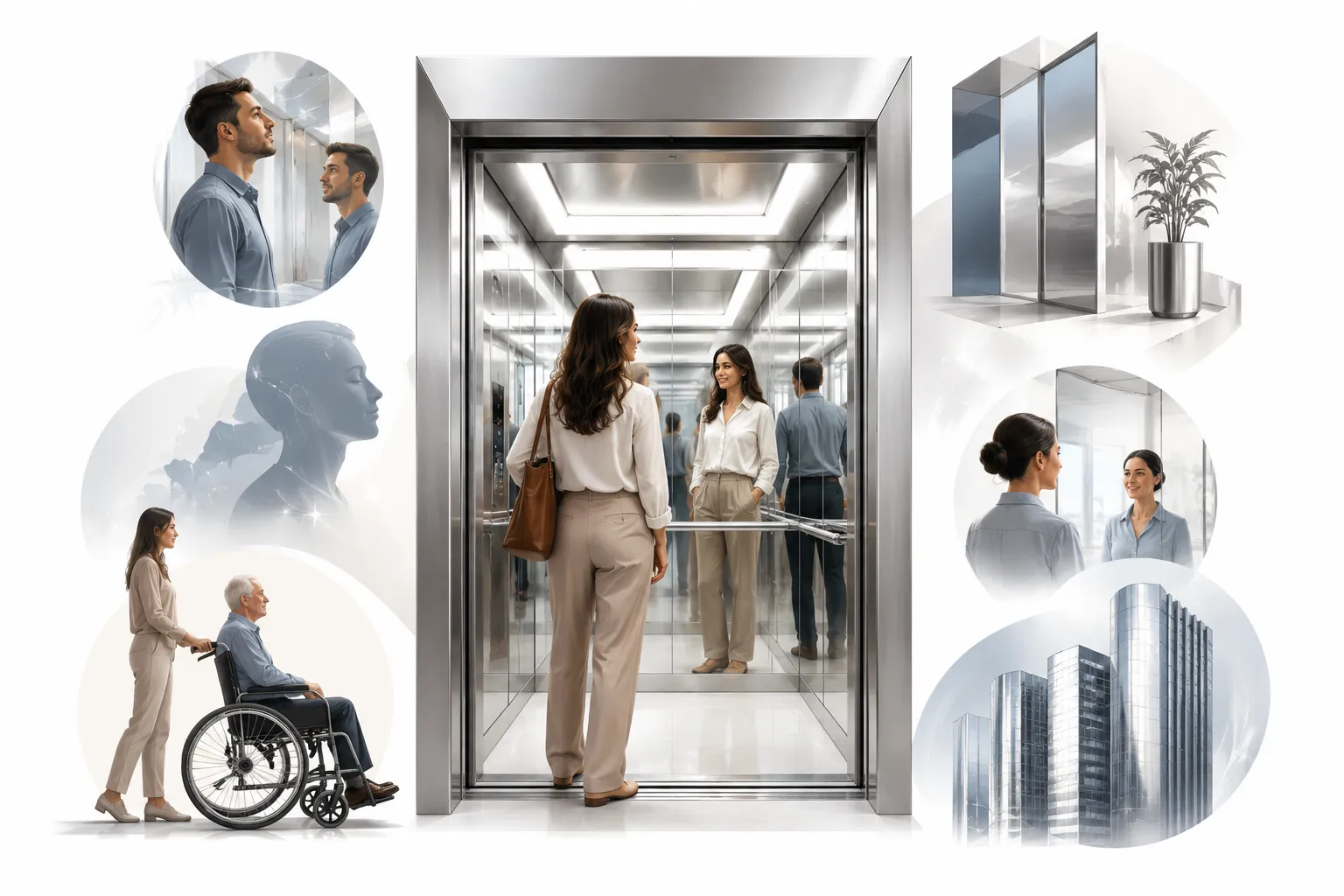
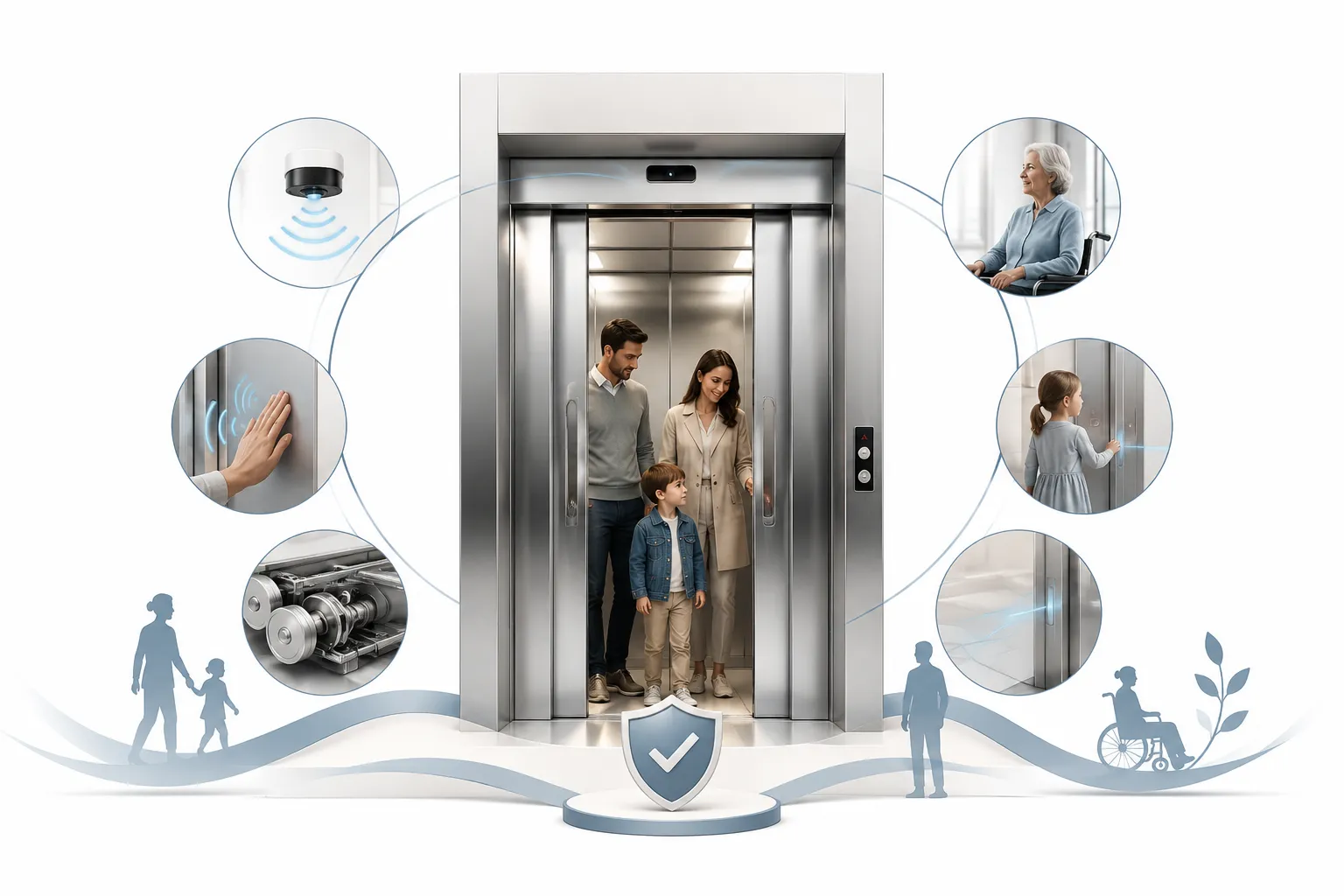
The diagram shows how dwell time, closing speed, sensors, and force limits combine to protect people entering the lift.
Dwell time
The doors must stay open long enough for slower passengers to enter safely.
Gentle close
Closing speed and force are limited so contact does not injure people.
Reopen sensors
Modern doors reverse when sensors detect someone in the doorway.
The Safety Logic
The Regulations Behind the Slow Door
Current state
Elevator doors in most countries are governed by strict safety standards. In the United States, the Americans with Disabilities Act (ADA) requires that elevator doors remain open for a minimum of three seconds after being triggered. This ensures that people with mobility impairments, people using wheelchairs, and people carrying heavy loads have sufficient time to enter without rushing.
What supports this
Beyond the minimum dwell time, doors must close at a speed slow enough that if they contact a person, they automatically reverse, and they must not exert enough force to cause injury even momentarily. These requirements exist because early elevator doors, which closed much faster, caused numerous injuries. The slow door is a design standard that emerged from decades of safety incidents and engineering refinement.
What could change this
In firefighter or emergency mode, elevator doors can and do close much faster, the safety rules are relaxed when trained personnel are operating the lift under emergency conditions. But in normal operation, the slow close is non-negotiable.
The Close Button
That Close Button Is Probably Not Working
The familiar part
Pressing a pedestrian crossing button repeatedly doesn't make the lights change faster. The button registers your request once and then the system runs its programme. Further pressing does nothing.
How it applies
Many elevator 'door close' buttons work exactly the same way, or don't work at all. Studies and building managers have confirmed that in many modern lifts, the close button is a placebo: it's there because people feel better having something to press, but it doesn't override the mandatory dwell time. In some lift models, it functions only with a special key used by engineers or emergency services.
Where the analogy breaks
Some elevators, particularly older ones, or lifts in hospitals that use key-operated modes, do have functioning door close buttons. But if you've been vigorously pressing the button in a normal office building lift and felt it wasn't working, you were probably right.
Final insight
Designed for the Slowest Person in the Room
Slow elevator doors are one of those design decisions that frustrates most people most of the time in order to protect a few people from serious harm on rare occasions. That's not a bad trade. The slowly closing door is, in its own minor way, a small daily act of consideration for anyone who needs a moment longer than the average.
Quick answers
Common questions
Does pressing the close button actually do anything? +
In many modern lifts, no, it's a placebo button that satisfies the urge to do something without actually affecting the door timing. In some older lifts or key-operated modes, it does work.
How long are elevator doors required to stay open? +
Under ADA regulations in the US, doors must remain open for at least three seconds. Other countries have similar requirements under their own building and safety codes.