Visual answer
Why bus windows are so large
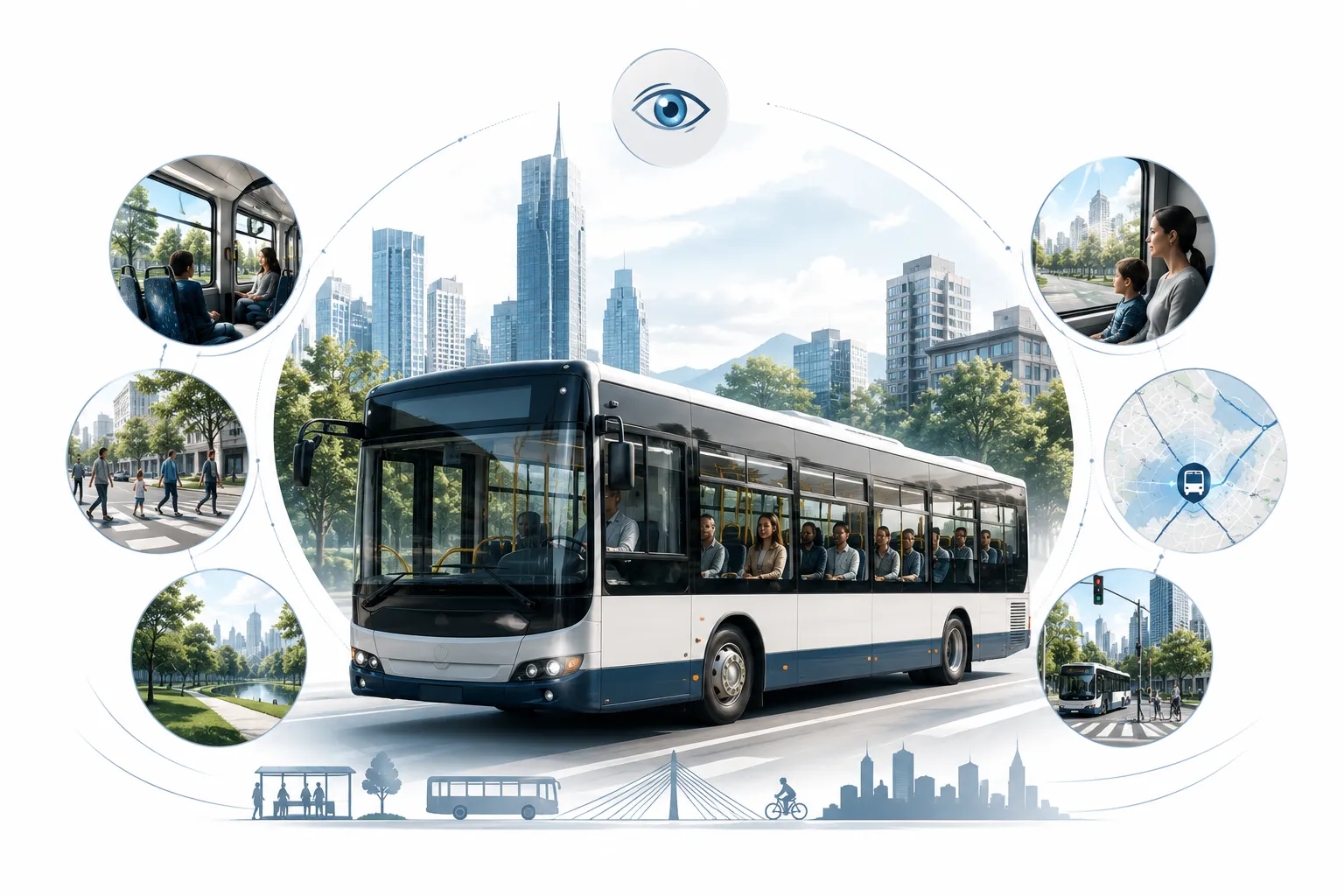
The diagram shows the combined passenger, safety, ventilation, and structural reasons behind large bus windows.
Stop visibility
Passengers need to see streets, signs, and landmarks before their stop arrives.
Emergency exit
Large push-out or breakable windows can provide escape routes.
Frame strength
The vehicle frame carries the main structural load, allowing large glazed panels.
Four Good Reasons
Why Buses Need Large Windows
Current state
The most immediately practical reason is navigation. Unlike train passengers, who know the order of stops in advance and often have digital displays confirming them, bus passengers have historically relied on looking out the window to know when to press the stop button. A large window makes it possible to read street signs, recognise landmarks and judge exactly when you're approaching your destination.
What supports this
Beyond navigation, bus windows serve as emergency exits. Most countries require that a bus has sufficient emergency egress points for all passengers, and windows, when large enough, count toward that requirement. In an accident, a window that can be pushed out or broken provides a critical escape route when the doors may be jammed. Additionally, buses carry a large number of people in a fairly small space for extended periods. Without good ventilation and natural light, the experience becomes unpleasant quickly. Large windows that open provide air circulation, and the natural light reduces the oppressive feeling of being enclosed.
What could change this
Modern buses increasingly add digital stop announcement systems, which reduce the navigation reliance on windows. Air conditioning systems reduce the ventilation argument. But the emergency exit requirement remains, and passenger comfort expectations mean windows are unlikely to shrink significantly.
Structure vs Skin
The Bus Shell Isn't What Holds the Bus Together
The familiar part
A modern building can have a glass façade that is entirely non-structural, the steel frame inside carries all the load, and the glass is just a skin. The glass can be vast, because it doesn't need to hold anything up.
How it applies
A bus works similarly. The structural load, the weight of the vehicle, the passengers, the forces of acceleration and braking, is carried by a steel frame. The walls and windows between the frame members are relatively non-structural. This means the windows can be made very large without compromising the strength of the vehicle.
Where the analogy breaks
There are limits. The roof structure of a bus relies partly on the upper sections of the side walls. Double-decker buses, which have a higher centre of gravity, need more structural reinforcement and tend to have slightly smaller windows relative to wall area than single-deckers.
Final insight
The Window Is Working for You
Every large bus window is simultaneously a navigation tool, a ventilation system, a light source and an emergency exit. It looks passive, you look through it, it does nothing. But it was put there for several very specific reasons, all of which serve the passenger in different ways.
Quick answers
Common questions
Are bus windows emergency exits? +
Many are, particularly the ones marked with red emergency release handles or push-out frames. Regulations in most countries require a minimum number of emergency exits on public transport vehicles.
Why don't armoured cars or prison vans have large windows? +
Because their design priorities are opposite to those of buses. They need security and structural resistance rather than passenger visibility and emergency egress. The absence of large windows is a deliberate design choice for those specific purposes.