Visual answer
The Three Different Causes of Dark Circles
Understanding which type you have determines which approach can actually help.
Vascular: blood shows through thin skin
The under-eye skin is 0.5mm thick versus 2mm elsewhere. In people with thin skin, blood vessels and pooled blood are visible. Worsened by fatigue, allergies, and fluid retention.
Pigmented: excess melanin in the dermis
Some individuals produce elevated melanin in the periorbital skin. This is more common in darker skin tones and people of South Asian, Middle Eastern, and Mediterranean heritage. Largely genetic.
Structural: tear trough hollow casts a shadow
Loss of fat volume in the under-eye area or a deep tear trough creates a concave surface. Light hits the cheek below but not the hollow, producing a shadow. Not a skin color issue at all.
Mixed: most people have more than one cause
Many people have two or three contributing factors simultaneously. Effective treatment requires identifying the dominant cause correctly, which is why comprehensive approaches tend to work better than single-ingredient solutions.
Causes
What Causes Dark Circles Under The Eyes?
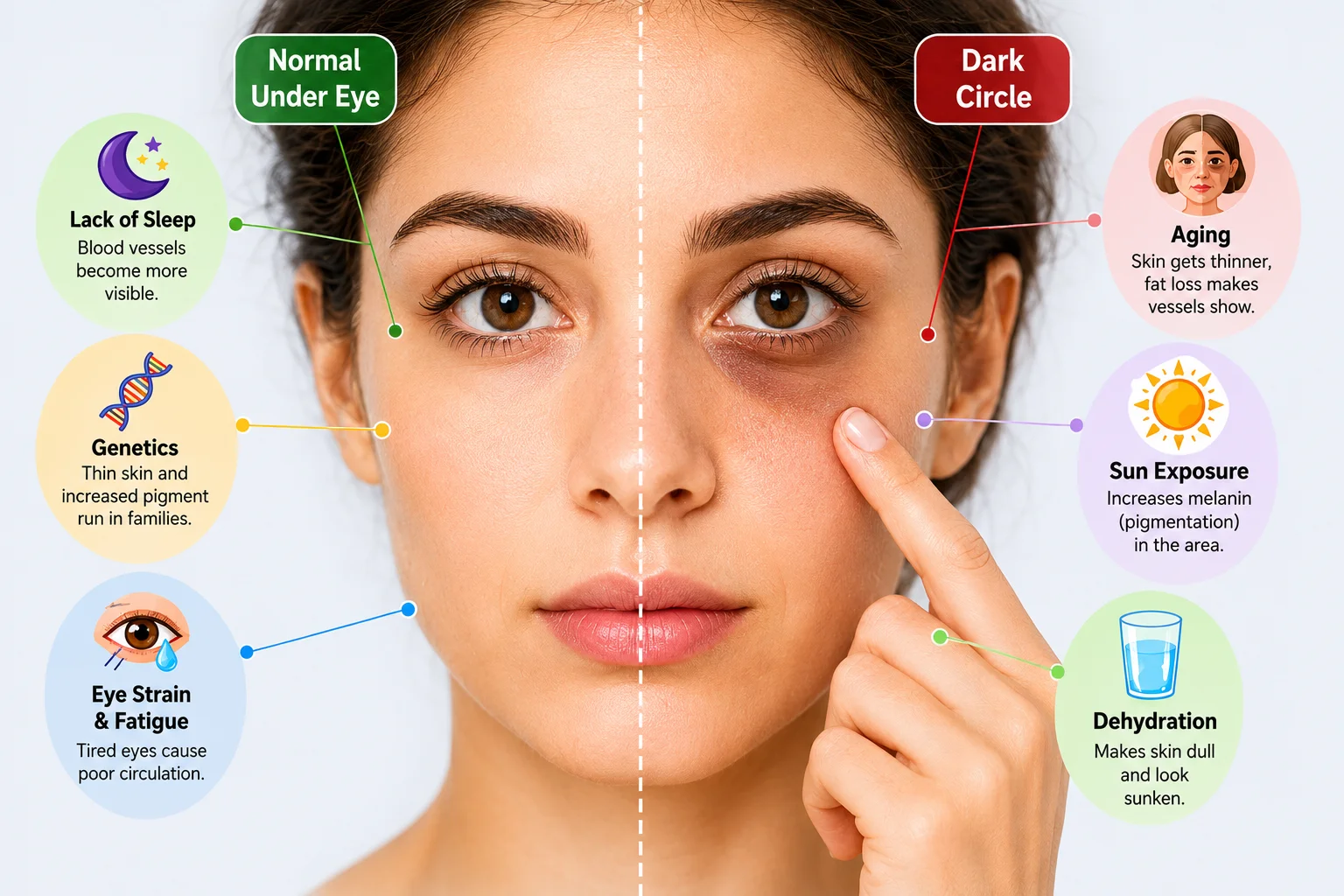
Dark circles are not caused by a single thing. The most common causes are thin under-eye skin, visible blood vessels, excess pigmentation, aging, allergies, lack of sleep, and genetics.
The skin beneath the eyes is among the thinnest anywhere on the body. Because it is so thin, the dark color of underlying blood vessels can show through more easily than elsewhere on the face.
Some people inherit darker pigmentation around the eyes, while others develop it through years of sun exposure, chronic eye rubbing, or inflammation. Aging can also deepen the hollow beneath the eye, creating shadows that look like dark circles even when the skin itself is normal.
Sleep
Why Does Lack Of Sleep Make Dark Circles Worse?
Many people notice darker circles after a poor night's sleep, but sleep deprivation usually reveals dark circles rather than creating them from scratch.
When you are tired, blood vessels beneath the eyes dilate and more blood collects in the area. Because the skin is extremely thin, this extra blood becomes more visible.
Lack of sleep can also cause puffiness around the eyes. The swelling creates additional shadows that exaggerate existing dark circles.
Genetics
Are Dark Circles Genetic?
Yes. Genetics plays a major role in dark circles.
Some people inherit thinner under-eye skin, making blood vessels easier to see. Others inherit higher levels of pigmentation around the eyes. In many families, dark circles appear across multiple generations regardless of sleep habits or lifestyle.
Genetic dark circles often begin early in life and tend to remain present even when a person is otherwise healthy.
Health
Can Dark Circles Be A Sign Of A Health Problem?
Most dark circles are harmless and cosmetic. They are usually caused by genetics, aging, allergies, or visible blood vessels rather than disease.
However, some medical conditions can make dark circles more noticeable. Iron deficiency anemia, eczema, chronic allergies, and certain thyroid disorders may contribute to under-eye darkness.
If dark circles appear suddenly, affect only one eye, or occur alongside unusual fatigue, swelling, or other symptoms, it is worth discussing them with a healthcare professional.
Deficiencies
Can Nutritional Deficiencies Cause Dark Circles?
Iron deficiency
The deficiency most commonly associated with dark circles. Reduced oxygen delivery can make under-eye blood vessels more visible.
Vitamin B12 deficiency
May contribute indirectly through anemia in some people.
Vitamin D deficiency
Some studies show associations, though evidence remains limited.
Most dark circles
Are not caused by vitamin deficiencies and are usually related to genetics, skin anatomy, or pigmentation.
Will They Go Away?
Will Dark Circles Go Away?
Sleep-related
Usually improve when sleep quality improves.
Allergy-related
Often improve when allergies are controlled.
Dehydration-related
May improve with hydration and recovery.
Genetic
Usually cannot be completely removed.
Pigmented
May fade gradually with treatment and sun protection.
Structural
Generally persist unless the underlying hollowing is addressed.
Treatment
How Do You Get Rid Of Dark Circles?
Vascular dark circles
Better sleep, allergy management, cold compresses, caffeine-containing products.
Pigmented dark circles
Sun protection, retinoids, vitamin C, dermatologist-guided treatments.
Structural dark circles
Volume restoration procedures such as fillers may help. Topical creams usually do not.
Deficiency-related
Treating the underlying deficiency is the most effective approach.
Types
The Three Different Types Of Dark Circles
Not all dark circles are the same. Dermatologists generally group them into three broad categories: vascular dark circles, pigmented dark circles, and structural dark circles.
Vascular dark circles happen when blood vessels or pooled blood become visible beneath thin under-eye skin. Pigmented dark circles happen when extra melanin accumulates around the eyes. Structural dark circles occur when the natural shape of the eye socket creates shadows.
Many people have a combination of two or even all three types, which is why finding the dominant cause is important before trying treatments.
Why Under Eyes?
Why Do Dark Circles Appear Under The Eyes Instead Of Elsewhere?
The skin beneath the eyes is uniquely vulnerable. At roughly half a millimeter thick, it is among the thinnest skin on the human body.
Unlike many other areas of the face, the under-eye region contains very little fat and a dense network of tiny blood vessels. This combination makes underlying structures far more visible.
As a result, changes in blood flow, pigmentation, hydration, or facial anatomy become much easier to see beneath the eyes than on the forehead, cheeks, or chin.
Mirror Test
The Simple Mirror Test: Which Type Of Dark Circle Do You Have?
Lightens when pressed
Likely vascular. Blood vessels are contributing to the darkness.
Stays the same color
Likely pigmentation. Excess melanin is responsible.
Changes with lighting
Likely structural. Shadows are creating the appearance of darkness.
Several signs at once
A mixed type involving more than one underlying cause.
Myths
Common Myths About Dark Circles
Dark circles always mean lack of sleep
False. Genetics, pigmentation, allergies, and facial anatomy are often more important.
Drinking more water cures dark circles
False. Hydration may help slightly but usually does not eliminate the root cause.
Eye creams work for everyone
False. Different types of dark circles respond to different treatments.
Only older people get dark circles
False. Many people inherit dark circles and develop them during childhood or adolescence.
Aging
Why Do Dark Circles Become More Noticeable With Age?
Dark circles often become more obvious as people get older because several age-related changes happen at the same time.
The skin beneath the eyes becomes thinner, making blood vessels easier to see. Collagen levels decline, reducing support for the skin. Fat volume around the eye socket also decreases, creating deeper hollows and stronger shadows.
These changes make both vascular and structural dark circles more visible over time.
Quick answers
Common questions
Will sleeping more fix dark circles? +
For vascular dark circles in people whose vessels dilate with fatigue, better sleep definitely helps. For pigmented or structural dark circles, sleep has no effect on the underlying cause. Consistent fatigue worsens all three types indirectly through increased inflammation and collagen breakdown over time.
Do dark circles get worse with age? +
Yes. Skin thins with age, making vascular circles more visible. Fat volume decreases in the tear trough area, deepening structural shadows. And cumulative sun exposure increases periorbital pigmentation. All three mechanisms progress with age.
Are dark circles a sign of a health problem? +
Rarely. Sudden new dark circles, especially if one-sided, warrant attention. Chronic dark circles in the absence of other symptoms are almost always cosmetic. Conditions like iron deficiency anemia, thyroid disease, and atopic dermatitis can worsen dark circles but usually present with other symptoms.
Does hydration affect dark circles? +
Dehydration causes skin to appear dull and less plump, which can make vascular dark circles more visible. Adequate hydration supports skin turgor and reduces the sunken appearance that worsens structural circles. It is a small contributing factor, not a primary cause or cure.
Do eye creams work for dark circles? +
It depends on the type. Caffeine-based creams transiently constrict vessels for vascular circles. Vitamin C and retinol-containing creams can gradually reduce pigmented circles with consistent long-term use. No topical product meaningfully addresses structural hollow dark circles.