Visual answer
From Mosquito Bite to Itch: What Happens Under the Skin
Four steps from the moment a mosquito feeds to the itch you feel.
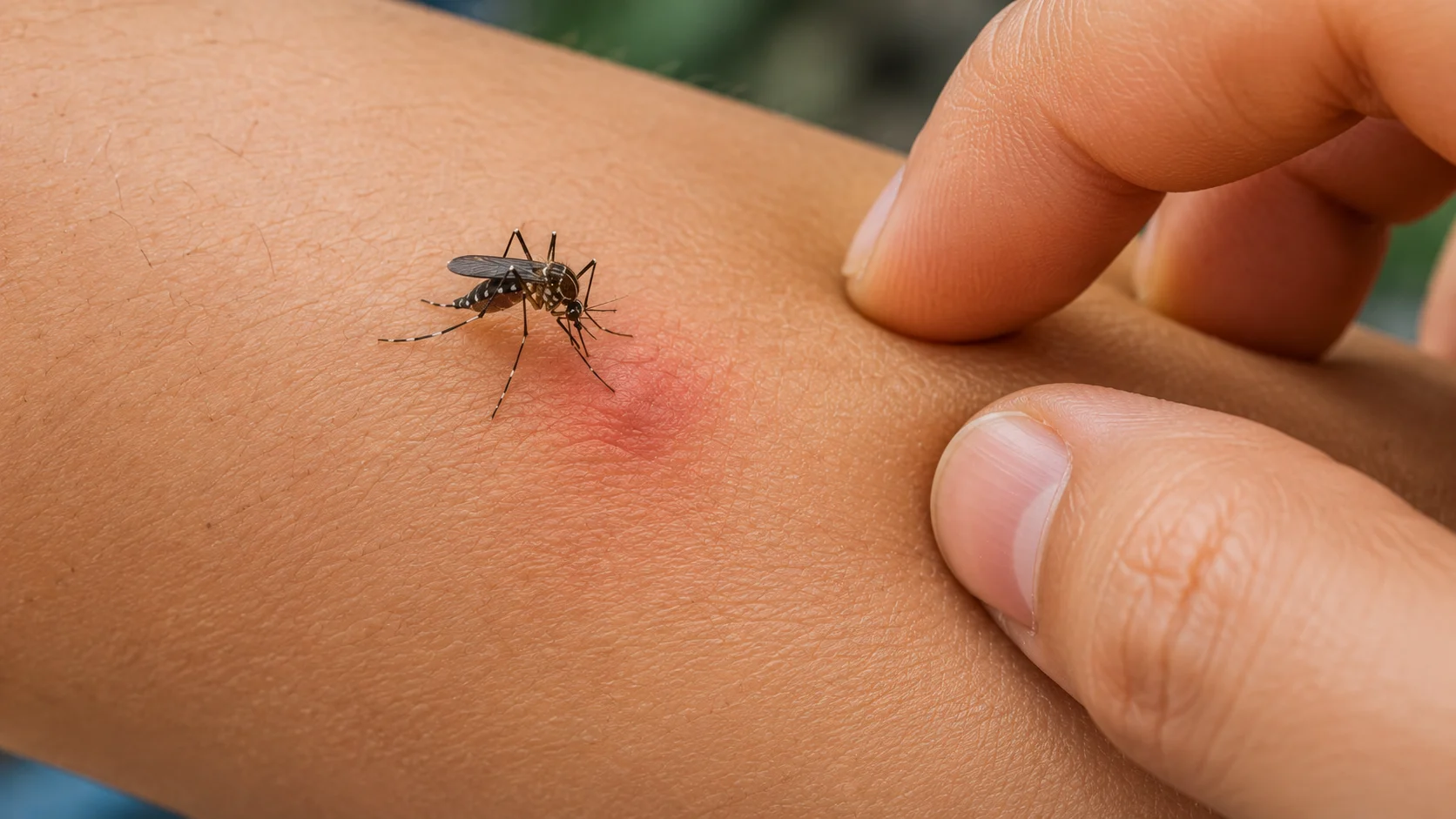
Mosquito injects saliva
While feeding, a mosquito pumps saliva into your skin. The saliva contains anticoagulants and other proteins that stop your blood from clotting while it feeds.
Immune system detects foreign proteins
Mast cells in your skin recognize the saliva proteins as foreign and trigger an immune response, flagging the area as under attack.
Histamine floods the area
Mast cells release histamine, which causes local blood vessels to dilate and become more permeable. Fluid leaks into surrounding tissue, causing the characteristic raised, red bump.
Nerve endings signal itch
Histamine binds to receptors on nearby nerve endings, which send itch signals to the brain. The more histamine, the stronger and longer the itch.
Real reason
Your Immune System Is the One Making You Itch
A mosquito's mouthpart pierces your skin and draws blood. While it feeds, it releases saliva containing proteins that prevent clotting. Your body has no use for these proteins and immediately flags them as foreign invaders. Mast cells in your skin, which are part of your immune system's front line, respond by dumping histamine into the surrounding tissue.
Histamine is a signaling molecule that causes blood vessels to widen and leak fluid into nearby tissue. That is what creates the puffy, red bump. At the same time, histamine binds to itch-specific nerve receptors in the skin, sending a persistent itch signal to the brain. The whole reaction can start within minutes of the bite.
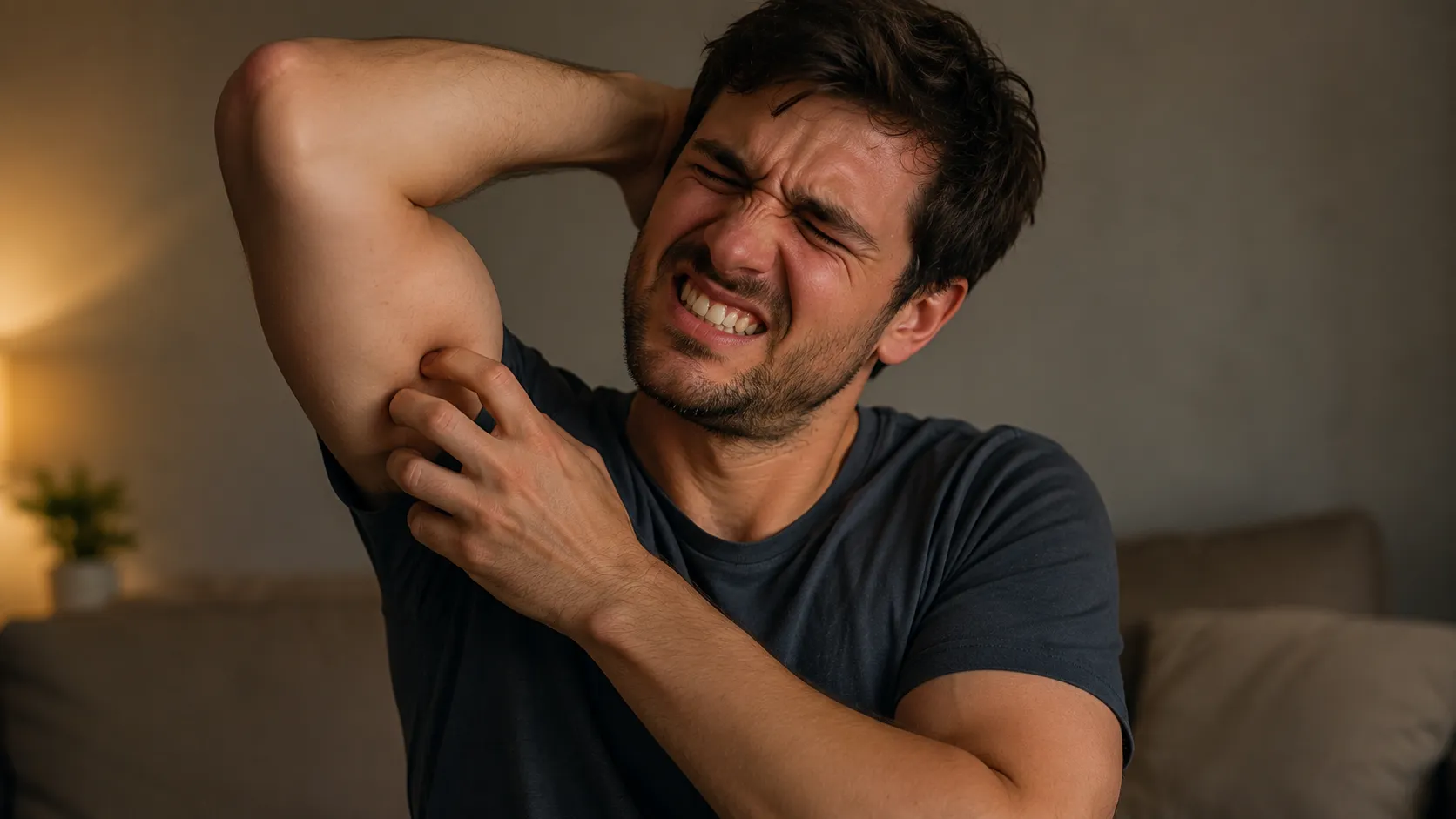
Scratching the bite stimulates the same nerves and prompts more inflammation. It gives short-term relief by briefly overriding the itch signal with a pain signal, but it extends how long the bite stays irritated. Over time and repeated exposure, some people build partial tolerance to mosquito saliva and react less intensely.
Myth vs reality
Myth vs Reality
What people think
Mosquitoes inject a venom or toxin that causes the itch
Mosquitoes do not inject venom. They inject saliva, which serves a practical purpose: keeping your blood liquid while they feed. The itch is not a direct chemical attack. It is your own immune system reacting to proteins it does not recognize.
What actually happens
Your immune system causes the itch, not the mosquito
The mosquito is long gone by the time the itch peaks. Your mast cells release histamine in response to the saliva proteins, and that histamine activates nerve endings in the skin. The itch is entirely your body's doing.
What affects the itch
What Makes Mosquito Bites Itch More or Less
Scratching the bite
Tears skin and causes more inflammation, which releases additional histamine and extends the itch
Applying a cold pack
Reduces blood flow to the area and slows histamine activity, dulling the itch without making it worse
Antihistamine cream or tablet
Blocks histamine receptors at the skin or systemically, reducing both the itch and the swelling
Previous exposure to mosquitoes
Repeated bites over time can reduce immune overreaction in some people, leading to less intense itching
Quick answers
Common questions
Why do mosquito bites itch more at night? +
Your cortisol levels drop at night, which reduces your body's natural anti-inflammatory suppression. This allows the histamine response to feel stronger. Warmth from bedding also increases blood flow to the skin, which can amplify itching.
Why do some people get bitten more than others? +
Mosquitoes are attracted to carbon dioxide, body heat, sweat compounds, and certain skin bacteria. People who produce more of these signals get targeted more. Blood type O has also been linked to higher attractiveness to mosquitoes in some studies.
Does scratching a mosquito bite make it worse? +
Yes. Scratching increases inflammation, can introduce bacteria under the skin, and triggers more histamine release. It feels temporarily satisfying because it briefly replaces the itch signal with a pain signal, but it prolongs the overall reaction.
What is the fastest way to stop a mosquito bite from itching? +
A cold compress reduces histamine activity and numbs the nerve endings. An over-the-counter antihistamine cream like hydrocortisone or diphenhydramine is also effective. Oral antihistamines work well if you have multiple bites.
Can you become immune to mosquito bites? +
Not fully immune, but immune tolerance can develop. People who are bitten frequently in the same region over years may react with less swelling and itch over time as their immune system becomes more familiar with the saliva proteins.
Why do mosquito bites swell up? +
Histamine makes blood vessels leaky, so fluid seeps into the tissue surrounding the bite. The immune system is essentially flooding the area with resources to fight what it perceives as a foreign invader, and that fluid buildup is what causes the raised bump.