Visual answer
The Itch-Scratch-Itch Cycle and Why It Perpetuates Itself
From skin stimulus to spinal cord to brain, and how scratching creates a reinforcing loop.
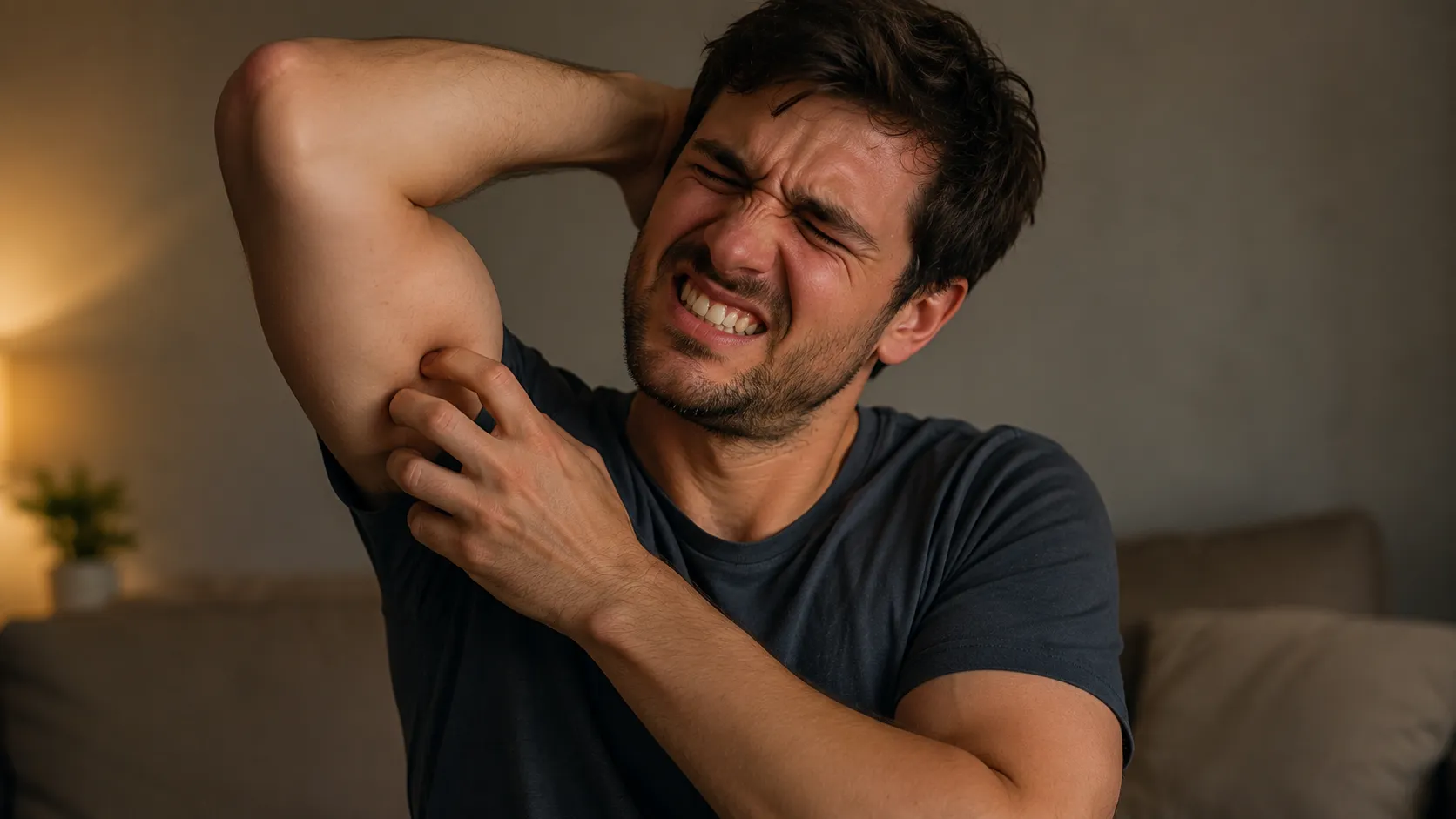
Pruriceptors activate in the skin
Histamine, cytokines, or mechanical stimulation activates C-fiber pruriceptors. They send signals through the spinal cord to the thalamus and then to the somatosensory cortex and insula.
Scratching introduces a pain signal
Nail pressure activates A-delta pain fibers. These conduct faster than the C-fibers carrying itch. The pain signal inhibits itch transmission at the spinal dorsal horn through gate control mechanisms.
The brain releases serotonin for pain relief
The brain responds to scratching pain by releasing serotonin from the raphe nuclei. This is part of the descending pain modulation system.
Serotonin reactivates itch neurons
Serotonin binds to 5-HT1A receptors on gastrin-releasing peptide neurons in the spinal cord. These neurons are primary itch amplifiers, so serotonin's arrival intensifies the itch signal rather than reducing it.
Chronic itch
Chronic Itch Is a Nervous System Problem, Not Just a Skin Problem
Conditions like eczema, psoriasis, and urticaria create persistent itch not just because of ongoing skin inflammation, but because repeated itch-scratch cycles sensitize the spinal neurons involved. The itch pathway becomes hypersensitized, responding to stimuli that would not normally cause itching and producing more intense responses to stimuli that do. This is called central sensitization and is why chronic itch is so difficult to treat with antihistamines alone.
There is also a psychological dimension. The anticipation of itch in a familiar context can trigger itching before any physical stimulus occurs. People with chronic itch disorders often itch more when they pay attention to their skin or think about itching, the same contagious itch phenomenon observed in healthy individuals but amplified by sensitization.
Novel itch treatments are targeting the serotonin loop directly. Dupilumab and newer biologics work on the inflammatory signals upstream of itch. But researchers are also investigating serotonin receptor blockers specifically aimed at breaking the scratch-serotonin-itch amplification cycle, which would address chronic itch at its spinal cord mechanism.
Myth vs reality
Myth vs Reality
What people think
Antihistamines treat most itching
Antihistamines work for histamine-driven itch, which includes allergic reactions and some insect bites. But most chronic itch, including itch from eczema, kidney disease, liver disease, and nerve damage, does not involve histamine as the primary mechanism. Antihistamines are largely ineffective for these types.
What actually happens
Most chronic itch is driven by non-histamine inflammatory pathways
Interleukins, cytokines, substance P, and direct nerve sensitization drive most chronic itch conditions. These require targeted treatments such as topical calcineurin inhibitors, biologics, or JAK inhibitors rather than antihistamines.
Quick answers
Common questions
Why does scratching in one spot sometimes relieve itch in another spot? +
This is due to the inhibitory circuits in the spinal cord dorsal horn. Pain signals in one location can suppress itch signals from nearby areas through lateral inhibition in the spinal cord. The effect works best for neighboring regions.
Why does warm water on an itch feel so good? +
Warm water activates TRPV1 receptors in the skin, which can override itch signaling through a similar competitive mechanism to scratching but without the tissue damage. It also promotes relaxation, which reduces central itch amplification driven by stress.
Is itching contagious for real? +
Yes, experimentally confirmed. Showing people videos of other people scratching produces increased itch and scratching in observers. Brain imaging confirms genuine neural activation in itch-processing regions. It is a form of social contagion mediated by mirror neuron systems.
Why do bug bites itch? +
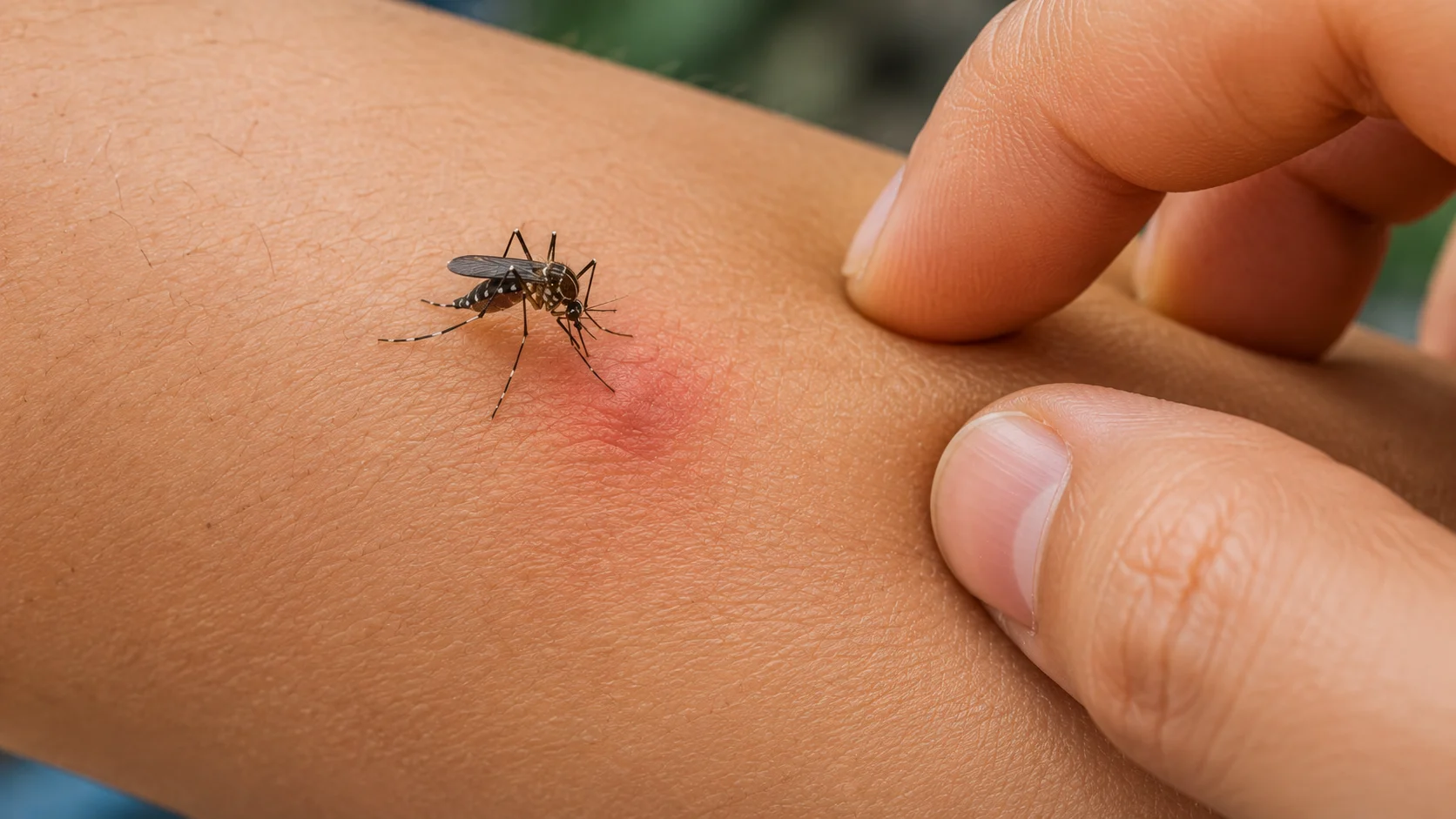
Insect saliva contains proteins and compounds that trigger histamine release from mast cells in the skin. Histamine binds to pruriceptors and directly triggers itch. The immune system also produces cytokine signals during its response to foreign proteins, which add to the itch independently of histamine.
Can itching be a sign of serious illness? +
Whole-body itching without a rash can indicate liver disease, kidney failure, thyroid disorders, lymphoma, or polycythemia vera. New unexplained persistent itch in an adult warrants blood tests to rule out systemic causes.