1
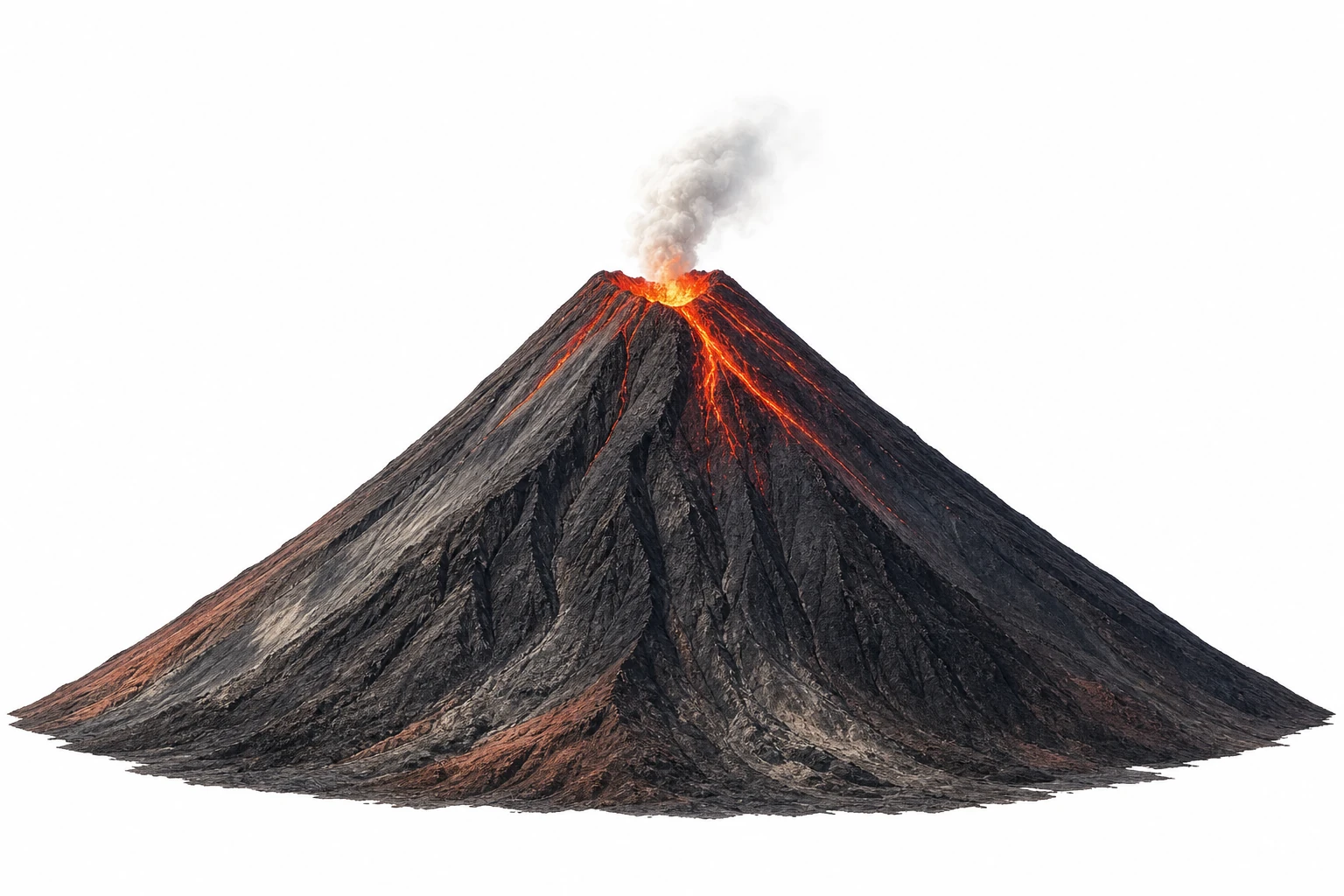
01. Erupted material exits from a central vent
Lava, ash, and pyroclastic debris are deposited around the eruption point.
Earth Science
One of the most dramatic shapes in nature turns out to have a very simple explanation. A perfectly conical volcano silhouetted against the sky is one of geology's most iconic images - symmetrical, dramatic, almost too tidy for something built by an explosion. And yet the cone shape is almost inevitable, which makes it either reassuringly logical or slightly unsatisfying, depending on your taste for mystery. The answer involves the angle of repose, material building up on itself, and the reason different types of volcanoes produce dramatically different shapes.
Quick answer
Volcanoes form cones because erupted material, lava, ash, and rock, piles up around the central vent and builds outward and upward at the steepest angle the material can maintain without sliding down, a property called the angle of repose, naturally producing a conical shape. Not all volcanoes are cones at all. Shield volcanoes, built from very fluid lava, are broad, gently sloping domes that look nothing like the classic silhouette - the cone is a product of the material, not the eruption itself.
The mystery
The answer involves the angle of repose, material building up on itself, and the reason different types of volcanoes produce dramatically different shapes.
The short answer
Volcanoes form cones because erupted material, lava, ash, and rock, piles up around the central vent and builds outward and upward at the steepest angle the material can maintain without sliding down, a property called the angle of repose, naturally producing a conical shape.
The twist
Not all volcanoes are cones at all. Shield volcanoes, built from very fluid lava, are broad, gently sloping domes that look nothing like the classic silhouette - the cone is a product of the material, not the eruption itself.
Common mistake
Many people imagine that a volcano's cone is formed by one large eruption event.
Earth Science
Lava viscosity determines slope; thin, fluid lava spreads wide, while thick lava builds steep cones.
The geologist who classified volcanic forms
An Italian volcanologist who contributed significantly to the classification of volcanic types and eruption intensities in the early 20th century.
Related questions
If the underlying magma chamber empties rapidly, the cone can collapse into a caldera.
Where the angle of repose shapes other landscapes
The windward and leeward slopes of sand dunes are governed by the angle of repose of dry sand.
Where the angle of repose shapes other landscapes
Rock debris that falls from cliffs accumulates in cone-like fans below the cliff face, following identical angle-of-repose principles.
Isn't the cone caused by a single massive explosion?
Most volcanic cones are built gradually over hundreds or thousands of years of repeated eruptions, each adding a layer to the accumulating structure.
Continue learning