Everyday Science

Why Does the Sound Change in a Seashell?

Hold it to your ear and you hear the ocean. You are actually hearing something else entirely. Generations of children have been told that holding a seashell to their ear lets them hear the distant roar of the ocean, captured somehow inside the shell itself. It is a lovely idea. It is also, unfortunately, not remotely what is happening. The answer involves ambient noise, resonance, and the slightly less poetic truth about where that whooshing sound actually comes from.

Quick answer

The sound heard in a seashell is not the ocean at all, but ambient background noise from the surrounding environment, amplified and shaped by the shell's hollow, resonant cavity, which boosts certain frequencies the same way an empty room or cupped hand does. You can recreate the exact same effect with an empty cup, a cupped hand held over your ear, or almost any small hollow object - the seashell is not actually special.
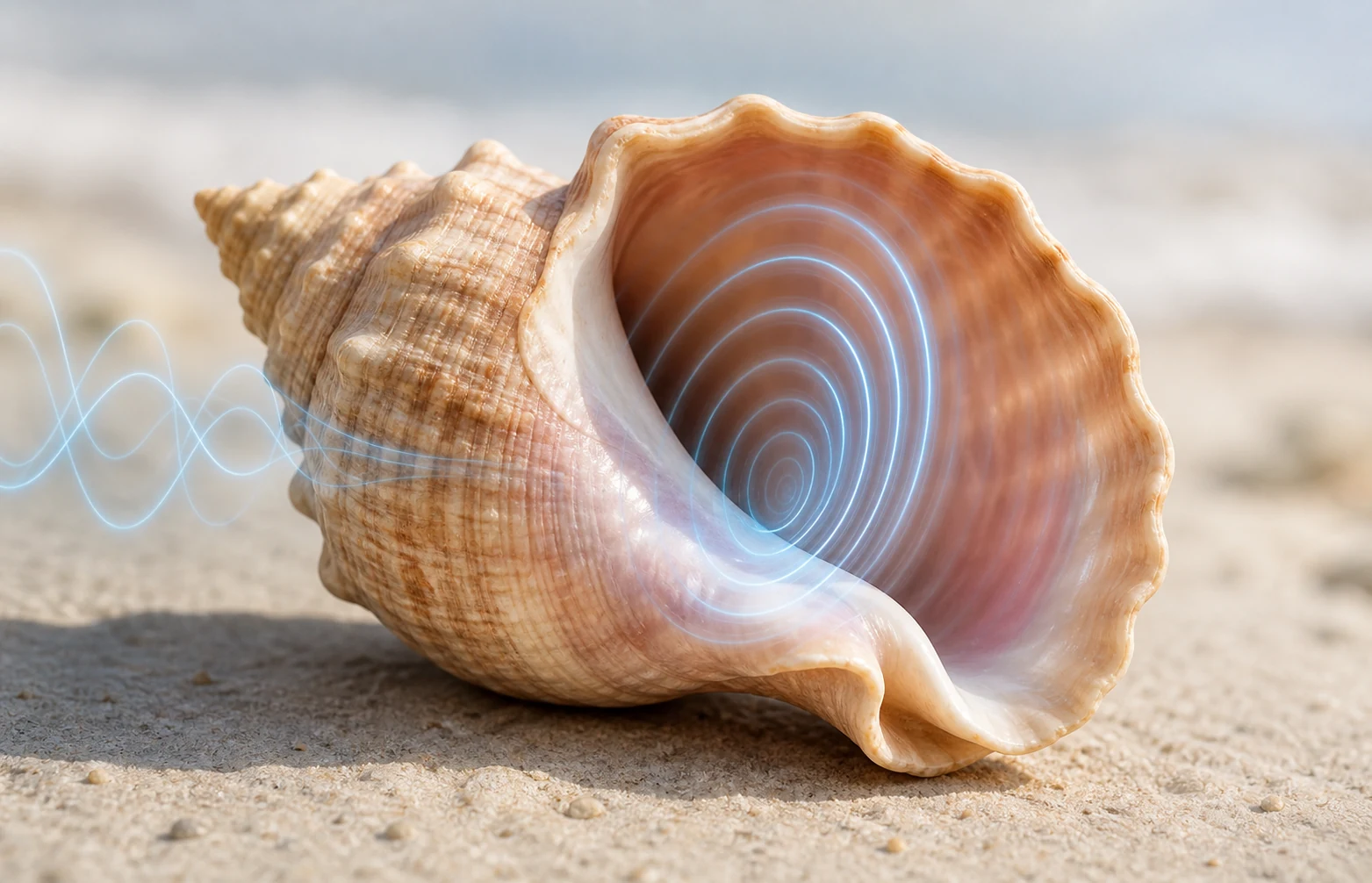
Why Does the Sound Change in a Seashell? hero image

The mystery

The answer involves ambient noise, resonance, and the slightly less poetic truth about where that whooshing sound actually comes from.

The short answer

The sound heard in a seashell is not the ocean at all, but ambient background noise from the surrounding environment, amplified and shaped by the shell's hollow, resonant cavity, which boosts certain frequencies the same way an empty room or cupped hand does.

The twist

You can recreate the exact same effect with an empty cup, a cupped hand held over your ear, or almost any small hollow object - the seashell is not actually special.

Common mistake

The popular and long-standing belief is that a seashell literally captures and replays the sound of ocean waves.

It's resonance, not the ocean

A seashell's whooshing sound is a straightforward demonstration of acoustic resonance, mistaken for centuries as something far more romantic.

Ambient noise is everywhere, even in a quiet room

Even seemingly silent environments contain a wide range of faint background sounds, from air movement to distant traffic to blood flow within your own ear.

This constant low-level noise is the actual raw material that a seashell amplifies.

A truly silent room does not exist - there is always something quietly humming in the background, waiting to be amplified.

The shell's hollow shape boosts certain frequencies

A seashell's curved, hollow interior acts as a resonating chamber, amplifying specific frequencies of that ambient noise while damping others, similar to how a guitar's hollow body shapes and amplifies a vibrating string.

This selective amplification creates the rushing, wave-like sound people associate with the ocean.

A seashell does not capture the ocean; it simply turns up the volume on whatever sound happens to be nearby.

Any similarly shaped hollow object works the same way

Holding an empty cup, a cupped hand, or any small hollow chamber against your ear produces a nearly identical whooshing sound, proving the effect has nothing specifically to do with seashells or the ocean.

The shell's particular shape simply happens to resonate frequencies that sound pleasantly similar to ocean waves.

An empty coffee mug can produce the exact same trick, though admittedly with far less poetic marketing.

From ambient noise to ocean-like whoosh

A short sequence explains how background sound becomes a recognizable rushing noise.

1

01. Ambient sound exists in the surrounding environment

Faint background noise is present in virtually every environment, even quiet ones.

2

02. The shell's cavity resonates with certain frequencies

Its hollow shape naturally amplifies specific frequency ranges within that ambient noise.

3

03. Amplified frequencies reach your ear

The resonant chamber boosts those frequencies significantly compared to the surrounding open air.

4

04. The result resembles a continuous rushing sound

This amplified resonance creates the familiar whooshing sound associated with seashells.

Why this myth has lasted so long

The seashell-ocean myth likely persists because it is genuinely difficult to notice ambient background noise in everyday life until something amplifies it, making the sudden whooshing feel mysterious and specifically ocean-related.

It is also simply a more charming explanation than "acoustic resonance amplifying ambient noise," which may explain why the myth has outlasted the science by a fairly wide margin.

Surprising facts about the seashell sound

It works even far from the ocean
A seashell produces the same whooshing effect indoors, in a desert, or anywhere else far from any actual ocean.
Total silence would eliminate the effect entirely
In a truly soundproof environment with no ambient noise at all, a seashell would produce little to no audible whoosh.
Blood flow contributes to the sound too
Some of the perceived sound may come from amplified blood flow and other sounds generated within your own body.

Isn't it really the sound of the ocean trapped inside?

Myth

The popular and long-standing belief is that a seashell literally captures and replays the sound of ocean waves.

The whooshing, wave-like quality of the amplified sound closely resembles ocean waves, reinforcing a charming but inaccurate folk explanation.

Reality

The sound is entirely generated by ambient noise being resonantly amplified by the shell's shape, with no actual ocean sound involved at all.

The sound is entirely generated by ambient noise being resonantly amplified by the shell's shape, with no actual ocean sound involved at all.

Where similar resonance effects occur

Empty glass bottles
Blowing across or holding an empty bottle to your ear can produce comparable resonant amplification effects.
Concert hall acoustics
Architects deliberately design resonant spaces to amplify and shape specific sound frequencies for musical performance.

Why this small correction matters

Understanding acoustic resonance helps clarify a widely believed myth while introducing a genuinely interesting principle behind how sound interacts with hollow spaces.

The same resonance principle informs the design of musical instruments, concert halls, and noise-canceling technology.

Worth noting

The ocean you never actually heard

The whoosh inside a seashell is real, but the ocean inside it never was - it was always just the quiet, ordinary noise of wherever you happened to be standing. Few myths have survived this long on the strength of nothing more than a flattering coincidence in pitch.

Quick answers

Common questions

Does the size of the shell change the sound?

Yes, larger shells generally resonate at different frequencies than smaller ones, slightly altering the character of the sound.

Why does a cupped hand work the same way as a shell?

Both create a small resonant air cavity near the ear, amplifying ambient noise in a very similar manner.

Everyday Science

Related questions

The hollow body resonates with the vibrating strings, amplifying specific frequencies, much like a seashell amplifies ambient noise.

The science behind resonant chambers

Acoustic Resonance Theory

A foundational principle in physics describing how hollow structures amplify specific sound frequencies based on their shape and size.

Related questions

Can you hear the seashell effect in a soundproof room?

Only faintly, if at all, since the effect depends on amplifying existing ambient background noise.

Where similar resonance effects occur

Empty glass bottles

Blowing across or holding an empty bottle to your ear can produce comparable resonant amplification effects.

Where similar resonance effects occur

Concert hall acoustics

Architects deliberately design resonant spaces to amplify and shape specific sound frequencies for musical performance.

Isn't it really the sound of the ocean trapped inside?

The sound is entirely generated by ambient noise being resonantly amplified by the shell's shape, with no actual ocean sound involved at all.

The sound is entirely generated by ambient noise being resonantly amplified by the shell's shape, with no actual ocean sound involved at all.