1
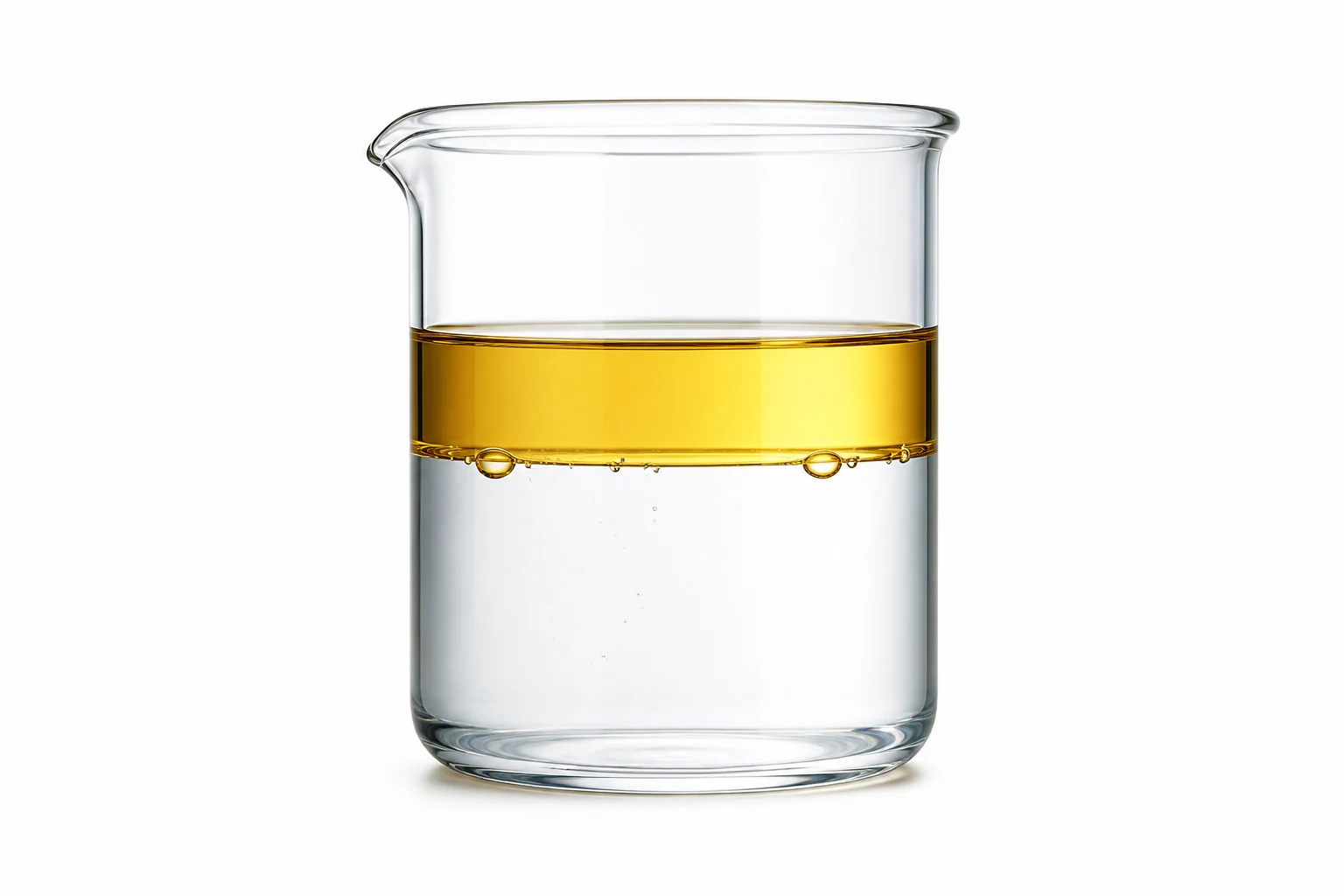
01. Oil and water are combined
The two liquids are poured into the same container.
Everyday Science
Two liquids that refuse to mix, for reasons that go back to their molecular personalities. Pour oil into a glass of water and it never blends in - it gathers itself into golden pools and sits stubbornly on top, no matter how thoroughly you stir it. This is not laziness. Oil and water are, at a molecular level, simply incompatible in a way that has nothing to do with mixing technique. The answer involves polarity, density, and why oil and water have been famously refusing to get along since long before the phrase existed.
Quick answer
Oil floats on water primarily because it is less dense than water, and the two liquids do not mix because water molecules are polar while oil molecules are nonpolar, so they are chemically incompatible and naturally separate. Even if oil were somehow made denser than water, it would still refuse to dissolve into it - density explains why it floats, but polarity explains why it never blends.
The mystery
The answer involves polarity, density, and why oil and water have been famously refusing to get along since long before the phrase existed.
The short answer
Oil floats on water primarily because it is less dense than water, and the two liquids do not mix because water molecules are polar while oil molecules are nonpolar, so they are chemically incompatible and naturally separate.
The twist
Even if oil were somehow made denser than water, it would still refuse to dissolve into it - density explains why it floats, but polarity explains why it never blends.
Common mistake
Many people assume oil floats simply because it is more viscous, or "thicker," than water.
Everyday Science
Soap molecules surround grease with their nonpolar ends while their polar ends bond with water, washing it away.
The chemistry behind polarity
A foundational chemistry concept describing how uneven electron distribution gives molecules positive and negative regions.
Related questions
Oil's low density and resistance to mixing let it spread thinly across the water's surface.
Where this separation principle matters
Chefs use emulsifiers like egg yolk to stabilize sauces that would otherwise separate, such as hollandaise.
Where this separation principle matters
Oil spill containment relies directly on oil's tendency to float and stay separated from water.
Isn't it just about oil being thicker than water?
Viscosity has nothing to do with floating; the actual cause is oil's lower density and its chemical incompatibility with water's polarity.
Continue learning

Everyday Science
A nearby object mystery to keep exploring.
Everyday Science
A nearby object mystery to keep exploring.
Everyday Science
A nearby object mystery to keep exploring.