1
01. A magnetron generates microwaves
This component produces electromagnetic radiation at the specific frequency needed to excite water molecules.
Everyday Science
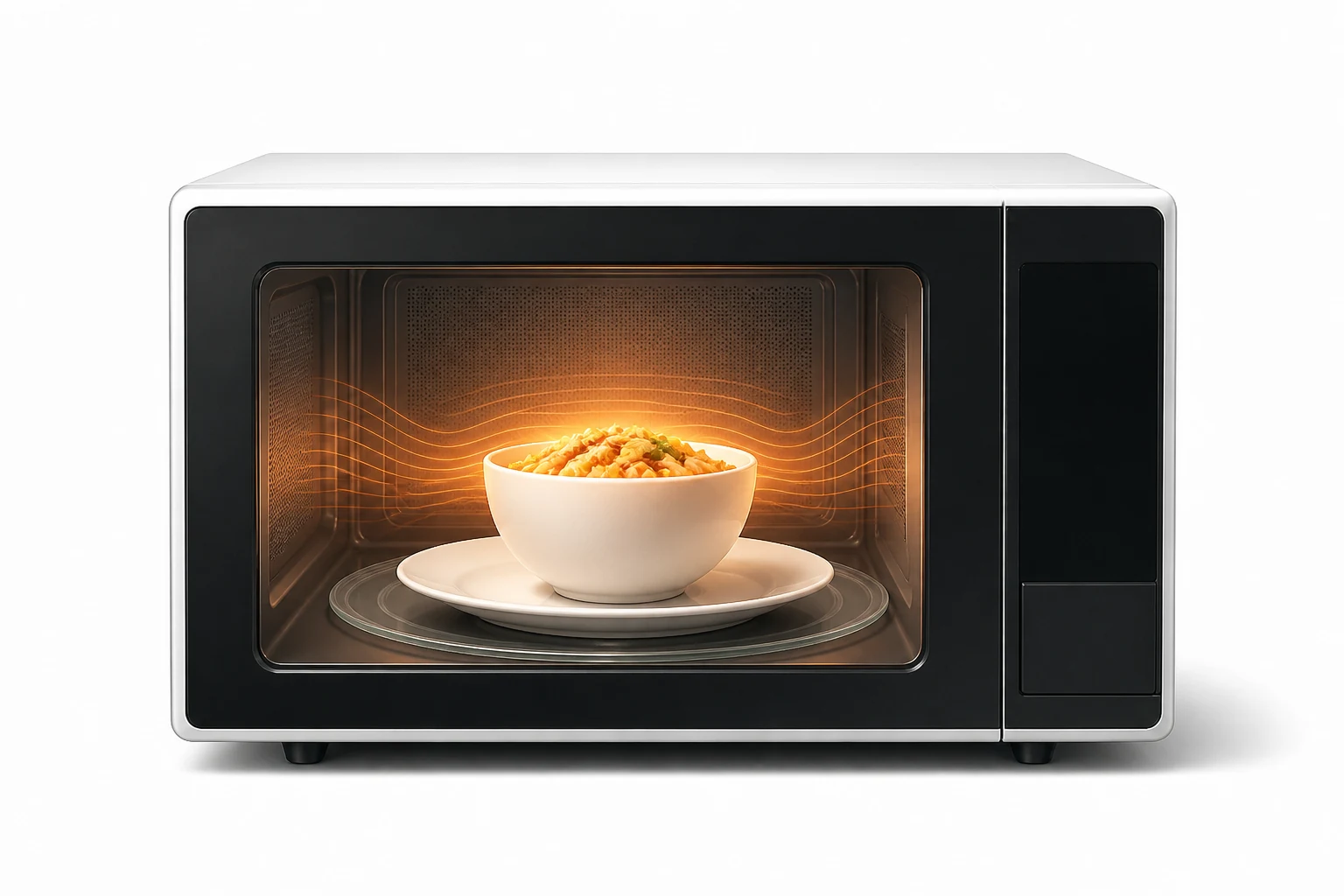
A box that heats dinner without ever directly touching it. Pull a dish out of the microwave and the food inside is scalding, but the plate underneath is often only warm - heated secondhand, almost as an afterthought. It is a strange kind of selective cooking, as if the microwave had specifically chosen to ignore the ceramic and go straight for the lasagna. The answer involves water molecules being shaken violently, a very specific kind of radiation, and why ceramic plates mostly get a free pass.
Quick answer
Microwaves heat food because they specifically excite water molecules, causing them to vibrate and generate heat through friction, while most plates contain very little water and so absorb far less microwave energy directly. The plate does get hot eventually - but only because the food sitting on it transfers heat into it, not because the microwave is heating the plate itself.
The mystery
The answer involves water molecules being shaken violently, a very specific kind of radiation, and why ceramic plates mostly get a free pass.
The short answer
Microwaves heat food because they specifically excite water molecules, causing them to vibrate and generate heat through friction, while most plates contain very little water and so absorb far less microwave energy directly.
The twist
The plate does get hot eventually - but only because the food sitting on it transfers heat into it, not because the microwave is heating the plate itself.
Common mistake
A common belief is that microwaves penetrate deep into food and cook the center before the surface.
Everyday Science
Metal reflects microwaves and can concentrate electrical charge at sharp edges, creating sparks.
The accidental inventor
An American engineer who discovered microwave cooking in 1945 after a radar-related microwave melted a chocolate bar in his pocket.
Related questions
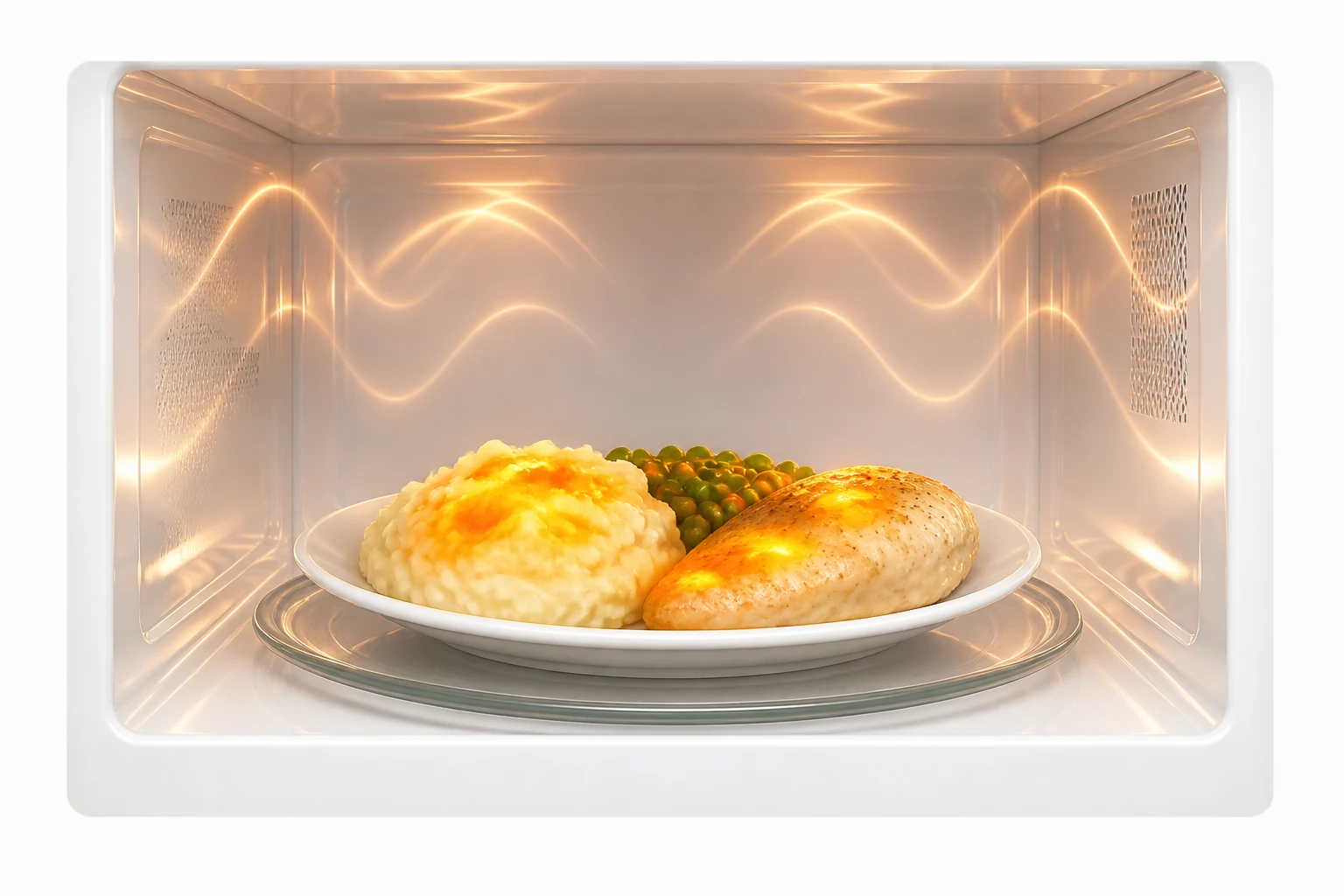
Standing wave patterns inside the oven create hot and cold spots, which turntables help reduce.
Where similar selective heating applies
These bags often include materials specifically designed to absorb microwaves and generate extra heat for popping.
Where similar selective heating applies
These are specifically engineered from materials with minimal microwave absorption to avoid overheating.
Don't microwaves cook food from the inside out?
Microwaves typically penetrate only a few centimeters; thicker foods cook mainly from the outside in, with heat spreading inward via conduction afterward.
Continue learning
Everyday Science
Another familiar question explained by simple physics.

Everyday Science
Another familiar question explained by simple physics.
Everyday Science
Another familiar question explained by simple physics.