Everyday Science

Why Does a Soccer Ball Curve?

The physics behind the free kick that bends impossibly around a wall of defenders. A perfectly struck free kick seems to defy belief: the ball sails wide of the goal, curves sharply in midair, and somehow ends up in the back of the net. Defenders watch it happen and still cannot quite explain it. Physicists, fortunately, can. The answer involves spin, air pressure differences, and a phenomenon named after a 19th-century German physicist who never once kicked a soccer ball professionally.

Quick answer

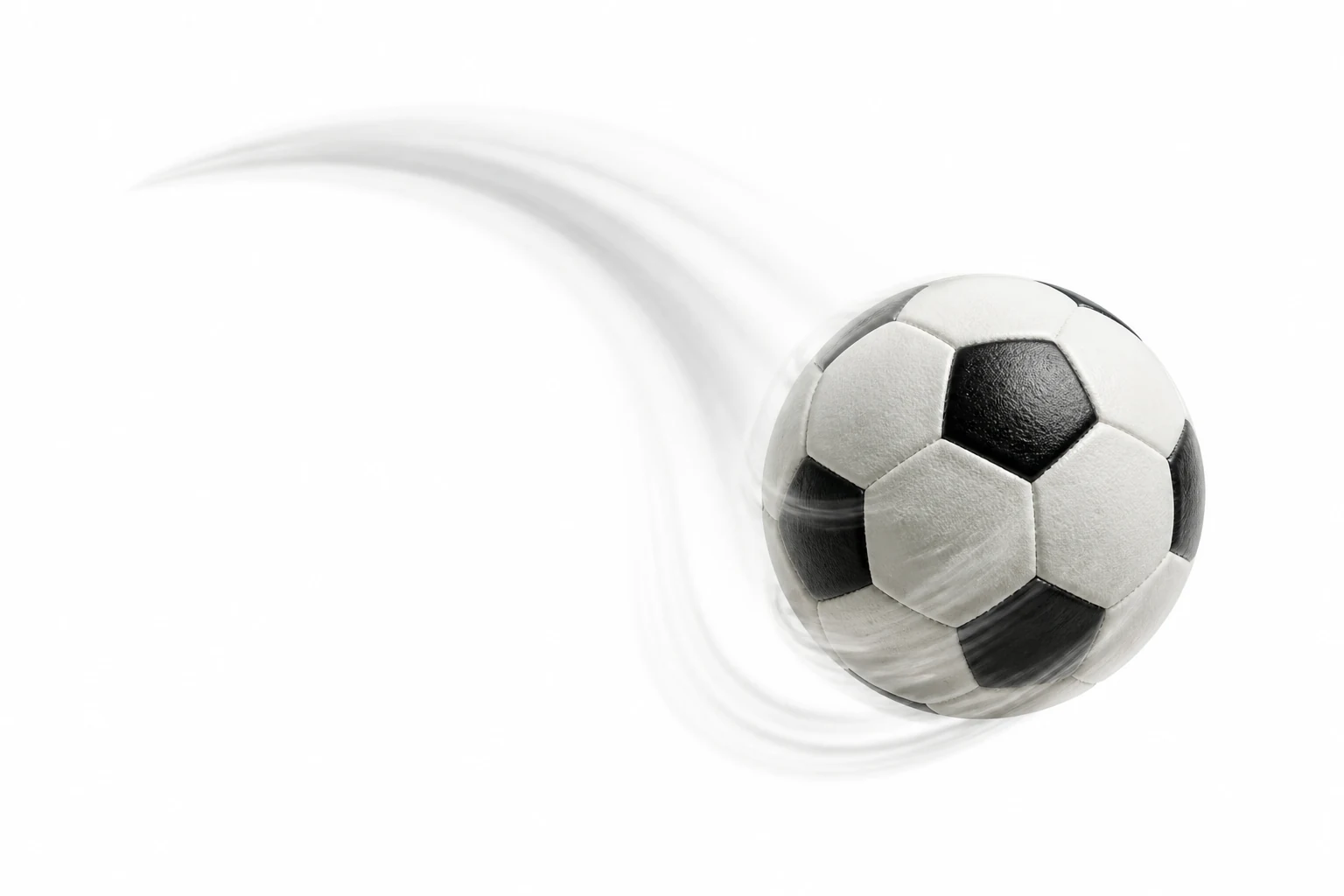
A soccer ball curves because spin imparted by the kicker creates unequal air pressure on either side of the ball - a phenomenon called the Magnus effect - pushing the ball sideways into a curved flight path. The same physics that bends a free kick also explains why a poorly thrown baseball curves unpredictably, and why golf balls have dimples at all.
Why Does a Soccer Ball Curve? hero image

The mystery

The answer involves spin, air pressure differences, and a phenomenon named after a 19th-century German physicist who never once kicked a soccer ball professionally.

The short answer

A soccer ball curves because spin imparted by the kicker creates unequal air pressure on either side of the ball - a phenomenon called the Magnus effect - pushing the ball sideways into a curved flight path.

The twist

The same physics that bends a free kick also explains why a poorly thrown baseball curves unpredictably, and why golf balls have dimples at all.

Common mistake

Some assume a curving free kick is mainly the result of wind conditions on the day.

How spin bends a straight kick

A curving free kick is a direct result of how a spinning ball interacts with the air rushing around it.

Spin drags air around with it

When a ball spins, friction between its surface and the surrounding air drags a thin layer of air along with the spin, slightly speeding up airflow on one side of the ball and slowing it on the other.

This uneven airflow is the seed of the entire curving effect.

A spinning ball does not just move through air; it briefly recruits some of it as an accomplice.

Unequal pressure pushes the ball sideways

According to basic fluid dynamics, faster-moving air exerts lower pressure than slower-moving air. This pressure difference between the two sides of the spinning ball creates a net sideways force.

This sideways force, called the Magnus effect, bends the ball's path away from a straight line.

The ball curves toward lower pressure, the same way water rushes toward an open drain.

Why technique matters so much

Skilled free-kick takers strike the ball off-center with a precise combination of speed and spin, deliberately engineering exactly how much curve the Magnus effect will produce.

Too little spin and the ball flies straight; too much and the curve becomes unpredictable.

A great free kick is really a carefully engineered argument between a foot, a ball, and the air around it.

The physics of a curving kick

A short sequence of physical events bends an otherwise straight shot.

1

01. The kicker strikes off-center

An off-center strike imparts spin to the ball as it leaves the foot.

2

02. The spinning surface drags nearby air

Friction between the ball's surface and the air creates uneven airflow around it.

3

03. Air pressure becomes unequal on each side

Faster airflow on one side produces lower pressure than the slower-moving air on the other.

4

04. The pressure difference pushes the ball sideways

This net force bends the ball's trajectory into a curve as it travels toward the goal.

Why this effect has a name and a history

The phenomenon is called the Magnus effect, after German physicist Heinrich Gustav Magnus, who studied the sideways deflection of spinning projectiles in the 1850s, long before anyone applied the science to soccer.

The same effect explains curveballs in baseball, swing bowling in cricket, and the lift generated by spinning golf balls.

Surprising facts about the Magnus effect

It works in reverse for backspin
Topspin and backspin produce vertical Magnus forces, which is part of why a backspinning ball can stay in the air longer.
Golf ball dimples enhance the effect
Dimples create controlled turbulence that increases lift generated through spin, helping golf balls travel farther.
Brazilian players helped popularize the technique
The dramatic curving free kick became globally famous partly through Brazilian players' mastery of it in the 1990s and 2000s.

Isn't the curve just caused by wind?

Myth

Some assume a curving free kick is mainly the result of wind conditions on the day.

Wind is a familiar, intuitive explanation for unpredictable-looking motion through the air.

Reality

While wind can influence a ball's path, the dramatic, consistent curve of a well-struck free kick is caused primarily by spin and the Magnus effect, independent of wind.

While wind can influence a ball's path, the dramatic, consistent curve of a well-struck free kick is caused primarily by spin and the Magnus effect, independent of wind.

Where the Magnus effect shows up in other sports

Baseball curveballs
Pitchers use the same spin-based pressure difference to make a baseball drop or curve unexpectedly.
Table tennis spin shots
Players exploit the Magnus effect at small scale to make the ball dip or curve sharply after leaving the paddle.

Why this physics matters beyond sports

Understanding the Magnus effect has practical applications well beyond athletics, including the design of spinning projectiles and certain types of aircraft technology.

Some experimental aircraft designs have even used rotating cylinders to generate lift through a deliberate application of the Magnus effect.

Worth noting

A goal scored by physics

Every spectacular curving free kick is, underneath the celebration, a clean demonstration of air pressure doing exactly what physics predicts it should. Defenders build walls to block a straight shot, and physics quietly built the ball a way around them.

Quick answers

Common questions

Does ball material affect how much it curves?

Yes, a ball's surface texture and material affect how strongly air grips its surface and influences the strength of the Magnus effect.

Can any player make a ball curve, or does it take special skill?

Generating significant curve requires precise technique to impart strong, controlled spin, which is why it is considered an advanced skill.

Everyday Science

Related questions

Topspin combined with the Magnus effect generates extra downward force on the ball's path.

The physicist behind the curve

Heinrich Gustav Magnus

A 19th-century German physicist who first scientifically described the sideways force on spinning objects moving through air.

Related questions

Why do golf balls have dimples?

Dimples manage airflow turbulence to increase lift and reduce drag, helping the ball fly farther.

Where the Magnus effect shows up in other sports

Baseball curveballs

Pitchers use the same spin-based pressure difference to make a baseball drop or curve unexpectedly.

Where the Magnus effect shows up in other sports

Table tennis spin shots

Players exploit the Magnus effect at small scale to make the ball dip or curve sharply after leaving the paddle.

Isn't the curve just caused by wind?

While wind can influence a ball's path, the dramatic, consistent curve of a well-struck free kick is caused primarily by spin and the Magnus effect, independent of wind.

While wind can influence a ball's path, the dramatic, consistent curve of a well-struck free kick is caused primarily by spin and the Magnus effect, independent of wind.