1
01. Glue is applied in a mobile state
Liquid, semi-solid, or pressure-sensitive glue makes initial surface contact.
Everyday Science
The chemistry of a bond that holds the world together - and occasionally your fingers. Glue is mysterious in a specific way: it grabs onto two separate surfaces and holds them together without any obvious mechanism. No nails. No stitches. No mechanical interlocking. Something at the molecular level must be happening. And it is considerably more interesting than the word 'adhesive' suggests. The answer involves polymer chains reaching into surface pores, intermolecular forces stronger than they look, and the reason some glues work on everything while others work on almost nothing.
Quick answer
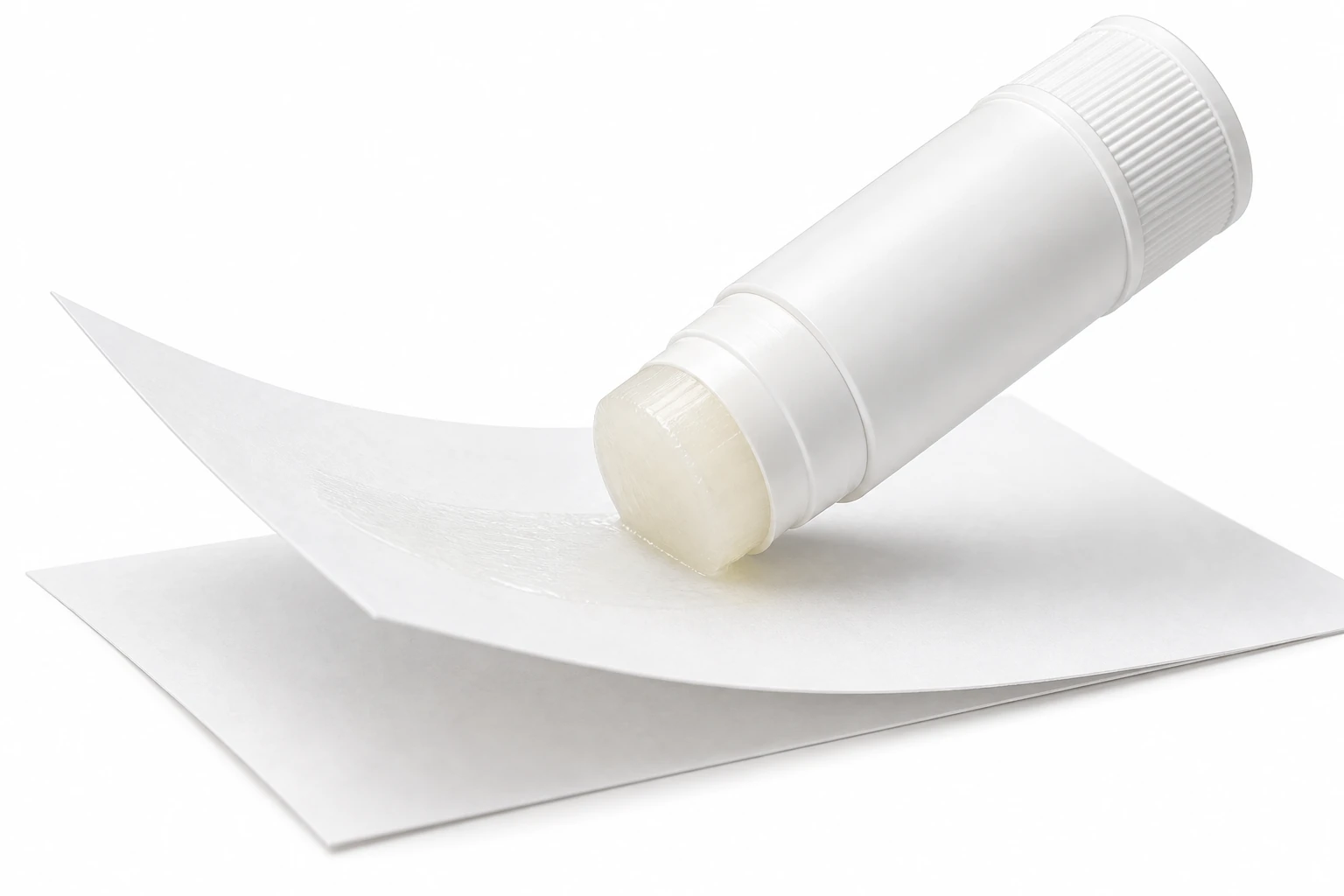
A glue stick works by flowing into the microscopic pores and irregularities of a surface before solidifying, providing mechanical anchoring through physical interlocking, while polymer chains in the glue also form weak but numerous intermolecular bonds with the surface molecules, combining to create an adhesive bond. True adhesion involves forces at the atomic and molecular level - even the stickiness of smooth, flat surfaces involves the same van der Waals forces that let geckos walk on glass.
The mystery
The answer involves polymer chains reaching into surface pores, intermolecular forces stronger than they look, and the reason some glues work on everything while others work on almost nothing.
The short answer
A glue stick works by flowing into the microscopic pores and irregularities of a surface before solidifying, providing mechanical anchoring through physical interlocking, while polymer chains in the glue also form weak but numerous intermolecular bonds with the surface molecules, combining to create an adhesive bond.
The twist
True adhesion involves forces at the atomic and molecular level - even the stickiness of smooth, flat surfaces involves the same van der Waals forces that let geckos walk on glass.
Common mistake
Many people assume bond strength comes mainly from the glue's inherent stickiness.
Everyday Science
Cyanoacrylate polymerizes rapidly when it contacts the moisture and proteins present on skin surfaces.
The invention of super glue
An American chemist who accidentally discovered cyanoacrylate superglue in 1942 while trying to make clear plastic gun sights.
Where adhesion science matters
Aircraft components are routinely bonded with structural adhesives whose science draws directly from the same molecular principles.
Where adhesion science matters
Surgical adhesives use tissue-compatible polymer chemistry to achieve bonding with wet biological surfaces.
Does stronger glue always make a stronger bond?
Bond strength depends critically on surface preparation, wetting, and the match between adhesive chemistry and surface chemistry, often more than on the adhesive's raw strength.
Continue learning