Myth vs Reality
Capping stops further drying but adds no moisture back
The cap prevents additional evaporation. To rehydrate, water must be reintroduced manually. The stick cannot recover moisture from the air inside a sealed cap.
Everyday Objects
A glue stick is basically a controlled water-delivery system, and leaving the cap off is slowly draining it.
Quick answer
Glue stick adhesive is a water-based polymer mixture. The active ingredient, usually polyvinyl alcohol or a similar compound, only works as an adhesive when it contains enough moisture. In that hydrated state it is soft, tacky, and able to bond paper fibres together. When the cap is left off, water evaporates from the exposed surface. The polymer stiffens and eventually becomes a hard, crumbly solid that no longer bonds anything. Even a capped glue stick dries slowly over months because water vapour gradually permeates through plastic packaging. The cap dramatically slows the process, but does not stop it entirely.
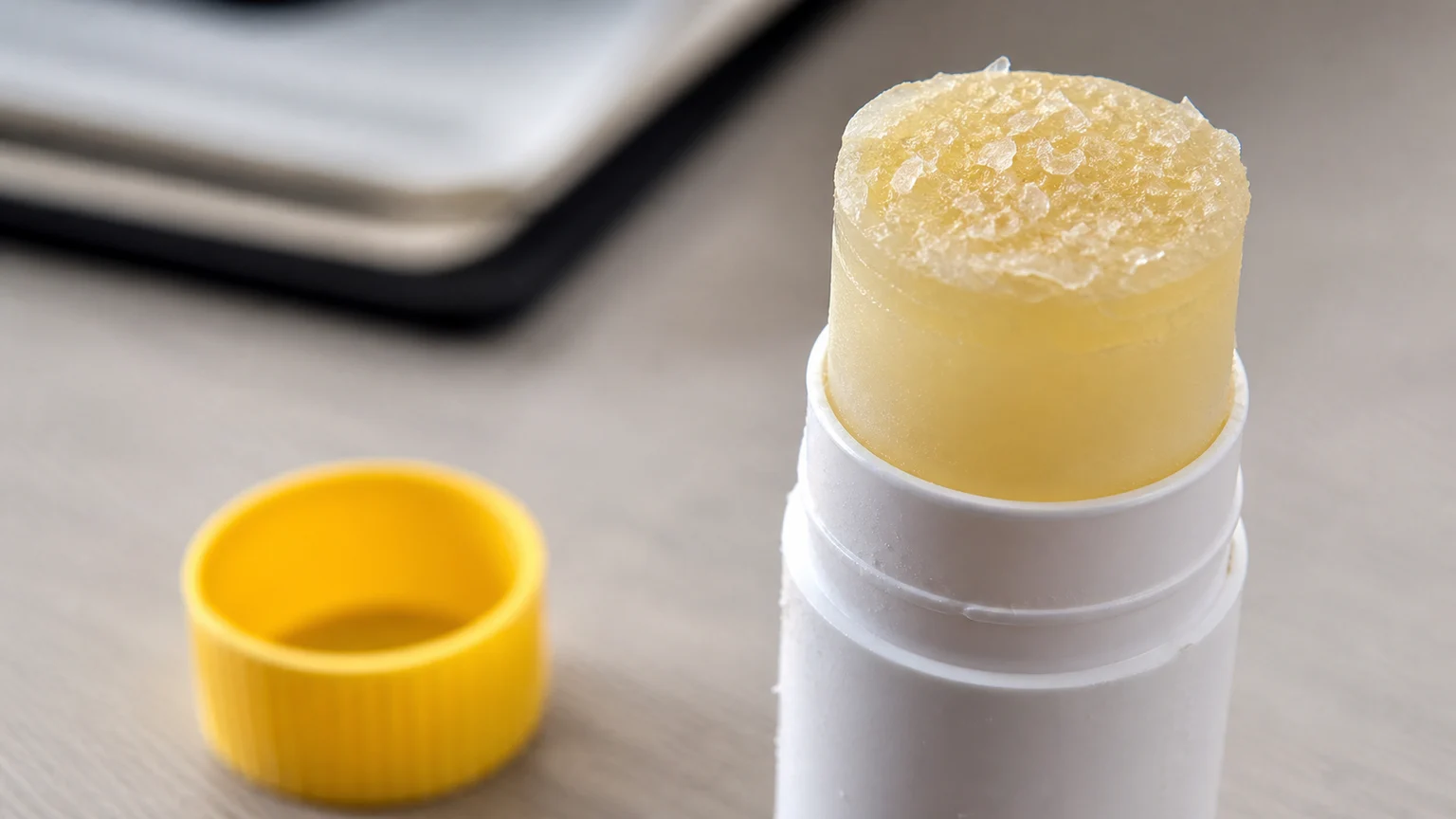
The adhesive is mostly water
A polymer dissolved in water is what makes the stick tacky. No water, no tack.
Evaporation is the mechanism
Leaving the cap off lets moisture escape rapidly, stiffening the polymer into a non-bonding solid.
Capped sticks still dry, eventually
Water vapour slowly permeates through the plastic tube. Most glue sticks have a shelf life of one to three years.
Myth: a dried stick is ruined
Mildly dried sticks can sometimes be partially restored by introducing a small amount of water and recapping.
Everyday Objects
Briefly dip the end of the stick in water, replace the cap, and leave it for a few hours. The adhesive may rehydrate enough to work again. Severely dried sticks with cracked, crumbly surfaces are generally too far gone.
Myth vs Reality
The cap prevents additional evaporation. To rehydrate, water must be reintroduced manually. The stick cannot recover moisture from the air inside a sealed cap.
Continue learning
Everyday Objects
Both explain how everyday stationery and office products fail at a material level.
Everyday Objects
Both involve stationery and craft tools designed around the fact that the working surface degrades.
Everyday Objects
Both explain the chemistry of common adhesive and writing products.