Myth vs Reality
Brief exposure in ventilated spaces is generally safe
Short, occasional use in a ventilated room poses minimal risk for most people. The concern is prolonged or deliberate inhalation of concentrated fumes in enclosed spaces.
Everyday Objects
That sharp chemical smell is not a side effect, it is the actual mechanism that makes the marker permanent.
Quick answer
Permanent marker ink is dissolved in chemical solvents, typically xylene, toluene, or similar compounds. These solvents are what carry the pigment onto the surface and then rapidly evaporate, leaving the pigment behind. The strong smell is those solvents evaporating. They are volatile organic compounds (VOCs), which means they turn to vapour at room temperature and travel easily through air to your nose. The solvent is also why the ink is permanent. It dissolves slightly into the surface, whether plastic, glass, or fabric, allowing the pigment to bond at a deeper level than water-based inks do. Water-based markers smell mild because water evaporates without producing a strong VOC signature.
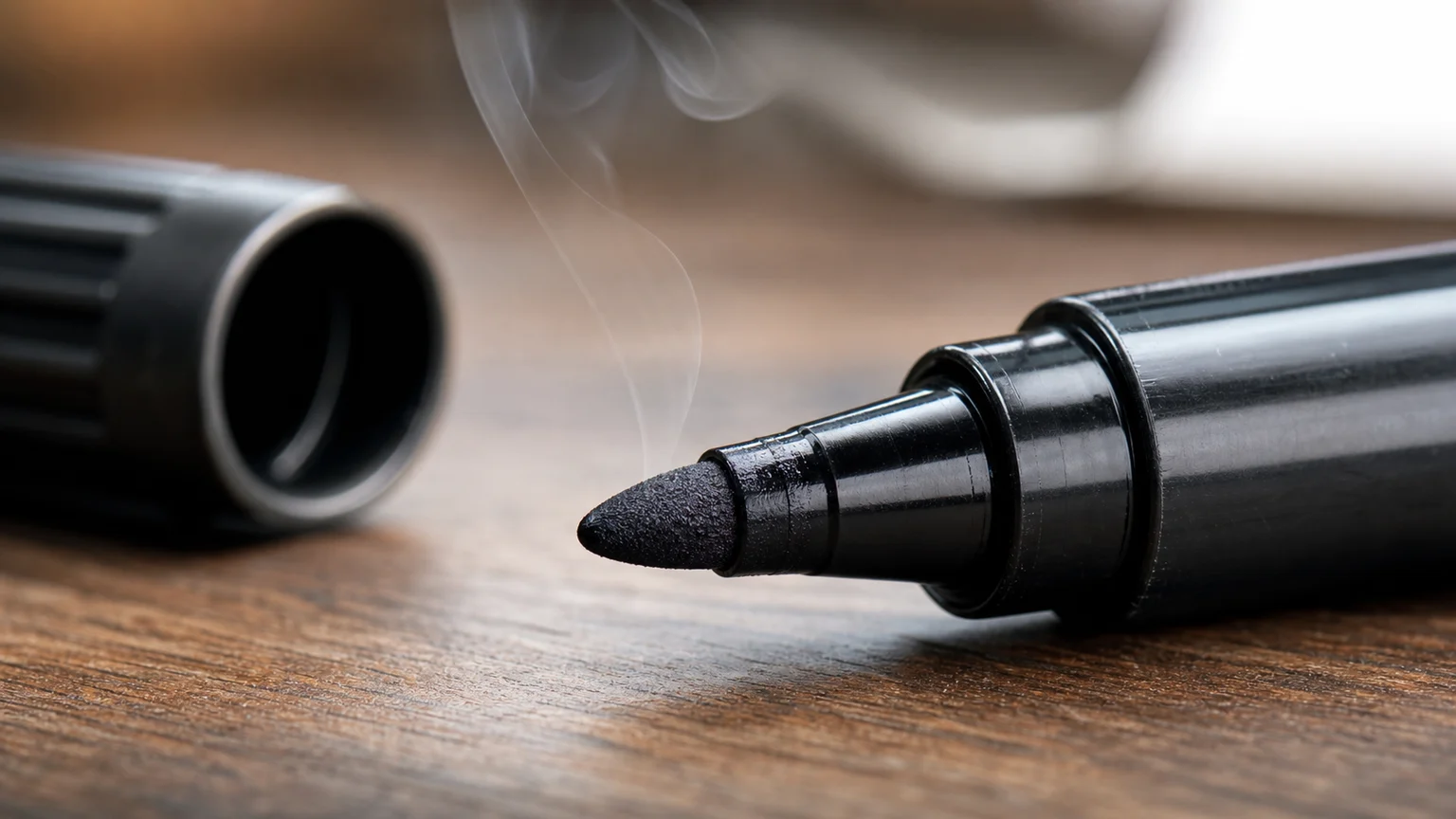
The smell is evaporating solvent
Compounds like xylene and toluene are volatile, they turn to vapour at room temperature and reach the nose easily.
The solvent is what makes it permanent
Organic solvents partially dissolve surfaces, letting pigment bond at a deeper level than water-based ink.
Newer markers use milder solvents
Some modern permanent markers use alcohol-based solvents, which are less toxic and less pungent than xylene or toluene.
Myth: the smell means the marker is toxic to use occasionally
Brief, well-ventilated exposure to permanent marker fumes is generally harmless. Prolonged, concentrated inhalation in enclosed spaces is the concern.
Everyday Objects
Opening a window or working near airflow significantly reduces the concentration of VOCs around you. The smell dissipating quickly is a sign the solvent is evaporating into a larger air volume rather than building up.
Myth vs Reality
Short, occasional use in a ventilated room poses minimal risk for most people. The concern is prolonged or deliberate inhalation of concentrated fumes in enclosed spaces.
Continue learning
Everyday Objects
Both explain the chemistry of common adhesive and writing products.

Everyday Objects
Both involve the interaction of marker ink chemistry with surfaces.

Everyday Objects
Both explain chemistry most people notice but never think to question.