Animal Facts

How Long Do Horses Live?

A guide to horse years, from an eleven-month pregnancy to a horse that reportedly made it to sixty-two. There is a particular kind of person who, upon learning a horse can live into its thirties, immediately starts recalculating everything they thought they knew about horse years. This is a reasonable reaction. Horses live a surprisingly long time, and they take their time arriving, too. An eleven-month pregnancy, a lifespan that can stretch past three decades, and, in one extraordinary case, a horse that allegedly outlived several human generations. The story runs from a famously long pregnancy to a nineteenth-century horse whose age nobody can quite agree on, but everyone agrees was absurd.

Quick answer

Most horses live between 25 and 30 years, and their pregnancies last roughly 11 months, or about 340 days on average. One horse, known as Old Billy, was reportedly still alive at 62 — more than double the typical lifespan, and long enough to have technically outlived some of the humans who bred him.
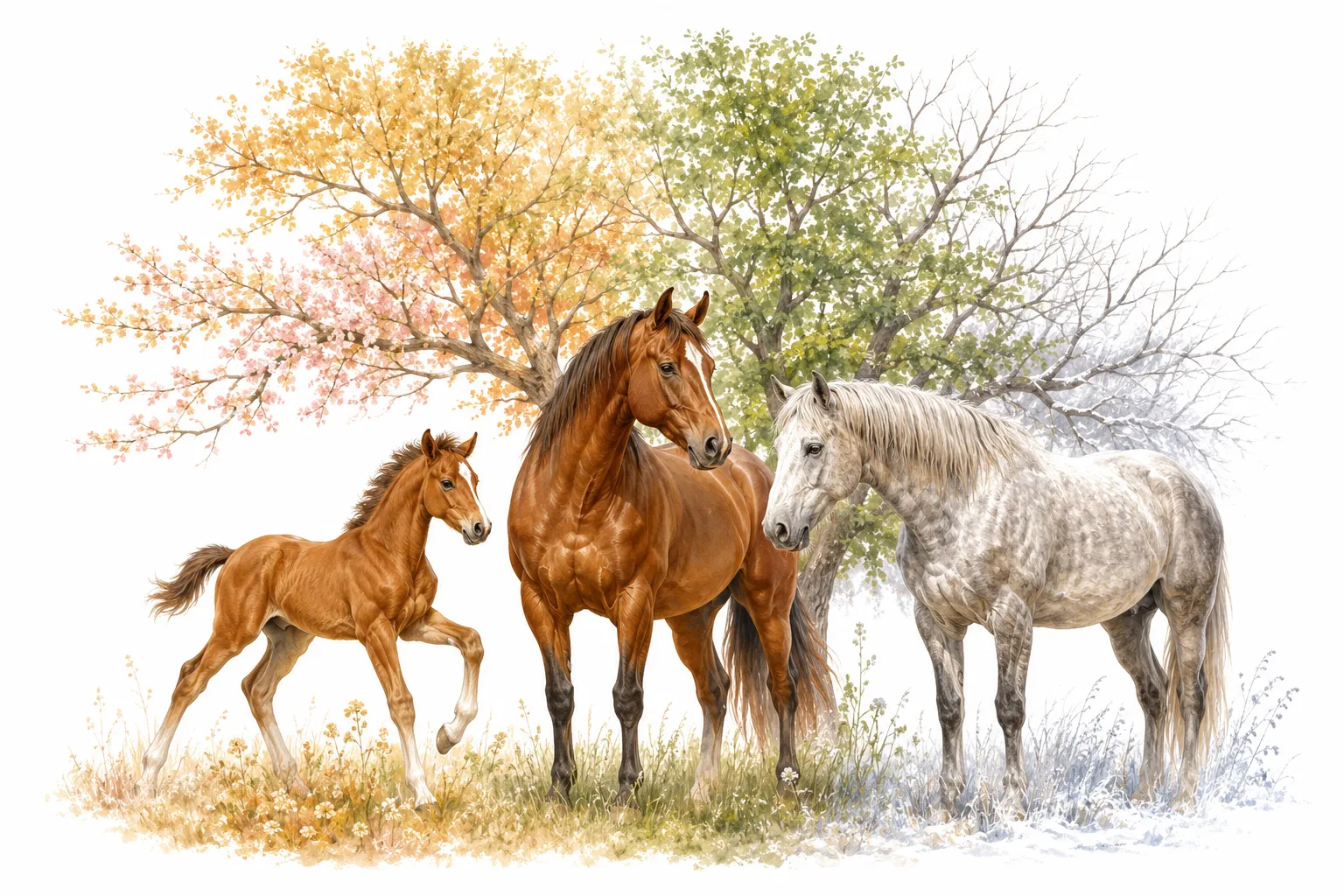
How Long Do Horses Live? hero image

The mystery

The story runs from a famously long pregnancy to a nineteenth-century horse whose age nobody can quite agree on, but everyone agrees was absurd.

The short answer

Most horses live between 25 and 30 years, and their pregnancies last roughly 11 months, or about 340 days on average.

The twist

One horse, known as Old Billy, was reportedly still alive at 62 — more than double the typical lifespan, and long enough to have technically outlived some of the humans who bred him.

Common mistake

Many assume a horse's lifespan is fairly fixed across breeds, similar to how people think of general 'dog lifespan.'

A life measured in decades, not years

Horses occupy an odd space in the animal kingdom: too big to be considered small livestock, too long-lived to think of casually the way you might a family dog.

Eleven months of waiting

Horse pregnancies, called gestation, last around 340 days — roughly 11 months, noticeably longer than a human's nine. Breeders often aim for foals to arrive in spring, timing the breeding season nearly a year in advance.

A newborn foal is remarkably capable for something so recently arrived: most stand and attempt to walk within an hour or two of birth, a survival trait inherited from millennia of needing to keep up with the herd.

A foal spends almost a year in the womb and then, within hours, is expected to walk like it's had practice.

The typical horse lifespan

Domestic horses generally live between 25 and 30 years, depending on breed, care, and how hard they've worked over their lifetime. Ponies, somewhat unfairly given their size, often live even longer than full-sized horses.

Veterinary care plays an enormous role here: horses that receive regular dental checkups, proper nutrition, and attention to joint health tend to live comfortably well into their late twenties.

A well-cared-for horse can live long enough to see an owner's child grow from toddler to teenager.

The horse who broke the curve

Old Billy, a barge horse born in England in the late 1700s, is often cited as the oldest horse on record, reportedly reaching 62 years old before his death in 1822. His skull is still displayed at a museum in Manchester.

Records from that era are imperfect, and some historians treat the exact number skeptically, but even generous downward revisions still leave Old Billy remarkably old for his species.

Old Billy was old enough that if horses kept calendars, he'd have needed a second one.

What actually determines how long a horse lives

Longevity in horses isn't random. A handful of factors do most of the work.

1

01. Breed and size set a baseline

Smaller breeds and ponies tend to outlive larger horses, likely because bigger bodies put more strain on the heart and joints over a long life.

2

02. Dental health decides how well they eat

Horses' teeth grow continuously and wear down over decades. Once teeth wear unevenly or fail, a horse struggles to chew properly, which can quietly undermine its health for years.

3

03. Workload and care add or subtract years

Horses that are worked hard without adequate recovery, or that receive inconsistent veterinary care, tend to develop joint and organ problems earlier than those raised with steady, attentive management.

Why horse years don't map neatly onto human years

Unlike the old myth of multiplying dog years by seven, horses don't age at a constant rate relative to humans. A one-year-old horse is already roughly equivalent to a human teenager, while the pace of aging slows considerably in the following years.

This uneven scaling is why a 20-year-old horse is often still active and healthy, even though the number sounds dramatic to owners more used to thinking in dog years.

Surprising horse life-cycle facts

Foals can be up to 90% of their adult height at birth
Long legs are one of the first things a foal grows, since being able to move quickly with the herd matters more, early on, than overall body size.
Mares can be pregnant and nursing at the same time
It's common for a mare to conceive again within weeks of giving birth, meaning she may be nursing one foal while carrying the next.

Do all horse breeds live about the same length of time?

Myth

Many assume a horse's lifespan is fairly fixed across breeds, similar to how people think of general 'dog lifespan.'

Because most public figures for horse lifespan get quoted as a single range without breed context, the variation between breeds rarely makes it into casual conversation.

Reality

Lifespan varies meaningfully by breed and size, with smaller ponies often outliving larger draft horses by several years on average.

Lifespan varies meaningfully by breed and size, with smaller ponies often outliving larger draft horses by several years on average.

Where lifespan and pregnancy facts matter most

Breeding program planning
Knowing the roughly 11-month gestation period lets breeders time matings precisely so foals arrive during favorable spring weather.
Retirement and end-of-life care
Understanding typical horse lifespans helps owners plan appropriately for a horse's later years, including changes in diet, exercise, and veterinary attention.

Why these numbers matter beyond trivia

For anyone caring for or considering owning a horse, understanding realistic lifespan and pregnancy timelines is essential for responsible, long-term planning — a horse is a multi-decade commitment, not a short-term one.

Underestimating a horse's lifespan has historically led to inadequate long-term care planning, while overestimating pregnancy timing can catch inexperienced breeders off guard.

Worth noting

A long life, carefully timed

From an eleven-month wait before birth to a life that can stretch past a quarter-century, horses operate on a timeline that rewards patience — both theirs and their caretakers'. Horses take nearly a year to arrive and, if all goes well, decades to say goodbye.

Quick answers

Common questions

How many foals can a mare have in her lifetime?

A healthy mare can typically produce one foal per year during her breeding years, often totaling somewhere between 10 and 15 foals over a lifetime, though this varies widely.

Animal Facts

Related questions

Most veterinarians consider horses senior starting around age 15 to 18, when metabolism, joint health, and dental needs begin shifting noticeably.

The museum that still holds Old Billy's skull

Manchester Museum

The institution that has preserved the skull long attributed to Old Billy, the barge horse whose reported 62-year lifespan remains one of the most cited (if debated) records in equine history.

Where lifespan and pregnancy facts matter most

Breeding program planning

Knowing the roughly 11-month gestation period lets breeders time matings precisely so foals arrive during favorable spring weather.

Where lifespan and pregnancy facts matter most

Retirement and end-of-life care

Understanding typical horse lifespans helps owners plan appropriately for a horse's later years, including changes in diet, exercise, and veterinary attention.

Do all horse breeds live about the same length of time?

Lifespan varies meaningfully by breed and size, with smaller ponies often outliving larger draft horses by several years on average.

Lifespan varies meaningfully by breed and size, with smaller ponies often outliving larger draft horses by several years on average.