Quick Facts
Quick Facts
Spartacus was a Thracian who had served as a soldier in the Roman army.
He was enslaved and trained as a gladiator.
He escaped from a gladiatorial school in Capua in 73 BC.
His army grew to perhaps 70,000 escaped slaves.
He defeated several Roman armies before being crushed by Crassus.
Visual answer
The Third Servile War
The slave rebellion led by Spartacus.
73 BC
Spartacus and about 70 gladiators escape from a school in Capua.
73-72 BC
The rebellion grows. Spartacus defeats several Roman armies sent to stop him.
72 BC
Spartacus's army marches north toward the Alps. The plan is to escape Italy.
71 BC
Spartacus turns back. The reasons are unclear. He is trapped by Crassus.
71 BC
Final battle. Spartacus is killed. His army is destroyed. 6,000 survivors are crucified along the Appian Way.
Story in brief
Story in Brief
73 BC
Spartacus and about 70 gladiators escape from a training school in Capua. They seize weapons and flee to Mount Vesuvius.
The rebellion begins with a handful of men. It will grow into an army.
73-72 BC
The rebellion grows. Thousands of escaped slaves join Spartacus. He defeats Roman armies sent to stop him.
72 BC
Spartacus's army marches north toward the Alps. They plan to escape Italy and return to their homelands.
72 BC
For unknown reasons, Spartacus turns back. He marches south again.
This decision is fatal. He is now trapped in Italy.
71 BC
The Roman general Crassus traps Spartacus in southern Italy. A final battle is fought.
71 BC
Spartacus is killed. His body is never found. His army is destroyed. 6,000 survivors are crucified.
The rebellion is over. Rome will not face another slave rebellion on this scale.
The Story
What the Ancient Sources Say
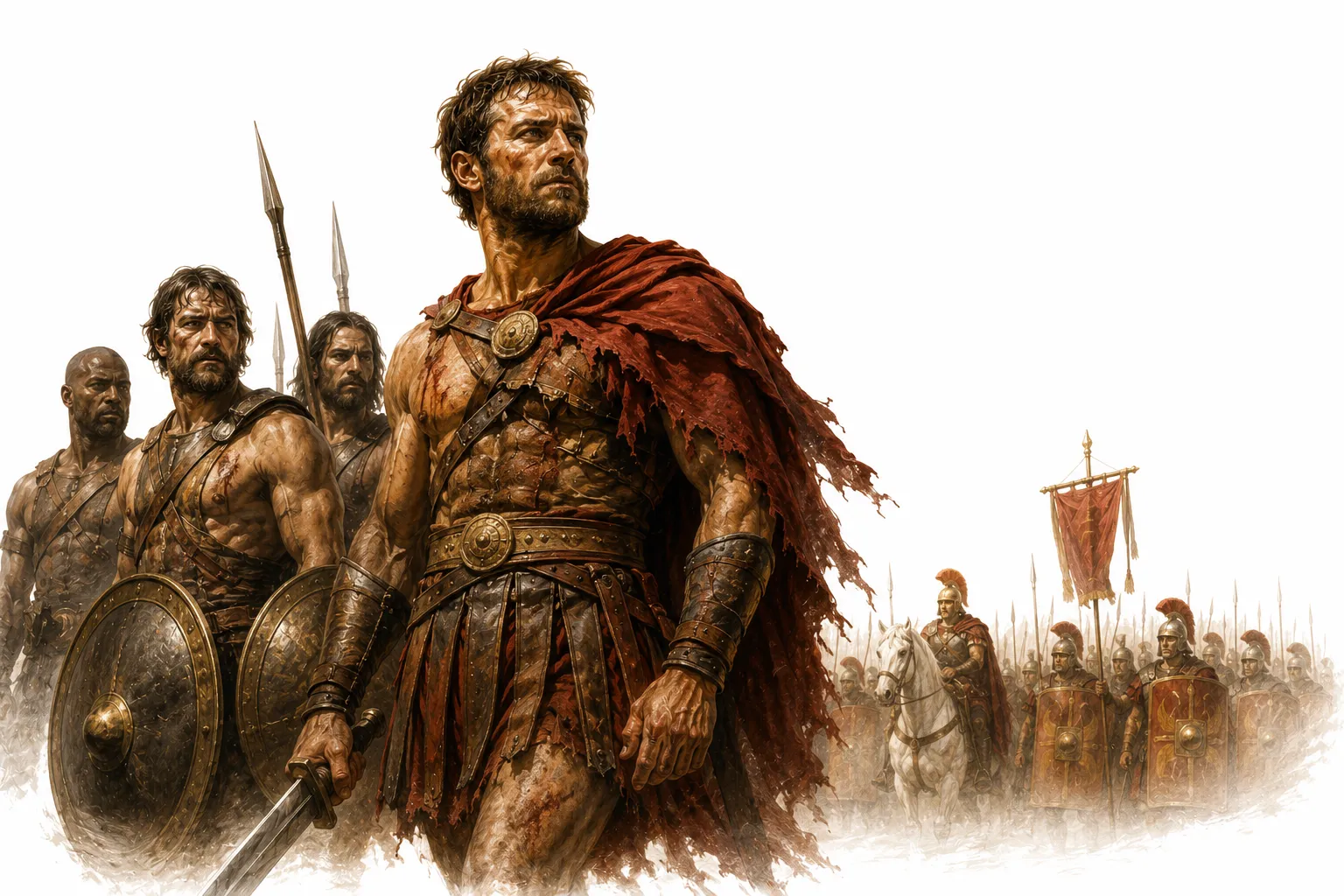
The ancient historians agree on the broad outlines. Spartacus was a Thracian. He had served as a soldier in the Roman army. He was enslaved and trained as a gladiator. In 73 BC, he and about 70 other gladiators escaped from a training school in Capua. They seized weapons and fled to Mount Vesuvius.
Other slaves joined them. The rebellion grew. Within a year, Spartacus commanded an army of perhaps 70,000 escaped slaves. He defeated Roman armies sent to stop him. He marched north toward the Alps, planning to escape Italy. Then he turned back. No one knows why.
The Roman general Crassus trapped Spartacus in southern Italy. In the final battle, Spartacus was killed. His body was never found. His army was destroyed. Six thousand survivors were crucified along the Appian Way, the road from Capua to Rome. Their bodies were left to rot. The rebellion was over.
From Plutarch
"Spartacus, a Thracian who had once fought as a soldier with the Romans, was made a prisoner and sold as a gladiator."
, Plutarch, Life of Crassus
Plutarch wrote about 150 years after the rebellion. He is our main source.
Evidence
The Case for Spartacus's Existence
Multiple ancient historians mention him by name (Plutarch, Appian, Florus).
StrongThe Third Servile War is historically documented.
StrongNo ancient source doubts his existence.
StrongHis body was never found. That is consistent with a real person.
CircumstantialKey Points
Key Points So Far
Spartacus is mentioned by multiple ancient historians.
He led a major slave rebellion from 73 to 71 BC.
His army grew to tens of thousands.
He was defeated by the Roman general Crassus.
He was killed in battle. His body was never found.
Analogy
Like a Historical Rebel Leader
The familiar part
Imagine a rebel leader in a civil war. Historians write about him. Their accounts differ on details but agree on the major events.
How it applies
That is Spartacus. The sources are thin. They disagree on details. But they agree that he existed and that he led a major rebellion. That is enough for historians.
Where the analogy breaks
Modern rebels leave video evidence. Spartacus left only written words.
Curiosity Notes
Details Most People Miss
Why this still matters
Why This Still Matters
Spartacus is still famous because he represents resistance. A slave who defied the most powerful empire in history. A man who fought for freedom and lost, but became a symbol. His story has been told for 2,000 years. It will be told for 2,000 more. The man is dead. The symbol is immortal.
Key Findings
- ✓Core findingSpartacus really existed. He is mentioned by multiple ancient historians.
- ✓Strong evidenceHe led a major slave rebellion (the Third Servile War) from 73 to 71 BC.
- ⚠Main consequenceHis army grew to tens of thousands and defeated several Roman forces.
- ✓Wider legacyHe was eventually defeated by the Roman general Crassus.
- ★Bottom lineHe was killed in battle. His body was never found.
Final insight
A Last Thought
Spartacus really existed. The evidence is clear. But the man has been buried under layers of myth. He was not the romantic hero of movies. He was a slave who fought for his own freedom, not for an idea. He lost. He died. His body was never found. That is the real story. It is less glamorous than the myth. But it is true. And truth is more important than glamour.
Quick answers
Common questions
Was Spartacus a gladiator? +
Yes. He was trained as a gladiator in Capua. He escaped from a gladiatorial school.
What happened to the survivors of Spartacus's army? +
Six thousand survivors were crucified along the Appian Way, the main road from Capua to Rome. Their bodies were left hanging as a warning.