COGNITIVE BIAS

What Is Status Quo Bias? Why Change Is So Hard

You have the same phone plan for years. A better one exists. You do not switch. Status quo bias is the cause.

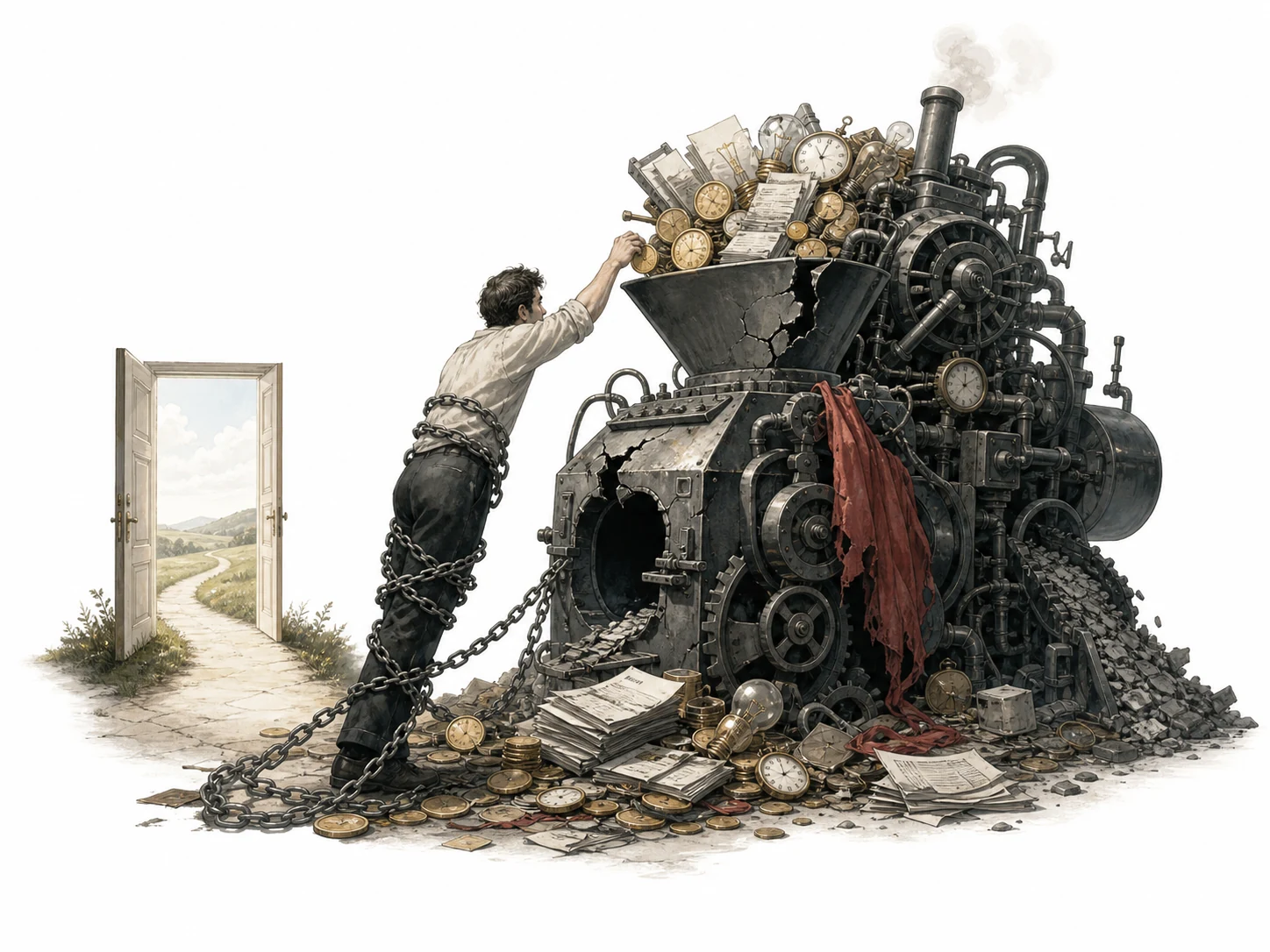
Editorial illustration of a person staying in a comfortable but outdated situation
Creator William Samuelson, Richard ZeckhauserOrigin PsychologyYear 1988Category Psychology, Economics

QUICK ANSWER

Here is the idea in plain English.

Status quo bias is the tendency to prefer the current state of affairs. It is a cognitive bias that makes change feel risky and difficult. The bias was identified by psychologists William Samuelson and Richard Zeckhauser in 1988. It explains why people stick with defaults, why change is hard, and why organizations resist innovation.

If you remember only a few things, remember these.

The basic move

Status quo bias is simple: you prefer what you know. Change feels risky. The current state feels safe. You stick with it.

Why it matters

This is not about being lazy. It is about being risk-averse. The unknown is scary. The known is comfortable.

Use it deliberately

When making a decision, ask: am I sticking with the status quo because it is good or because it is comfortable?

CORE IDEA

The concept in its simplest useful form.

What Does Status Quo Bias Mean in Simple Terms?

Status quo bias is simple: you prefer what you know. Change feels risky. The current state feels safe. You stick with it.

This is not about being lazy. It is about being risk-averse. The unknown is scary. The known is comfortable.

The problem is that the status quo is not always good. Sometimes change is needed. Status quo bias prevents it.
The small mechanism underneath the big idea.

01

The Story Behind Status Quo Bias

In 1988, psychologists William Samuelson and Richard Zeckhauser published a study. They asked people about their choices. They found that people consistently preferred the current state. They stuck with defaults.

The bias is powerful. It explains why people do not switch phone plans, why organizations resist change, and why the status quo is so hard to overcome.

Today, status quo bias is a foundational concept in psychology and economics.

02

Why Status Quo Bias Became Famous

Status quo bias became famous because it explains why change is so hard. It is a powerful force in personal decision making, organizational behavior, and public policy.

The concept is widely used in psychology and economics.

Today, status quo bias is a foundational concept in behavioral economics.

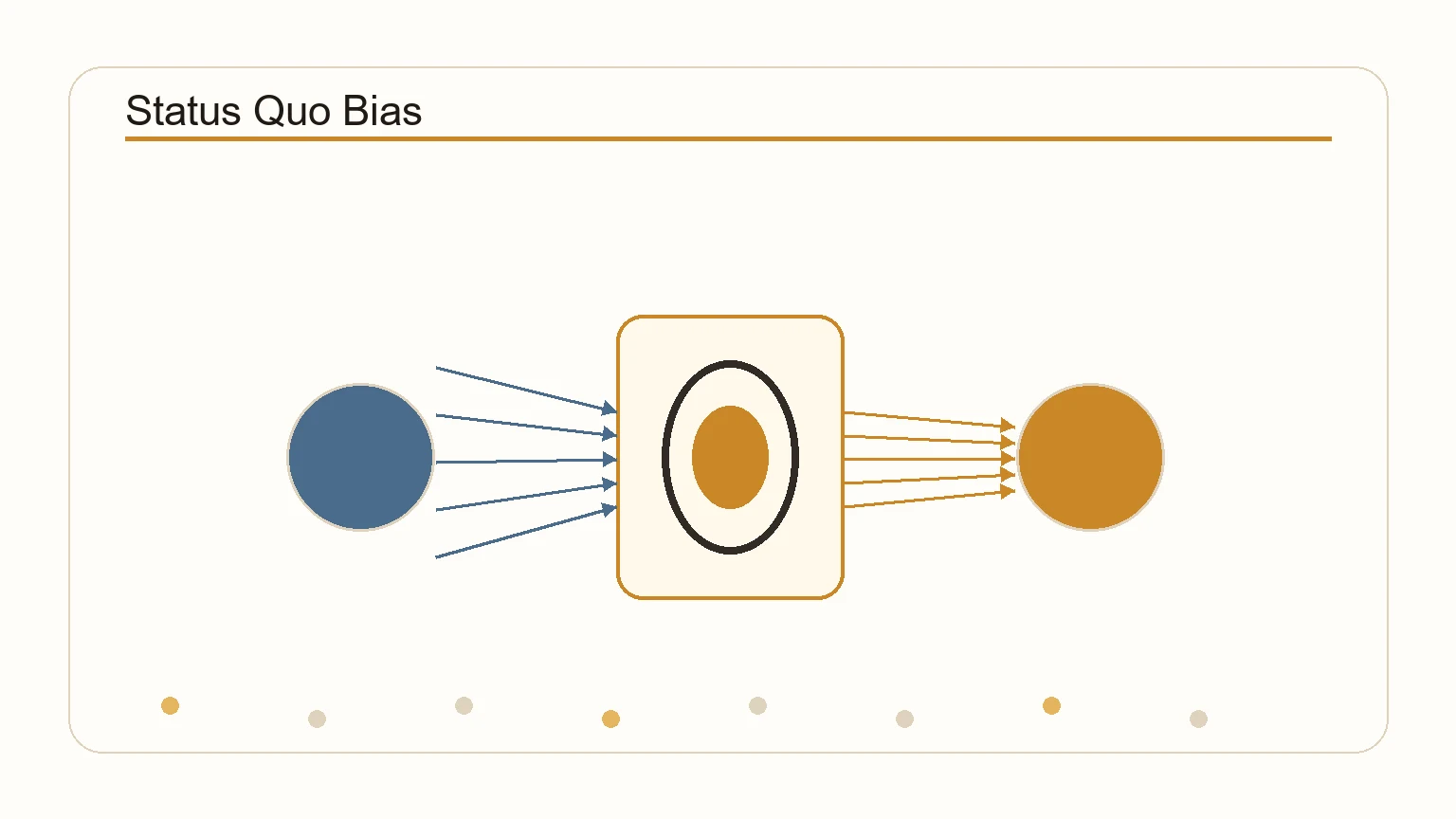
Diagram showing status quo bias and the preference for the current state
A diagram showing how people prefer the current state and resist change.

Where this idea shows up outside the textbook.

Everyday Life

You have the same phone plan for years. A better one exists. You do not switch. Status quo bias is the cause.

Business

Organizations stick with outdated processes. Change is hard. Status quo bias is the cause.

Politics

Voters prefer the current system. Change feels risky. Status quo bias is the cause.

Personal Life

You stay in a bad relationship. Change feels scary. Status quo bias is the cause.

CONCEPT MAP

Every idea has neighbors. This is where the current concept sits in the TinyThat knowledge graph.

Current concept

Status Quo Bias

People prefer the current state because change feels costly.

What people often get wrong about this idea.

Status quo bias means people are lazy.

No. It means people are risk-averse. Change is uncertain. The current state is known.

Status quo bias only applies to individuals.

No. It applies to organizations, governments, and societies. Anywhere change is needed.

You can eliminate status quo bias.

You cannot eliminate it. You can only recognize it. The goal is to be aware of the bias.

Three simple ways to apply the idea without turning it into a slogan.

1

When making a decision, ask: am I sticking with the status quo because it is good or because it is comfortable?

When making a decision, ask: am I sticking with the status quo because it is good or because it is comfortable?

2

Evaluate the status quo objectively

Evaluate the status quo objectively. Is it really the best option?

3

Be open to change

Be open to change. Change is not always risky. Sometimes it is necessary.

EXPLORE NEXT

The best next ideas to read after this one.

Quick answers to common questions.

What is status quo bias in simple terms?

You prefer what you know. Change feels risky. The current state feels safe. You stick with it.

What is an example of status quo bias?

You have the same phone plan for years. A better one exists. You do not switch. That is status quo bias.

How do you avoid status quo bias?

Evaluate the status quo objectively. Is it really the best option? Be open to change.

Why is status quo bias a problem?

It prevents change. It keeps you in bad situations. It makes you resist improvement.