BEHAVIORAL ECONOMICS

What Is the Endowment Effect? Why You Overvalue What You Own

You own a coffee mug. You would sell it for $5. Someone else would buy it for $3. The gap is the endowment effect. Ownership makes things feel more valuable.

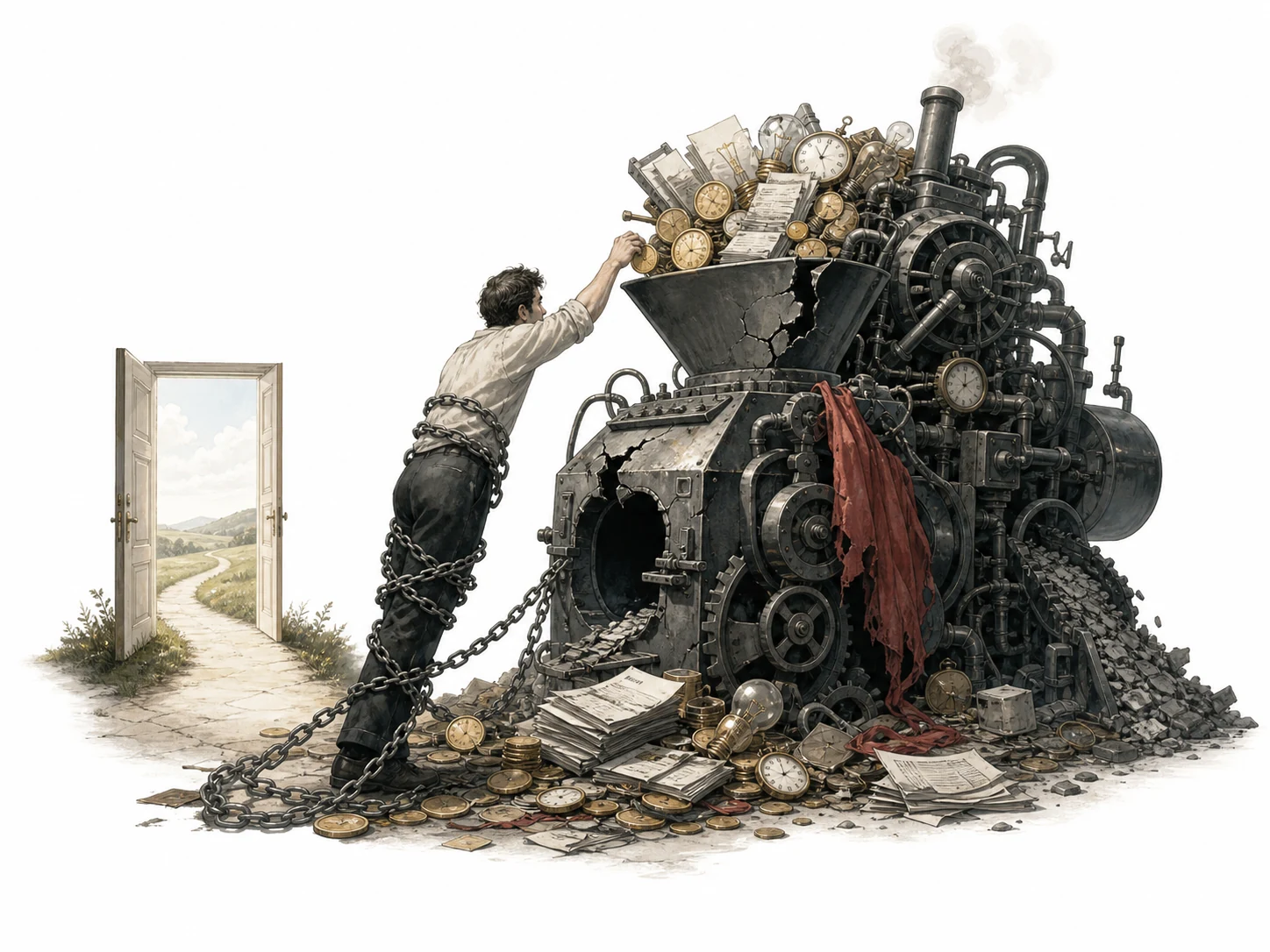
Editorial illustration of a person holding a mug and valuing it more than someone else does
Creator Richard ThalerOrigin Behavioral EconomicsYear 1980Category Psychology, Economics

QUICK ANSWER

Here is the idea in plain English.

The endowment effect is a cognitive bias where people value things more simply because they own them. It was first identified by economist Richard Thaler in 1980. The effect explains why sellers ask for more than buyers are willing to pay. It is driven by loss aversion: the pain of losing something is greater than the pleasure of gaining it. The endowment effect is why you overprice your house, your car, and your stuff.

If you remember only a few things, remember these.

The basic move

The endowment effect is simple: once you own something, you value it more. You think your car is worth more than buyers think. You think your house is worth more than the market thinks. The gap is not rational. It is psychological.

Why it matters

This happens because of loss aversion. Losing something feels worse than gaining something feels good. Once you own something, you are attached to it. You do not want to lose it. That attachment inflates its value.

Use it deliberately

When selling something, ask: is my price inflated by attachment? Be objective. The market does not care about your feelings.

CORE IDEA

The concept in its simplest useful form.

What Does the Endowment Effect Mean in Simple Terms?

The endowment effect is simple: once you own something, you value it more. You think your car is worth more than buyers think. You think your house is worth more than the market thinks. The gap is not rational. It is psychological.

This happens because of loss aversion. Losing something feels worse than gaining something feels good. Once you own something, you are attached to it. You do not want to lose it. That attachment inflates its value.

The effect applies to everything: mugs, cars, houses, and even ideas. You overvalue your own work. You overvalue your own opinions. The endowment effect is a form of self-deception.

The small mechanism underneath the big idea.

01

The Story Behind the Endowment Effect

In the 1980s, economist Richard Thaler was studying how people value things. He noticed a pattern: people who owned something demanded more to sell it than they would pay to buy it. The gap was systematic. It was not random.

Thaler called this the endowment effect. It was a challenge to classical economics. Classical economics assumed that value was objective. Thaler showed that value is subjective. Ownership changes perception.

Thaler's work on the endowment effect was part of his broader research on behavioral economics. He won the Nobel Prize in Economics in 2017. The endowment effect is one of his most famous contributions.

02

Why the Endowment Effect Became Famous

The endowment effect became famous because it challenged classical economics. It showed that people are not rational. Value is not objective. It is psychological.

The concept was popularized by Richard Thaler and Daniel Kahneman. It became a cornerstone of behavioral economics. It explains why markets are inefficient and why people make bad decisions.

Today, the endowment effect is one of the most cited concepts in behavioral economics. It is taught in business schools and applied in marketing, pricing, and negotiation.

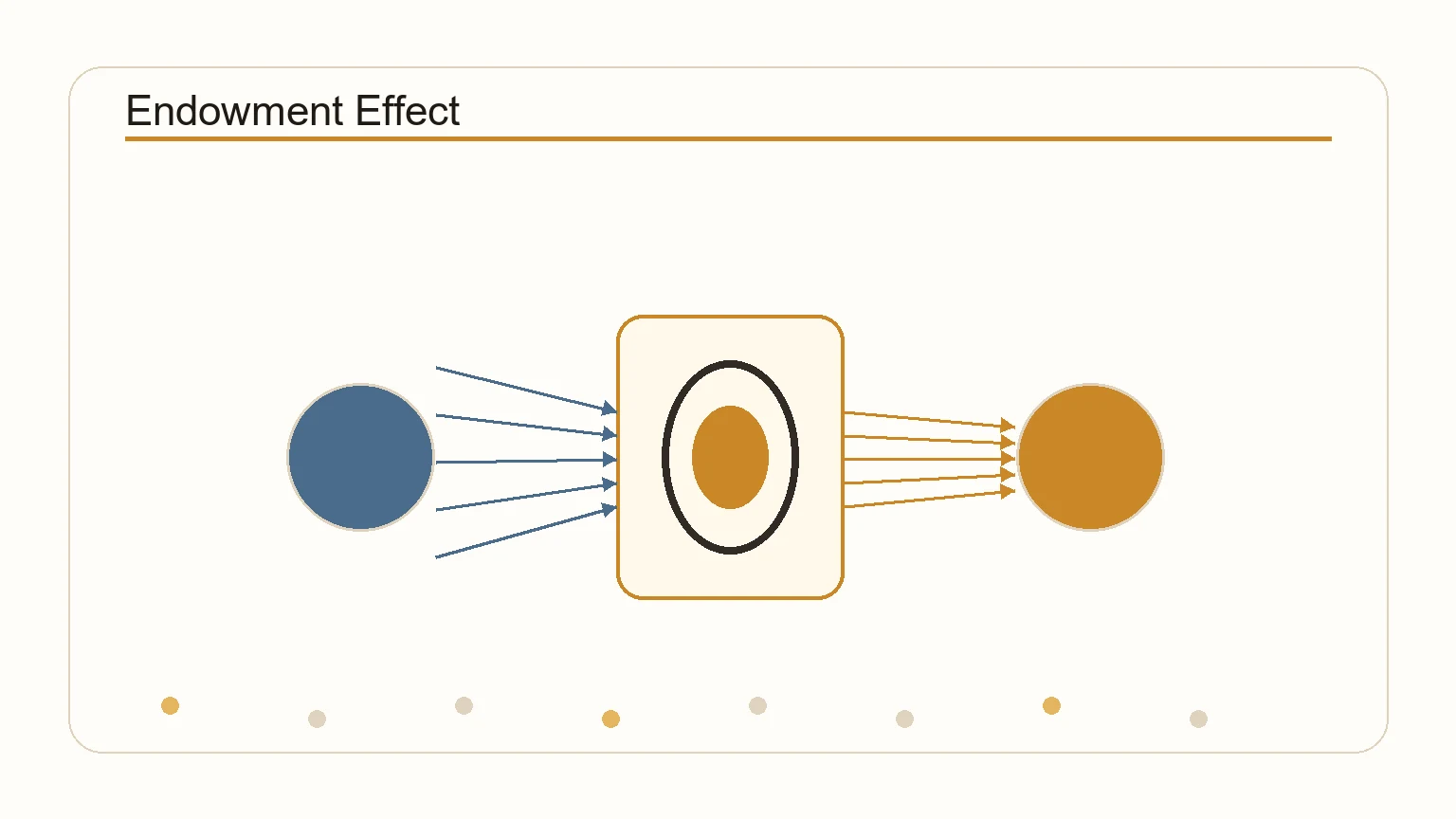
Diagram showing the gap between seller's valuation and buyer's valuation due to the endowment effect
A diagram showing the gap between the seller's price and the buyer's price. The gap is the endowment effect.

Where this idea shows up outside the textbook.

Real Estate

Homeowners overprice their houses. They are attached to them. They think their house is special. Buyers disagree. The endowment effect explains the gap.

Used Cars

Sellers overprice their used cars. They know every scratch and dent. They value the car more than buyers do. The endowment effect is the cause.

Jobs

You overvalue your own work. You think you deserve more than the market offers. The endowment effect inflates your self-assessment.

Everyday Life

You overvalue your own stuff. Your old phone is worth more to you than to anyone else. The endowment effect is the cause.

CONCEPT MAP

Every idea has neighbors. This is where the current concept sits in the TinyThat knowledge graph.

Current concept

Endowment Effect

People value something more once they own it.

What people often get wrong about this idea.

The endowment effect means people are irrational.

No. It means people are human. The effect is a bias, not a flaw. It is a feature of how the brain works.

The endowment effect only applies to material things.

No. It applies to ideas, opinions, and even relationships. You overvalue what you own, including your own thoughts.

You can eliminate the endowment effect.

You cannot eliminate it. You can only recognize it. Awareness is the first step to better decisions.

Useful ideas become dangerous when they are stretched too far.

Criticisms and Limitations of the Endowment Effect

The endowment effect is a powerful concept, but it has limitations. It does not apply to everything. Some people are less attached to their possessions. The effect varies.

The effect can be misused. Some people use it to justify overpricing. That is a misuse of the concept.

The effect is context-dependent. The endowment effect is stronger in some situations than others. The concept is a guide, not a law.

Three simple ways to apply the idea without turning it into a slogan.

1

When selling something, ask: is my price inflated by attachment? Be objective

When selling something, ask: is my price inflated by attachment? Be objective. The market does not care about your feelings.

2

When buying something, recognize the seller's attachment

When buying something, recognize the seller's attachment. They are asking more than the item is worth. Negotiate.

3

When evaluating your own work, be skeptical

When evaluating your own work, be skeptical. Your attachment inflates your assessment. Get feedback from others.

EXPLORE NEXT

The best next ideas to read after this one.

Quick answers to common questions.

What is the endowment effect in simple terms?

You value things more once you own them. Your car is worth more to you than to buyers. Your house is worth more to you than to the market.

What is an example of the endowment effect?

You try to sell your car. You think it is worth $5,000. Buyers think it is worth $3,000. Ownership inflates your value.

How do you avoid the endowment effect?

Recognize that ownership changes perception. Be objective. Get feedback from others. The market does not care about your attachment.

Why is the endowment effect a problem?

It leads to overpricing, bad negotiations, and unrealistic expectations. You overvalue what you own.