Visual answer
What Produces the Growling Sound in Your Gut
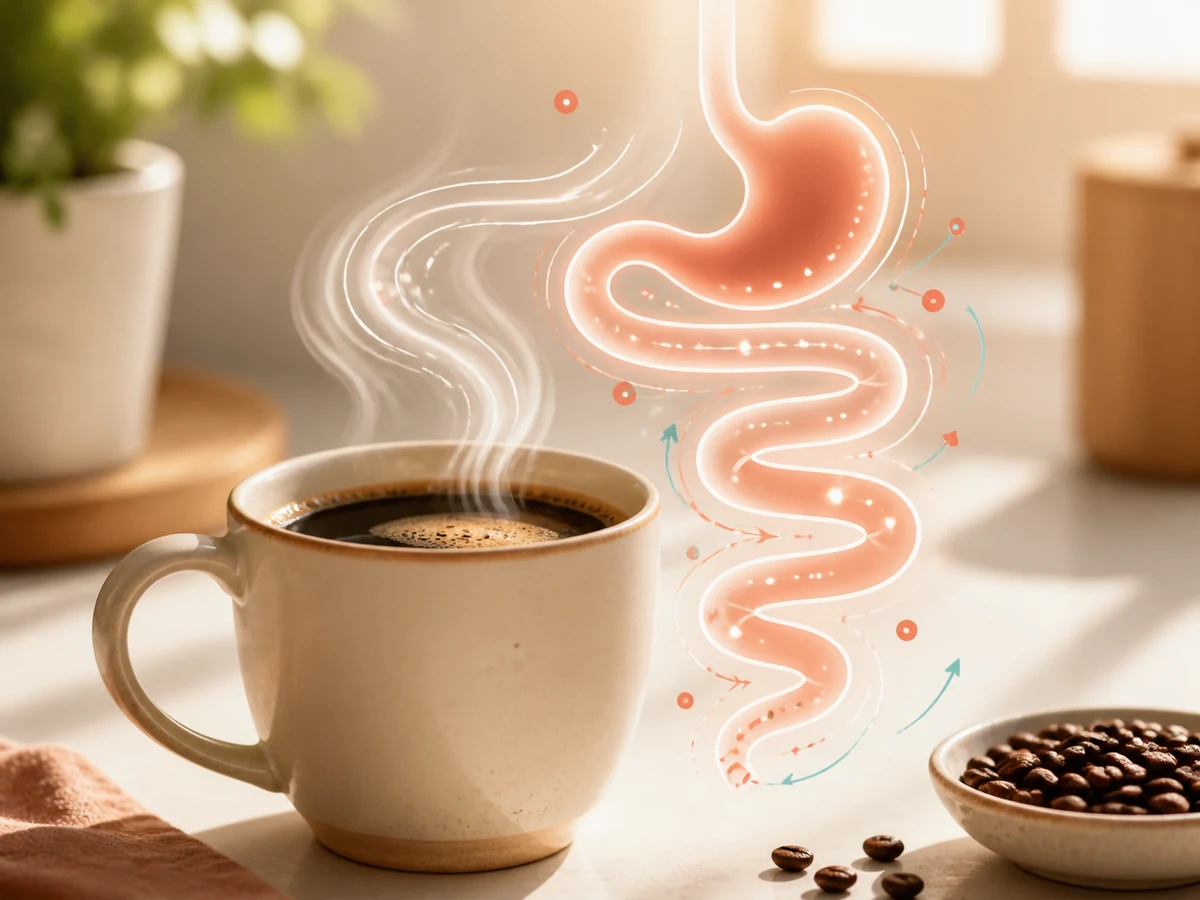
The migrating motor complex and how it produces sound when moving through an empty gut.
The gut empties between meals
After digestion is mostly complete, the stomach and small intestine are left with gas, residual fluid, and food remnants. The enteric nervous system detects the empty state.
The migrating motor complex starts
A wave of strong coordinated contractions begins in the stomach and sweeps toward the colon, occurring every 90 to 120 minutes when fasting. This is the gut's housekeeping system.
Contractions push gas and fluid turbulently
As the wave compresses liquid and gas through a partially empty tube, turbulent flow creates sound. The more gas present relative to liquid content, the louder the growl.
Signal reaches the brain as hunger
Hunger hormone ghrelin rises during fasting periods and is partly linked to MMC activity. The brain receives both hormonal and neural signals it interprets as the subjective sensation of hunger.
The cleaning cycle
Your Gut Runs a Maintenance Cycle Every 90 Minutes Between Meals
The migrating motor complex was only characterized in detail in the 1970s and 1980s. It is now understood as a key regulatory mechanism of the digestive system, clearing bacteria, cellular debris, and food remnants from the small intestine between meals. Without this cycle, bacteria would accumulate in the small intestine and cause significant digestive problems.
The MMC is suppressed the moment you eat. Even a small meal or snack resets the cycle back to its starting state. This is why frequent snacking keeps the gut in near-continuous active digestion rather than allowing the cleaning phase to run. Some researchers believe this is relevant to gut microbiome health, as the cleaning cycle helps maintain a healthy bacterial distribution.
Stress and anxiety accelerate gut motility through the vagus nerve and the gut-brain axis. This is why anxiety can cause both increased stomach sounds and urgent bathroom needs. The gut has more neurons than the spinal cord and operates as a semi-independent nervous system with strong bidirectional communication to the brain.
Myth vs reality
Myth vs Reality
What people think
Growling only means you are hungry
Stomach growling happens throughout digestion, regardless of hunger. It occurs after eating, during normal fasting cycles, and in response to stress. Most people hear gut sounds multiple times per day without consciously noticing them because they are below ambient noise levels.
What actually happens
The gut makes sounds constantly, you only notice the loud ones
The digestive system produces sound continuously. You notice borborygmi when the sound exceeds background noise, which is most likely in a quiet room, after a long fast, or when gut motility is elevated by stress or certain foods.
Quick answers
Common questions
Can you stop stomach growling? +
Eating something small stops the MMC and reduces fasting-related growling. Drinking water helps too. Slow deep breathing can reduce stress-related acceleration of gut motility. Swallowing less air by eating slowly reduces gas-related sounds.
Why is growling louder in a quiet room? +
The absolute volume of gut sounds has not changed. Background noise normally masks them. In a quiet environment the same sounds become audible relative to ambient noise.
When does stomach growling indicate a problem? +
Extremely loud, very frequent, or painful gut sounds, especially with bloating, diarrhea, or constipation, can indicate conditions like irritable bowel syndrome, food intolerances, or small intestinal bacterial overgrowth. Consult a doctor if gut sounds are accompanied by pain or significant digestive changes.
Do animals have borborygmi? +
Yes. All mammals with similar digestive anatomy produce gut sounds. Large animals like horses and cattle are routinely assessed by veterinarians who listen to gut sounds as a diagnostic indicator of digestive health.
Why does my stomach growl right after eating a big meal? +
Large meals trigger strong peristaltic contractions and often contain swallowed air. High-fiber foods, carbonated drinks, and rapidly eaten meals introduce more gas into the system, increasing both the volume and frequency of post-meal sounds.