Visual answer
How Ear Pressure Builds and Releases on a Plane
What happens between your eardrum and the Eustachian tube during a flight.
Cabin pressure drops as the plane climbs
The aircraft cabin is pressurized, but pressure still decreases as altitude increases. The air outside the eardrum has less pressure than the air trapped inside the middle ear.
Eardrum bows outward
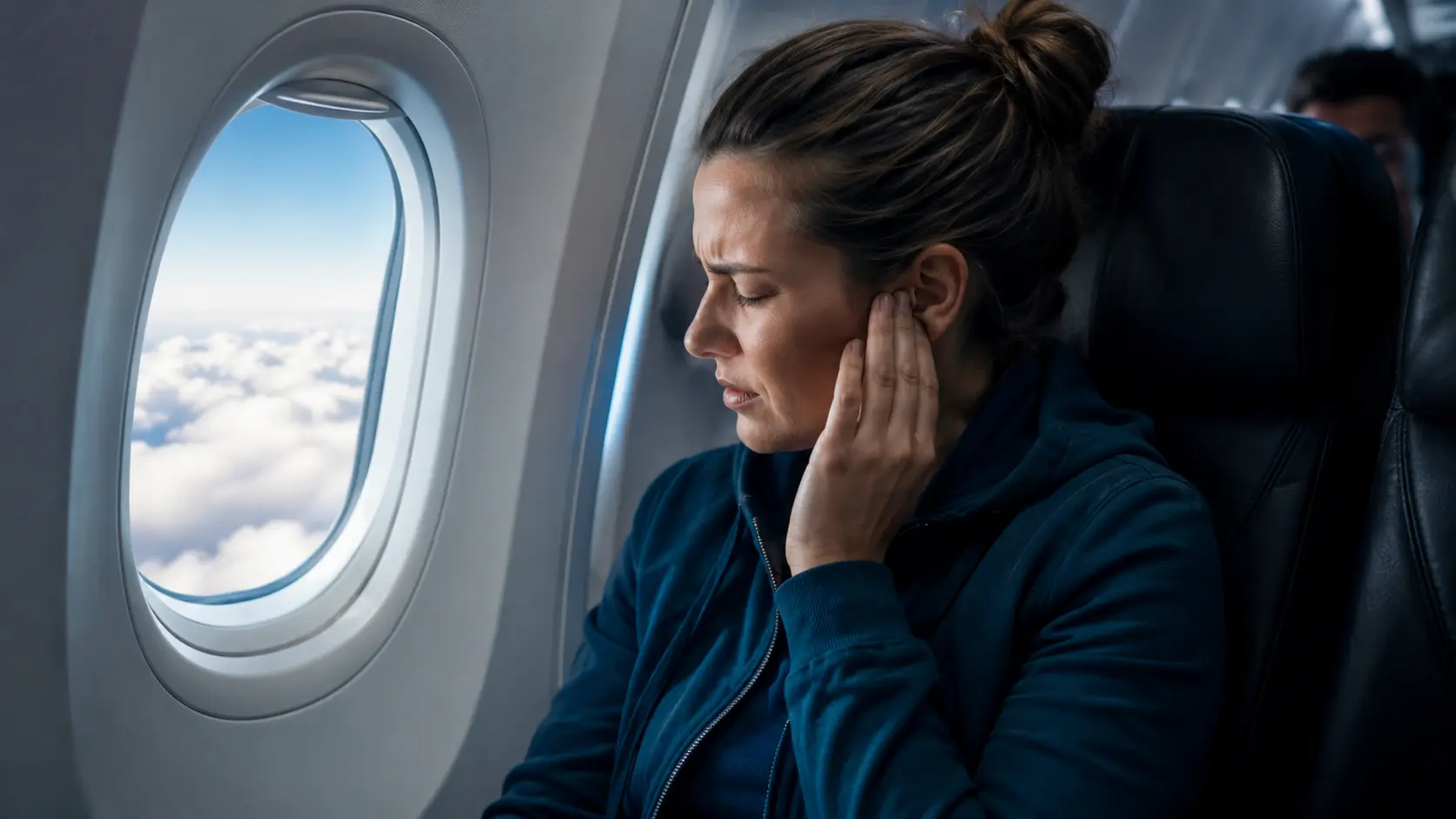
The higher-pressure air in the middle ear pushes the eardrum outward. This causes muffled hearing and a feeling of fullness or pressure in the ear.
Eustachian tube stays closed
The Eustachian tube is normally closed and only opens briefly when you swallow or yawn. If it does not open, pressure cannot equalize and discomfort builds.
Swallowing or yawning opens the tube
Muscles around the Eustachian tube pull it open when you swallow or yawn. Air flows in or out of the middle ear, pressure equalizes, and you hear and feel the pop.
Real reason
It Is a Pressure Imbalance Between Two Sides of Your Eardrum
Your middle ear is a sealed pocket of air sitting behind the eardrum. It connects to the outside world only through the Eustachian tube, a narrow passage that runs down to the back of your nose and throat. Under normal conditions, this tube opens briefly every time you swallow, keeping pressure on both sides of the eardrum equal. You never notice it.
On a plane, the cabin pressure changes far faster than it does at ground level. During ascent, cabin pressure decreases. During descent, it increases again. When these changes happen faster than your Eustachian tube naturally compensates for, a pressure gap builds up across the eardrum. The eardrum stretches in one direction, which is where the muffled hearing and discomfort come from.
Swallowing, yawning, or chewing forces the muscles around the Eustachian tube to pull it open. This allows a small burst of air to move in or out of the middle ear, equalizing the pressure. That moment of equalization is the pop. Descent is usually worse than ascent because the rising cabin pressure actively pushes against the tube from the outside, making it harder to open passively.
Myth vs reality
Myth vs Reality
What people think
The pop means something in your ear snapped or broke
Nothing breaks or tears when your ear pops. The sound and sensation come entirely from air rushing through a narrow tube. It is the same mechanism as any pressurized container equalizing, just inside your head.
What actually happens
The pop is just a pressure valve opening
The Eustachian tube opens, air moves rapidly through it to fill the pressure gap, and the eardrum returns to its neutral position. The pop is the sound of that air movement. It is harmless and means the system is working correctly.
Equalization methods
Ways to Equalize Ear Pressure on a Plane
Swallowing or yawning
Opens the Eustachian tube naturally and works well during gradual pressure changes
Chewing gum
Keeps you swallowing regularly, making it easier to stay ahead of pressure changes during descent
Valsalva maneuver
Pinch your nose, close your mouth, and gently blow as if blowing your nose. This pushes air up the Eustachian tube and is the most reliable active method
Decongestant nasal spray
Reduces swelling in the tissue around the Eustachian tube opening, making it easier to equalize when congested
Quick answers
Common questions
Why do ears pop more on descent than on takeoff? +
During descent, cabin pressure increases and pushes against the Eustachian tube from the outside, making it harder to open passively. On ascent, higher pressure inside the middle ear naturally wants to escape, which is easier. Descent requires more active equalization effort.
Is it bad if your ears do not pop on a plane? +
If they never pop but you feel no discomfort, the Eustachian tube is equalizing gradually without a noticeable event. If you feel significant pressure or pain and cannot equalize, it can cause barotrauma, a pressure injury to the eardrum. Try the Valsalva maneuver and avoid sleeping during descent.
Why do babies cry so much on planes during landing? +
Babies cannot intentionally equalize pressure the way adults can. They cannot do the Valsalva maneuver or chew gum. Feeding or offering a pacifier during descent encourages swallowing, which helps open the Eustachian tube. The crying is largely from the discomfort of unequalized pressure.
Can flying damage your hearing? +
Occasional flying does not cause hearing damage. Repeated or severe barotrauma from failed equalization can in rare cases cause temporary hearing loss or eardrum damage, but this is uncommon in healthy adults. People with existing ear conditions should consult a doctor before frequent flying.
Why does your voice sound different when ears are blocked on a plane? +
The eardrum is under tension and not vibrating freely, so sound transmission through the middle ear is reduced. You also hear more of your own voice conducted through bone rather than air, which shifts how it sounds to you.