Visual answer
Why Sunlight Changes Color Based on How Much Atmosphere It Crosses
The same sunlight produces different colors depending on the angle it enters the atmosphere.
Sunlight enters the atmosphere
White sunlight is a blend of all visible wavelengths. At midday, it enters nearly straight down and takes a short path to reach an observer on the ground.
Blue light scatters in all directions
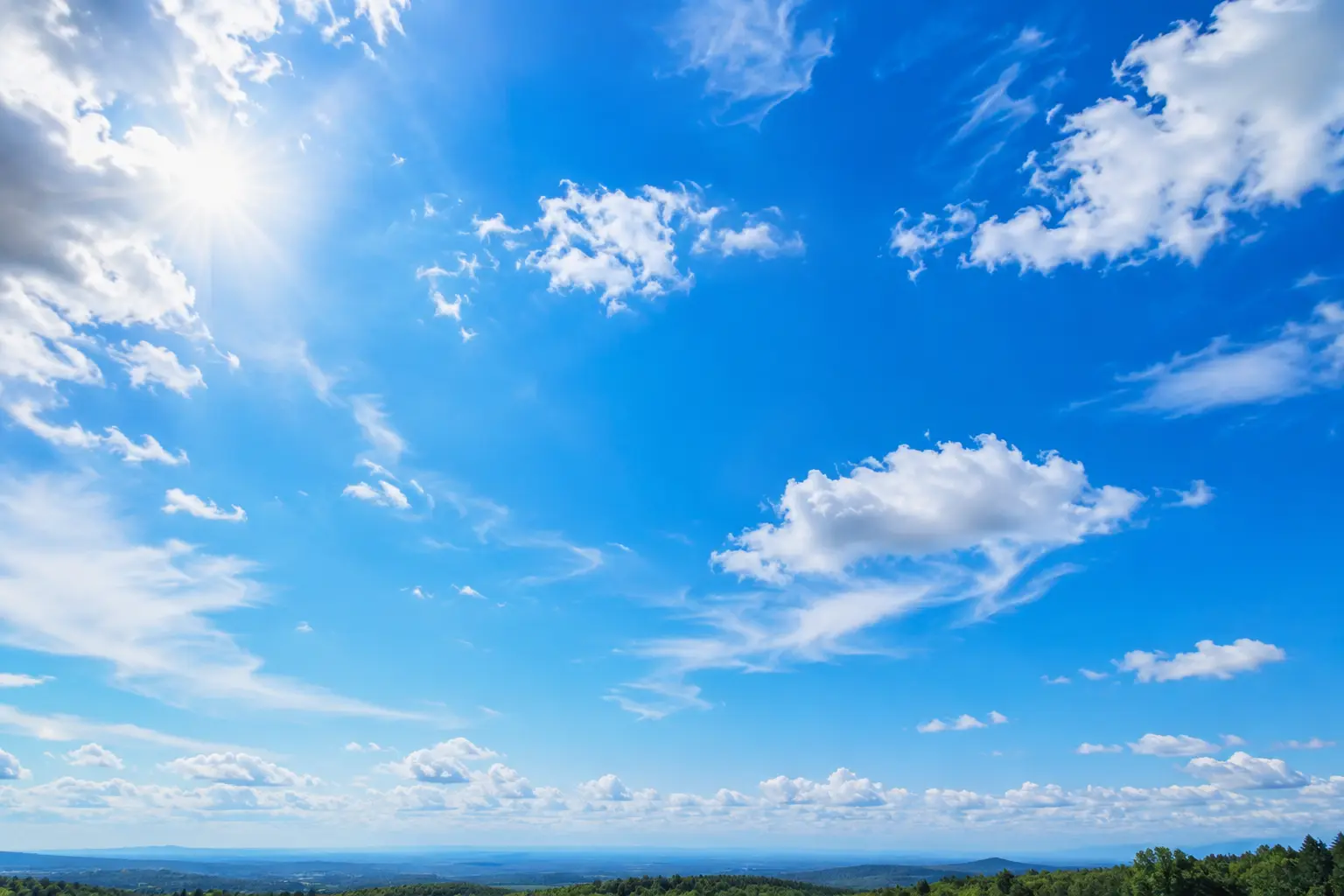
Blue light has a short wavelength and scatters easily off gas molecules. During the day this fills the sky with blue light from every direction.
At sunset, the path through atmosphere is much longer
With the sun on the horizon, sunlight enters at a steep angle and travels through the full depth of the atmosphere. This multiplies how many scattering interactions occur.
Only red and orange survive the full journey
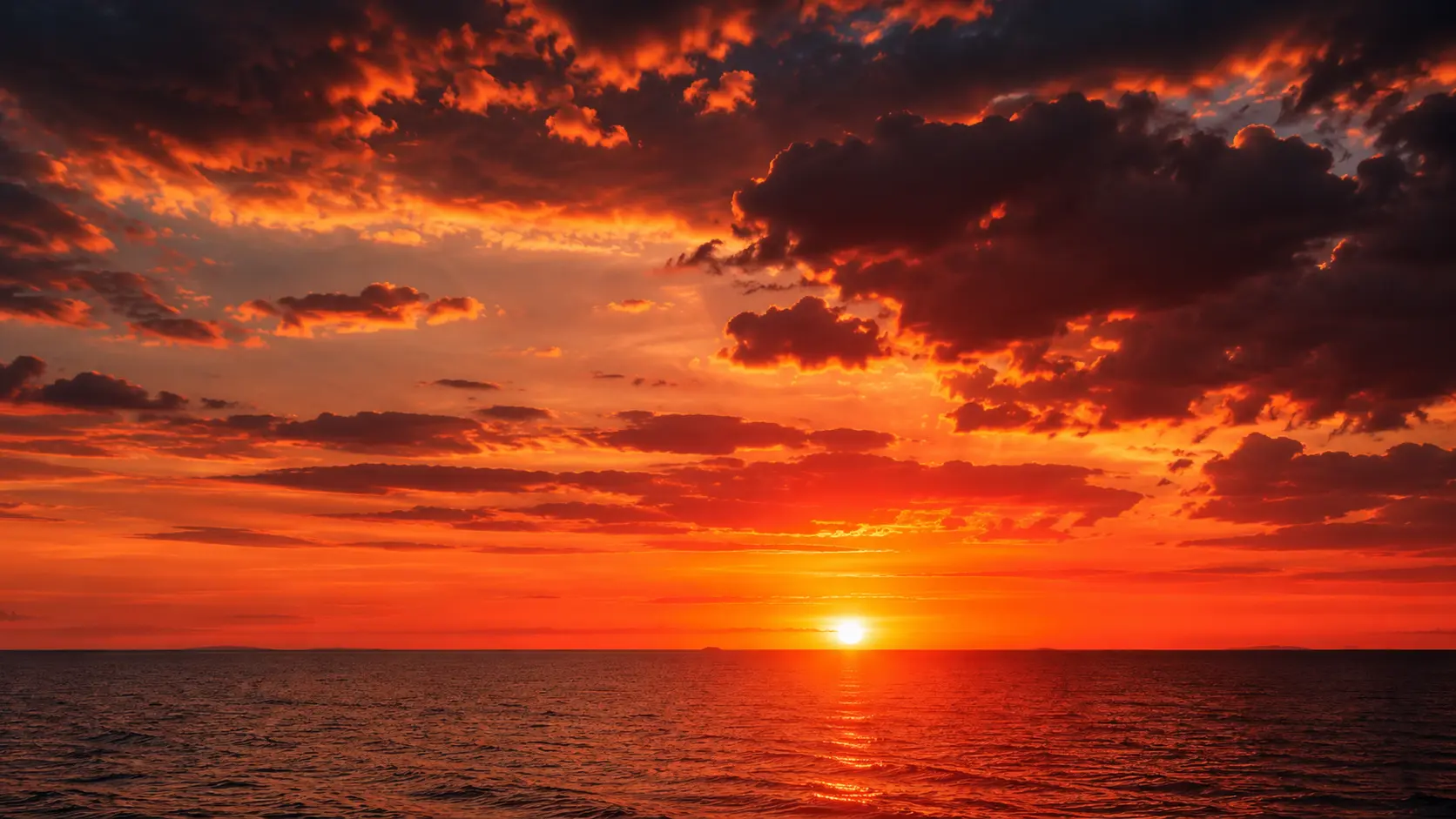
With virtually all the blue scattered away long before it reaches the observer, the remaining light is dominated by red and orange wavelengths, coloring the sky and the clouds.
Real reason
The Atmosphere Is Filtering Out Blue Light During the Long Path
The process is called Rayleigh scattering. When sunlight hits gas molecules in the atmosphere, blue light is scattered roughly ten times more strongly than red light. This is because scattering efficiency scales with the inverse fourth power of wavelength, so small wavelength differences produce enormous differences in how much each color scatters. Blue light bounces off in all directions, which is why the sky looks uniformly blue during the day rather than bright in one spot.
At sunset or sunrise, the sun sits near the horizon. The geometry means sunlight has to travel through a long diagonal slice of the atmosphere rather than dropping almost straight down as it does at noon. Estimates suggest the path length through the atmosphere at sunset is roughly 40 times longer than at solar noon. Over that longer path, blue light gets scattered away completely, leaving only the reds and oranges.
Pollution, dust, and smoke make sunsets more vivid, not less. These particles add to the scattering, removing even more of the shorter wavelengths and sometimes scattering red light in ways that create deeper, more dramatic colors. Volcanic eruptions are famous for producing unusually vivid sunsets globally for months afterward by injecting fine particles high into the stratosphere.
Myth vs reality
Myth vs Reality
What people think
The sun changes color because of heat near the horizon
The sun's actual temperature does not change. Its surface burns at roughly 5,500 degrees Celsius regardless of its position in the sky. The color change is entirely about the atmosphere filtering its light, not the sun itself getting hotter or cooler.
What actually happens
The color is about the filter, not the source
The atmosphere selectively removes blue light during the long low-angle path at sunset. The sun is emitting the same spectrum of light it always does. What changes is how much of that light reaches your eyes after surviving the much longer atmospheric journey.
Midday vs sunset
Why the Sky Looks Different at Noon vs Sunset
Angle of sunlight
Noon: nearly vertical, short path through atmosphere. Sunset: nearly horizontal, path is roughly 40 times longer.
Blue light
Noon: scatters across the sky, making it look blue. Sunset: almost entirely scattered away before reaching the observer.
Red and orange light
Noon: present but diluted by all other colors. Sunset: dominant because all shorter wavelengths have been filtered out.
Effect of particles in the air
Noon: particles make the sky hazier. Sunset: particles intensify the reds and oranges by adding to the scattering of shorter wavelengths.
Quick answers
Common questions
Why is the sky blue but sunsets are red? +
Both effects come from the same process: Rayleigh scattering. During the day, blue light scatters across the whole sky from a short overhead path. At sunset, the long horizontal path strips the blue away before it reaches you, leaving only red and orange.
Do sunrises and sunsets look the same? +
The physics is identical. Sunrises often appear slightly less vivid because there tends to be less dust and pollution in the air in the morning. Evening air typically carries more particles from daytime activity, which can deepen the colors.
Why do some sunsets look more orange and others more red? +
The deeper the red, the more blue and green light has been scattered out. Cleaner air produces more orange sunsets. Dustier or smokier air removes more of the remaining shorter wavelengths, shifting the color toward deep red.
Why are clouds pink and orange at sunset if the sky is turning red? +
Clouds are reflecting the red and orange light that reaches them from the low-angled sun. The undersides of clouds especially catch and reflect this light dramatically because they face the sun's direction when it is low on the horizon.
Why do volcanoes make sunsets more colorful? +
Volcanic eruptions inject sulfur dioxide and fine ash into the stratosphere, where it spreads globally. These particles are excellent at scattering shorter wavelengths, amplifying the filtering effect that produces vivid reds and purples at sunset.