Quick Facts
Quick Facts
Pythagoras claimed to remember his past lives. He said he had been a Trojan warrior named Euphorbus.
The Pythagorean Brotherhood had a secret symbol, the pentagram.
Members were called 'mathematikoi' (learners) and 'akousmatikoi' (listeners). The learners knew more secrets.
They believed that the sun was a giant mirror and that planets made music (the 'harmony of the spheres').
The Brotherhood was eventually attacked and burned. Pythagoras fled and died in exile.
Visual answer
The Pythagorean Cult
The hallmarks of a cult and how Pythagoras fits the pattern.
Charismatic Leader
Pythagoras was worshipped as semi-divine. Followers believed he could remember past lives.
Secret Teachings
The Brotherhood had esoteric knowledge reserved for initiates. Mathematics was part of the mystery.
Strict Rules
Vegetarianism, bean ban, oaths of silence, shared property. Breaking the rules meant expulsion or death.
Us vs. Them
The Brotherhood was secretive. Outsiders were not trusted. Members were expected to prioritize the group.
Unique Beliefs
Reincarnation, harmony of the spheres, numerology. These were not mainstream Greek beliefs.
Story in brief
Story in Brief
c. 530 BCE
Pythagoras moves to Croton in southern Italy and establishes the Pythagorean Brotherhood.
c. 530-500 BCE
The Brotherhood grows in power and influence. Members include both men and women. They control the local government.
The Pythagoreans become a political as well as a religious force.
c. 500 BCE
A rival faction attacks the Pythagorean meeting house. It is burned to the ground. Many Pythagoreans are killed.
The Brotherhood is dispersed. Pythagoras flees and dies in exile.
Later centuries
Pythagorean ideas influence Plato and later Neoplatonists. The Brotherhood never fully recovers.
The cult died. The math survived.
The Story
How a Mathematician Started a Religion
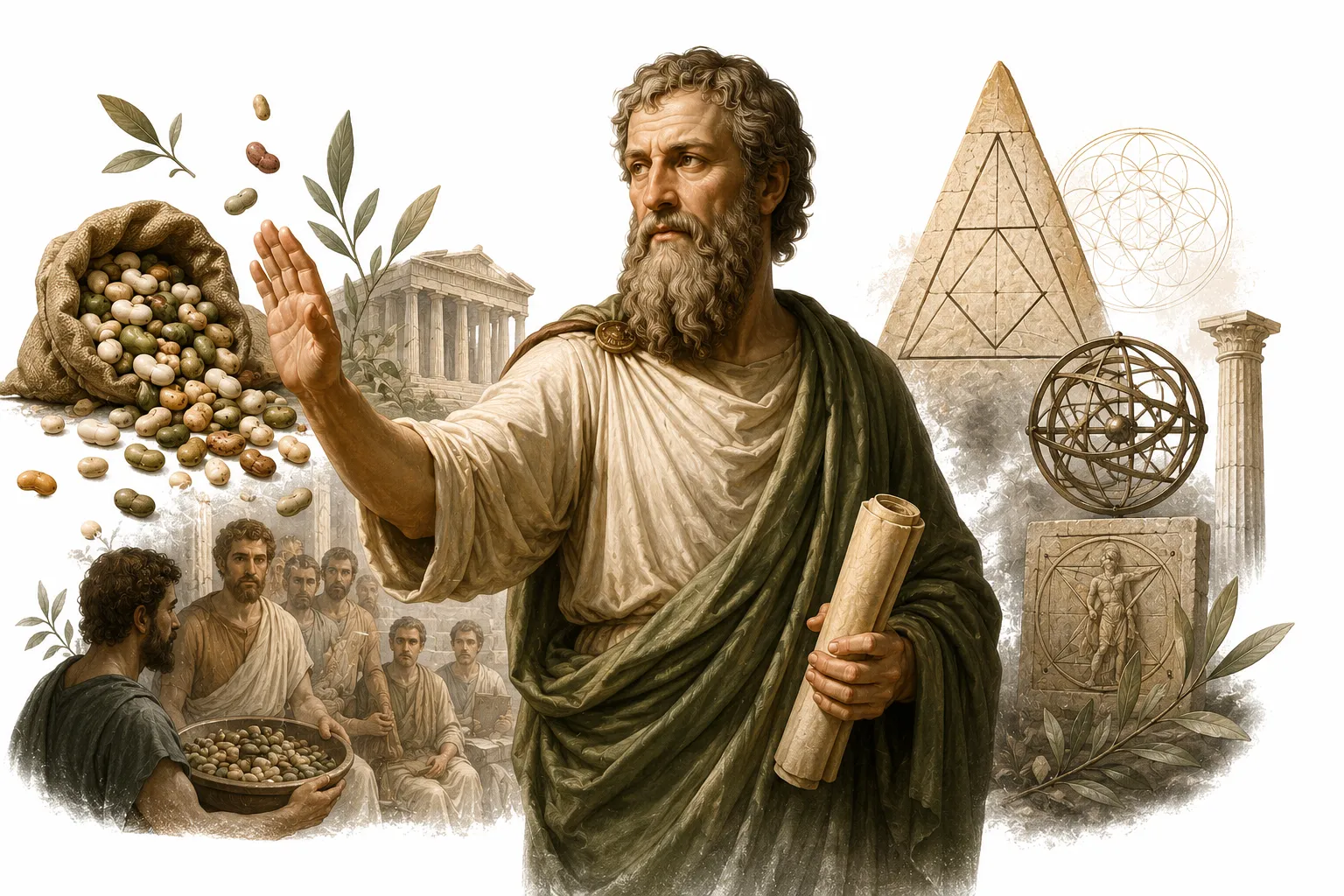
When Pythagoras moved to Croton in southern Italy, he did not just open a school. He started a community. His followers lived together. They shared all property. They swore oaths of secrecy. They believed that Pythagoras was a divine being who could remember his past lives. He told them he had been a Trojan warrior named Euphorbus.
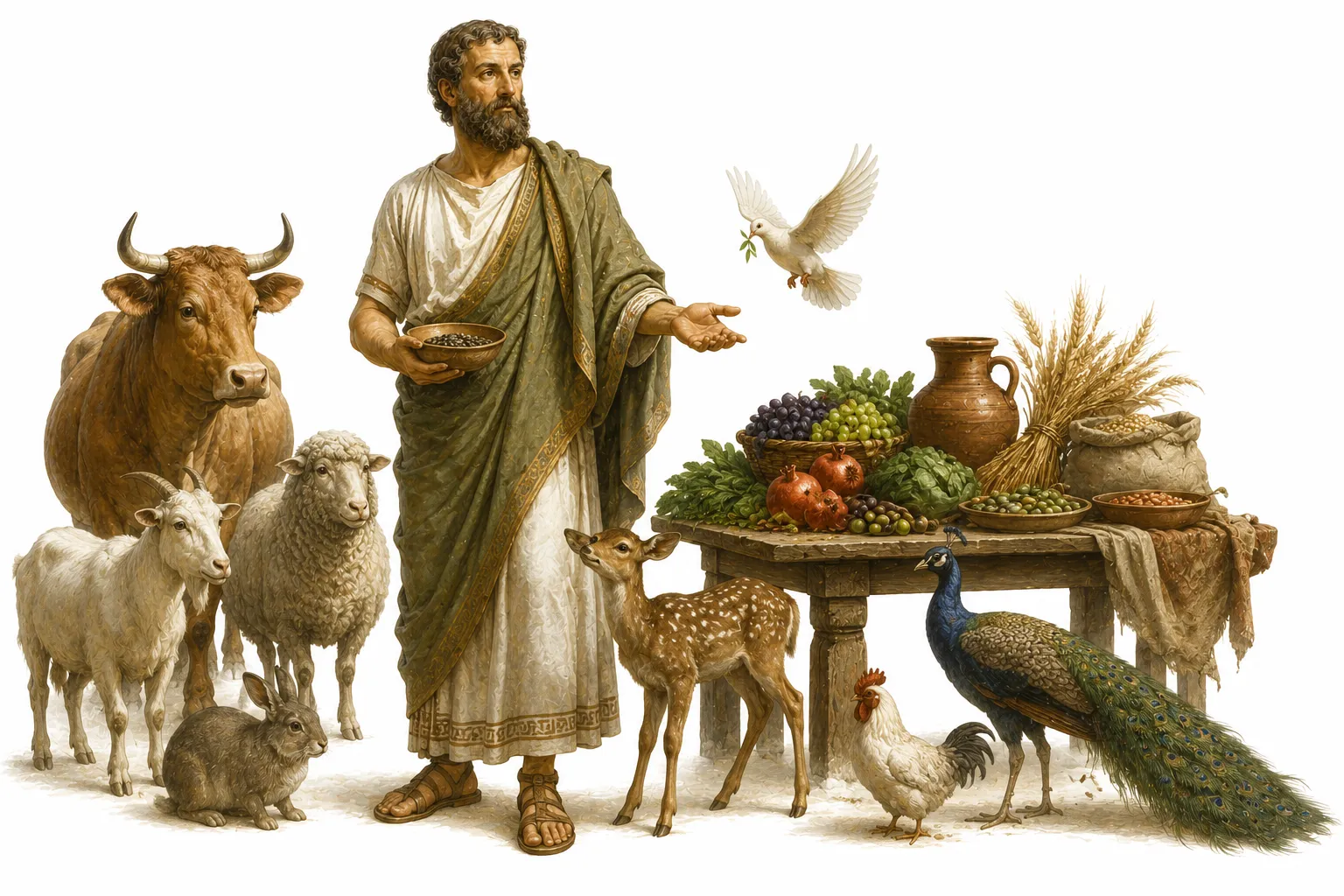
The community was called the Pythagorean Brotherhood. It had two levels: the 'mathematikoi' (learners) who knew the advanced teachings, and the 'akousmatikoi' (listeners) who followed the basic rules. The rules were extensive: no beans, no meat, no wool, no breaking bread, no stirring a fire with a knife, no peering over a bed. The list goes on.
The Brotherhood was also political. They took over the government of Croton. They ruled for a while. Then the locals got tired of them. A rival faction attacked the Pythagorean meeting house. It was burned to the ground. Many Pythagoreans were killed. Pythagoras fled. He died in exile. The cult was scattered. But its ideas lived on, influencing Plato and, through him, the entire Western philosophical tradition.
Famous Quote
"Do not allow a swallow to share your roof."
, Pythagorean rule
The Pythagoreans had many strange rules. This is one of the tamer ones. The symbolism is unclear. It might mean 'avoid flatterers.' Or it might mean 'swallows are bad luck.' No one knows.
Evidence
Cult Characteristics of the Brotherhood
Worship of a charismatic leader (Pythagoras as semi-divine)
StrongSecret teachings reserved for initiates
StrongStrict dietary and behavioral rules (bean ban, vegetarianism)
StrongShared property and communal living
StrongPersecution by outsiders
StrongKey Points
Key Points So Far
Pythagoras founded a secretive community known as the Pythagorean Brotherhood.
Members shared property, swore oaths of secrecy, and followed strict dietary rules.
Pythagoras was treated as a semi-divine being who could remember past lives.
The Brotherhood was politically powerful but was eventually attacked and scattered.
By modern definitions, the Brotherhood fits the pattern of a cult.
Analogy
Like a Modern Commune with a Mathematical Bent
The familiar part
Imagine a modern commune where the leader claims to be enlightened. Members share everything. They have strange rules about food. They worship the leader.
How it applies
That was the Pythagorean Brotherhood. The leader was Pythagoras. The strange rules included a ban on beans. The worship was based on his mathematical discoveries.
Where the analogy breaks
Modern commune leaders do not usually discover theorems that are still taught in schools. Pythagoras did.
Curiosity Notes
Details Most People Miss
Why this still matters
Why This Still Matters
The question 'was Pythagoras a cult leader?' matters because it forces us to think about the relationship between genius and charisma. Pythagoras was brilliant. He also had followers who worshipped him. He created a community that controlled his followers' lives. That sounds like a cult. But it also sounds like many religious communities. The line between religion and cult is blurry. Pythagoras reminds us that genius can be dangerous. It can attract followers. It can create systems of control. That is worth remembering.
Key Findings
- ✓Core findingPythagoras founded the Pythagorean Brotherhood, a secretive community that fits modern definitions of a cult.
- ✓Strong evidenceMembers shared property, swore oaths of silence, and followed strict dietary rules including a ban on beans.
- ⚠Main consequencePythagoras was treated as a semi-divine being who could remember his past lives.
- ✓Wider legacyThe Brotherhood was politically powerful but was eventually attacked and scattered.
- ★Bottom linePythagorean ideas influenced Plato and thus Western philosophy.
Final insight
A Last Thought
Was Pythagoras a cult leader? Yes. By modern standards, the Pythagorean Brotherhood was a cult. It had a charismatic leader, secret teachings, strict rules, and a belief that the leader was more than human. But the word 'cult' sounds negative. The Pythagoreans were also philosophers. They discovered important mathematics. They influenced Plato. They were weird. They were brilliant. They were both. That is the complexity of history. Pythagoras was a mathematician and a cult leader. The theorem and the bean ban come from the same man.
Quick answers
Common questions
Did Pythagoras call himself a god? +
He did not claim to be a god. But his followers treated him as semi-divine. He claimed to remember his past lives. That was close enough.
What happened to the Pythagorean Brotherhood? +
It was attacked by a rival faction in Croton. The meeting house was burned. Many members were killed. The survivors scattered. The cult never recovered.