1
01. Remote is set down during divided attention
The brain processes the placement as automatic, forming no explicit memory.
Everyday Life
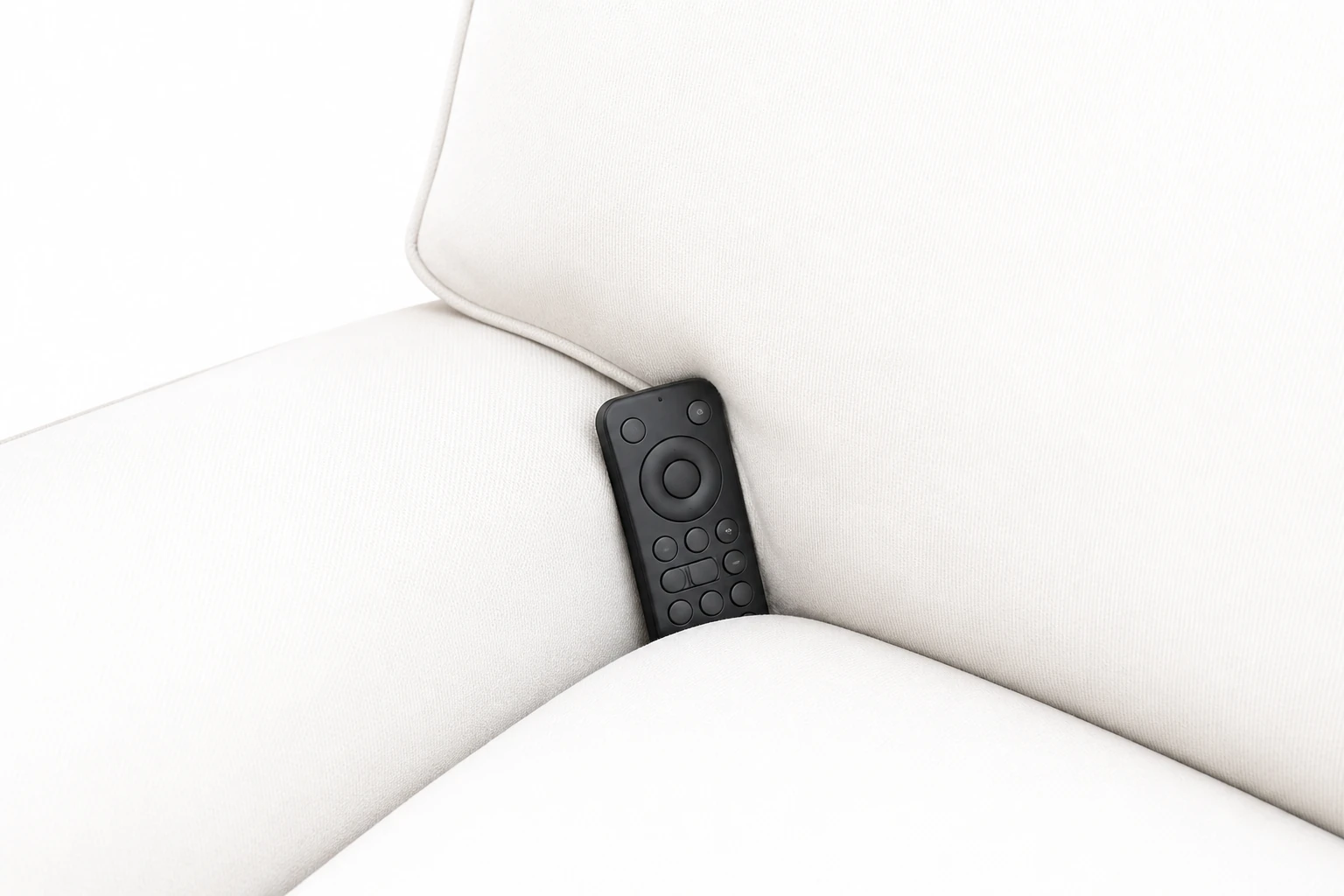
A small object, a large couch, and a fundamental mismatch between how humans pay attention and how remotes move. You set the remote down. You know you set it down. You have not left the room, no one else is home, and five minutes later it has completely vanished. This is not a mystery. It is simply the predictable result of what happens when a small object meets human attention at its least engaged. The answer involves how human memory encodes locations, why routine actions are never actually remembered, and the specific role furniture upholstery plays in the disappearance of small objects.
Quick answer
Remote controls disappear because they are set down during moments of divided attention, when the brain records the action as automatic rather than explicitly, meaning no reliable memory of the location is formed - while the remote's small size, neutral coloring, and tendency to slide under cushions further reduces the chance of immediate visual rediscovery. You almost certainly will find it in the same four or five places every time - because divided attention produces consistent patterns of unconscious placement.
The mystery
The answer involves how human memory encodes locations, why routine actions are never actually remembered, and the specific role furniture upholstery plays in the disappearance of small objects.
The short answer
Remote controls disappear because they are set down during moments of divided attention, when the brain records the action as automatic rather than explicitly, meaning no reliable memory of the location is formed - while the remote's small size, neutral coloring, and tendency to slide under cushions further reduces the chance of immediate visual rediscovery.
The twist
You almost certainly will find it in the same four or five places every time - because divided attention produces consistent patterns of unconscious placement.
Common mistake
It is extremely tempting to blame other household members for remote relocations.
Everyday Life
Because you stop looking once you find it - a joke that is also technically true by definition.
The psychologist who studied everyday forgetting
A pioneering cognitive psychologist whose work on everyday memory failures helped establish that attention, not storage capacity, is the primary limiting factor in human memory.
Related questions
Yes, consistently returning objects to a fixed location bypasses the divided-attention encoding problem entirely.
Where divided attention causes similar problems
Keys placed down while opening a door and carrying bags disappear for identical divided-attention reasons.
Where divided attention causes similar problems
Eyeglasses removed without deliberate attention produce the same retrievable-memory failure as a placed-down remote.
Does someone else always move the remote?
In single-person households, remotes disappear just as reliably, confirming that the lost-remote phenomenon is a feature of individual human attention patterns rather than a social problem.
Continue learning

Everyday Life
A nearby object mystery to keep exploring.
Everyday Engineering
A nearby object mystery to keep exploring.

Everyday Engineering
A nearby object mystery to keep exploring.