1
01. Electrical charge builds during a storm
Differences in electrical charge accumulate between storm clouds and the ground below.
Everyday Science
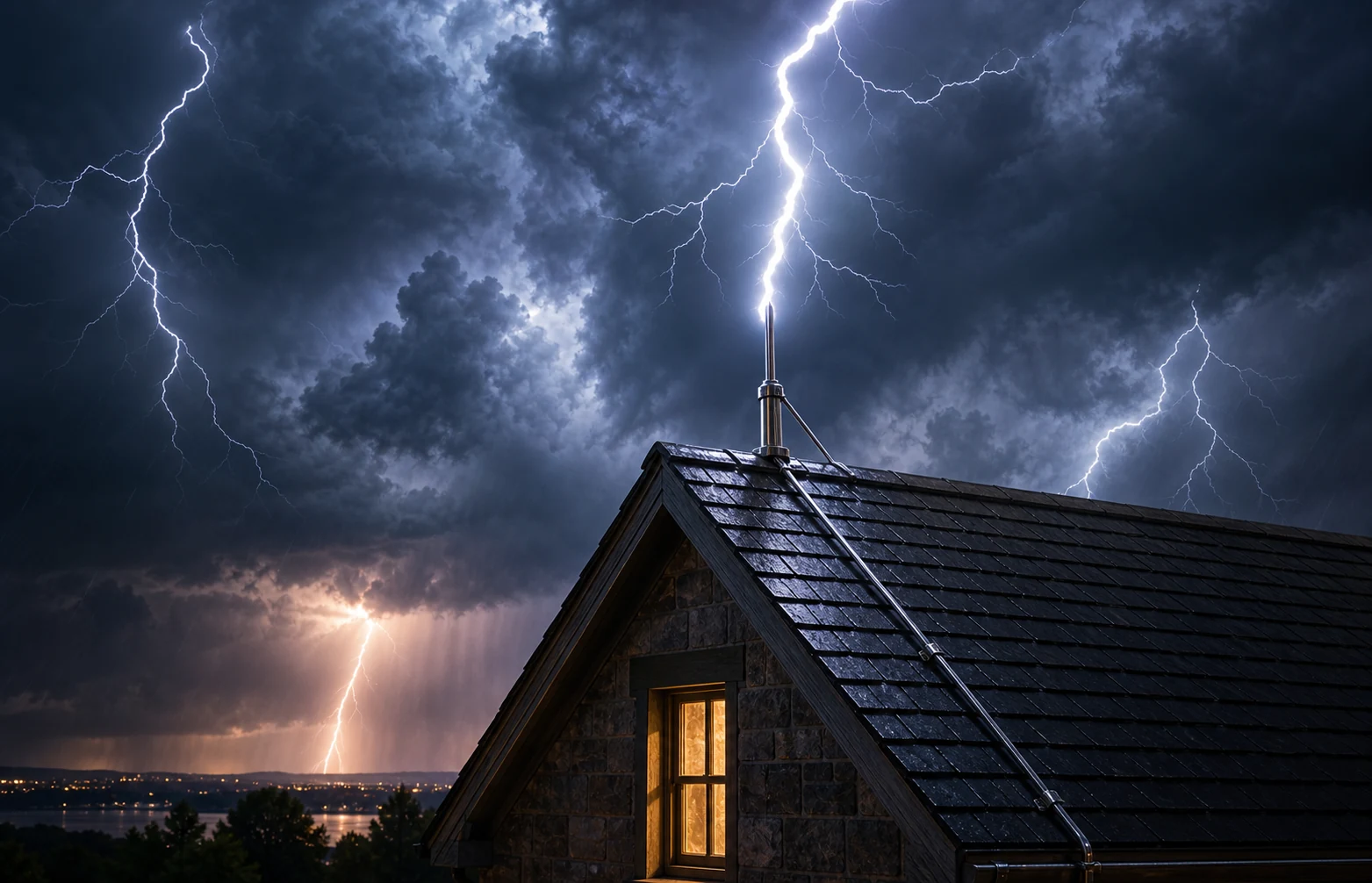
A simple metal spike that quietly volunteers to take a hundred million volts so your house doesn't have to. During a violent thunderstorm, a tall building survives direct lightning strikes again and again, completely unharmed, while a thin metal rod on its roof absorbs the full force instead. It looks almost like sacrifice. In a sense, that is exactly the arrangement Benjamin Franklin designed. The answer involves electrical charge, the path of least resistance, and a kite experiment that has been wildly exaggerated by history.
Quick answer
A lightning rod works by providing a path of low electrical resistance from the top of a structure down to the ground, encouraging lightning to strike the rod rather than the building, and then safely conducting that massive electrical charge harmlessly into the earth. A lightning rod does not actually prevent lightning from striking nearby; it simply makes itself the most attractive, lowest-resistance target so the strike goes there instead of somewhere more dangerous.
The mystery
The answer involves electrical charge, the path of least resistance, and a kite experiment that has been wildly exaggerated by history.
The short answer
A lightning rod works by providing a path of low electrical resistance from the top of a structure down to the ground, encouraging lightning to strike the rod rather than the building, and then safely conducting that massive electrical charge harmlessly into the earth.
The twist
A lightning rod does not actually prevent lightning from striking nearby; it simply makes itself the most attractive, lowest-resistance target so the strike goes there instead of somewhere more dangerous.
Common mistake
A common misconception is that a lightning rod stops lightning from striking nearby altogether.
Everyday Science
Height increases the likelihood that the rod, rather than a lower part of the structure, becomes the path lightning follows.
The man who tamed lightning
An American scientist and statesman who, in the 1750s, demonstrated lightning's electrical nature and invented the lightning rod.
Related questions
No, this is a popular myth; Franklin's experiment demonstrated lightning's electrical nature without him being directly struck.
Where similar grounding principles apply
Aircraft are designed with conductive skins that allow lightning current to travel around the exterior and exit safely without harming passengers.
Where similar grounding principles apply
Household electrical systems use grounding wires for a related safety purpose, directing excess or stray current safely into the earth.
Doesn't a lightning rod prevent lightning from striking the area at all?
A lightning rod does not prevent lightning strikes in the area; it simply ensures that any strike is directed safely through the rod instead of through the building itself.
Continue learning

Everyday Objects
Another familiar question explained by simple physics.

Everyday Science
Another familiar question explained by simple physics.

Everyday Science
Another familiar question explained by simple physics.