1
01. The bicycle begins to lean
Small disturbances or imperfect balance cause the bike to tip slightly to one side.
Everyday Science
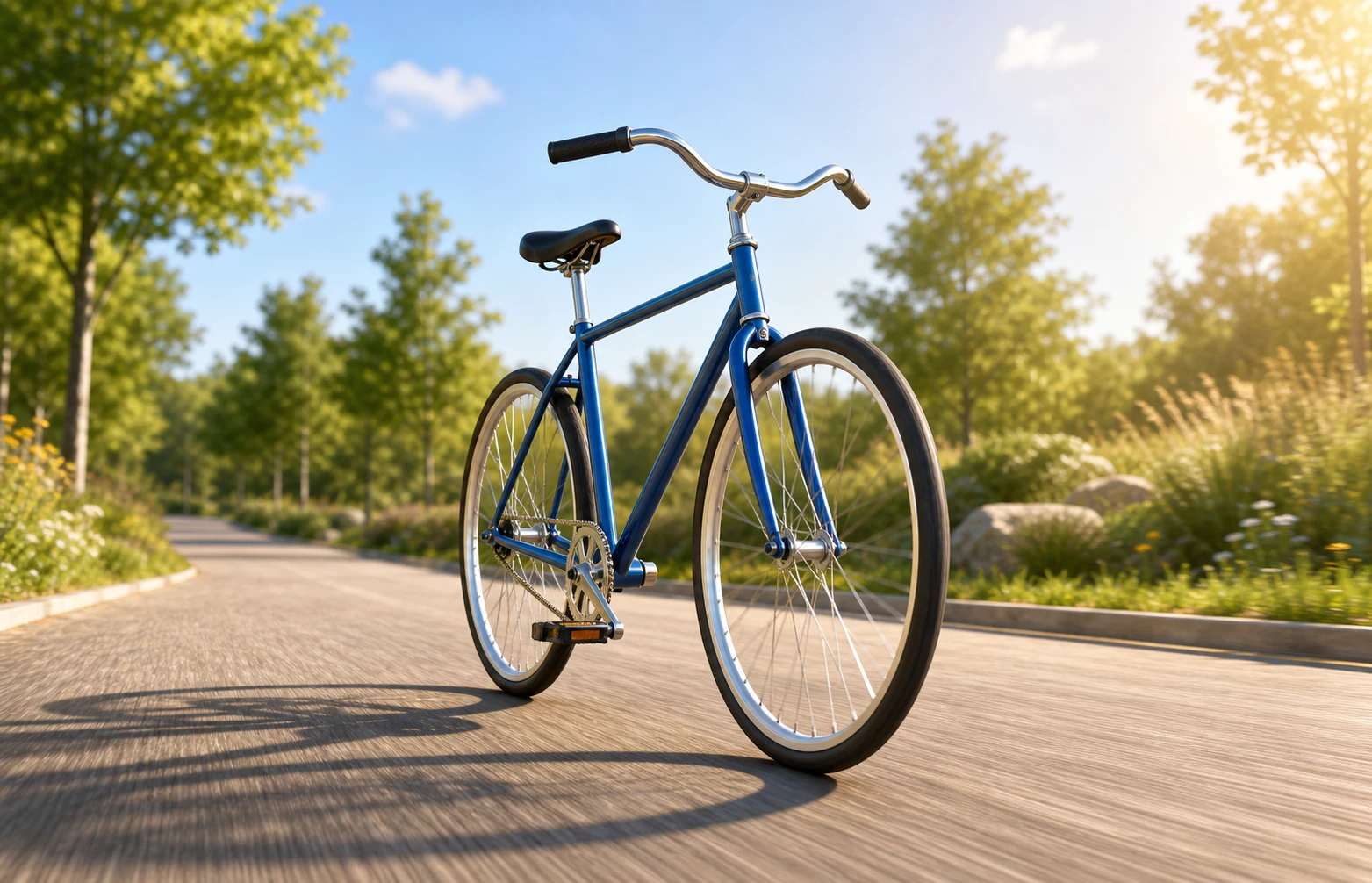
A two-wheeled puzzle that physicists still don't fully agree on, despite over a century of trying. A bicycle, left standing still, falls over almost immediately. The same bicycle, rolling forward at a modest speed, balances effortlessly, even with no hands on the handlebars. It seems like it should be a simple question. Remarkably, scientists have spent more than a hundred years arguing about the complete answer. The answer involves spinning wheels, steering geometry, and the slightly humbling fact that no single explanation fully solves the puzzle on its own.
Quick answer
A moving bicycle stays upright mainly through a combination of rider-driven steering corrections and the bicycle's geometry, which together automatically steer the front wheel back underneath any developing lean, while spinning wheel gyroscopic effects play a smaller supporting role. A famous 2011 experiment built a bicycle specifically designed to cancel out gyroscopic effects and front-wheel steering geometry, and it still balanced itself when set rolling - proving the old, simple explanations were incomplete.
The mystery
The answer involves spinning wheels, steering geometry, and the slightly humbling fact that no single explanation fully solves the puzzle on its own.
The short answer
A moving bicycle stays upright mainly through a combination of rider-driven steering corrections and the bicycle's geometry, which together automatically steer the front wheel back underneath any developing lean, while spinning wheel gyroscopic effects play a smaller supporting role.
The twist
A famous 2011 experiment built a bicycle specifically designed to cancel out gyroscopic effects and front-wheel steering geometry, and it still balanced itself when set rolling - proving the old, simple explanations were incomplete.
Common mistake
A long-standing popular belief is that gyroscopic forces from the spinning wheels are the entire reason bicycles stay upright.
Everyday Science
The self-correcting steering effect depends on forward motion, which a stationary bike does not have.
The researchers who challenged a century-old assumption
A team of researchers who, in a widely cited 2011 study, built a bicycle specifically engineered to eliminate gyroscopic and trail effects, and showed it could still balance.
Related questions
Increased speed generally strengthens the same self-correcting steering dynamics found in bicycles.
Where similar self-correcting steering applies
Motorcycles use similar fork trail geometry to achieve stable, self-correcting steering at speed.
Where similar self-correcting steering applies
Caster wheels naturally swivel to trail behind the direction of motion, using closely related geometric principles.
Isn't it all just about the spinning wheels acting like gyroscopes?
Gyroscopic effects contribute somewhat, but research has shown bicycles can self-balance even when this effect is deliberately removed, proving it is not the sole or primary cause.
Continue learning