1
01. Wood is processed into paper containing lignin and cellulose
These plant-derived polymers are built into the paper's structure.
Everyday Science
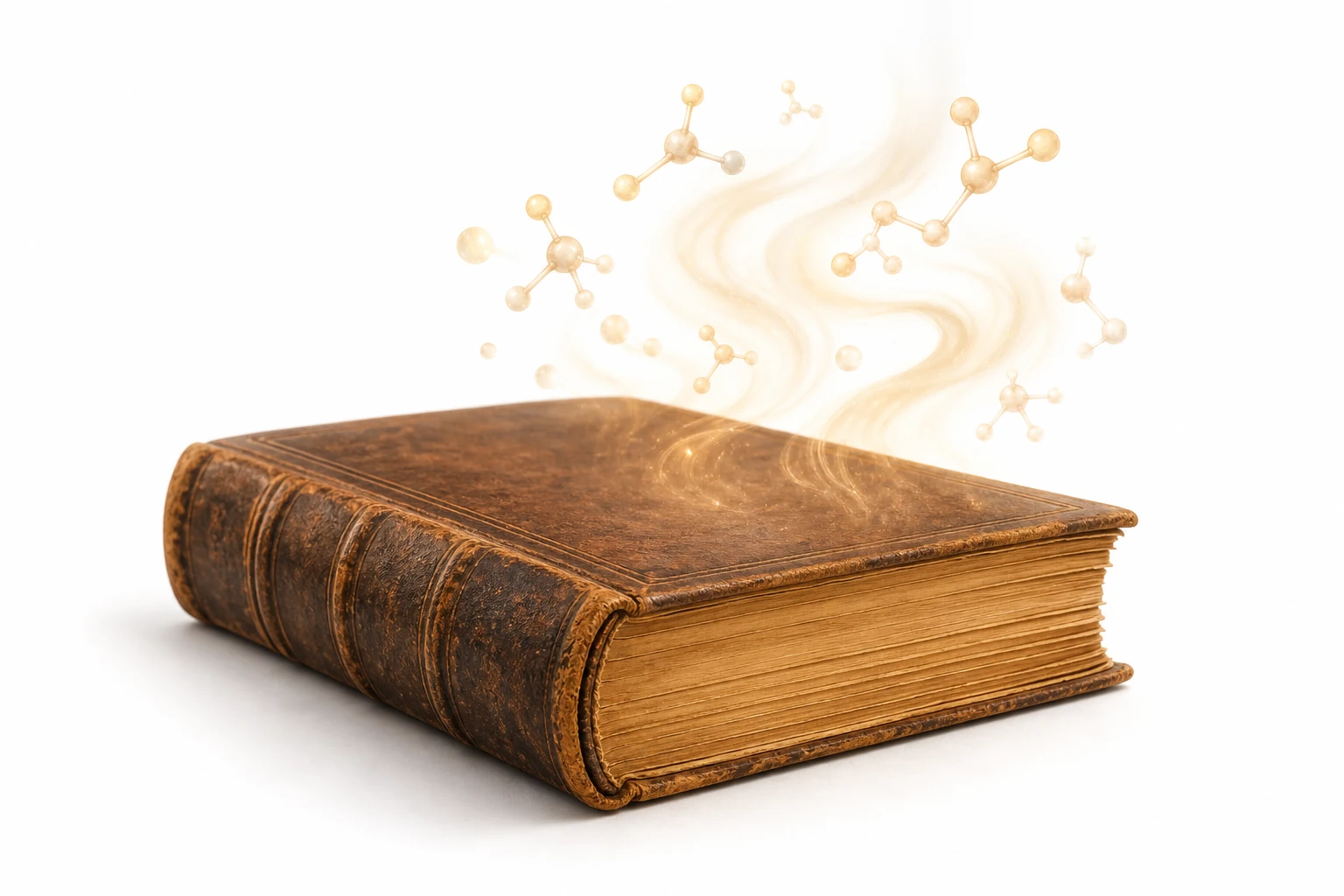
A perfume nobody designed, made by paper slowly falling apart. Open an old book and the smell arrives before the words - something warm, slightly sweet, faintly vanilla, carrying an air of accumulated time. This smell has its own devoted following. People describe it as comforting, intellectual, even romantic. It is also, in a purely chemical sense, the smell of slow decomposition. The answer involves lignin breakdown, volatile organic compounds, and the specific reason why old books smell pleasantly warm while new books smell sharply chemical.
Quick answer
Old books smell the way they do because paper is made from wood, which contains lignin and cellulose that slowly break down over time, releasing dozens of volatile organic compounds including vanillin, the same chemical found in vanilla extract, along with acids and alcohols that combine into the characteristic old-book aroma. Book conservators can use the smell of a book to assess its age and deterioration - a form of olfactory chemistry that has been used in libraries and archives to evaluate preservation needs.
The mystery
The answer involves lignin breakdown, volatile organic compounds, and the specific reason why old books smell pleasantly warm while new books smell sharply chemical.
The short answer
Old books smell the way they do because paper is made from wood, which contains lignin and cellulose that slowly break down over time, releasing dozens of volatile organic compounds including vanillin, the same chemical found in vanilla extract, along with acids and alcohols that combine into the characteristic old-book aroma.
The twist
Book conservators can use the smell of a book to assess its age and deterioration - a form of olfactory chemistry that has been used in libraries and archives to evaluate preservation needs.
Common mistake
Many assume the smell comes primarily from old printing inks.
Everyday Science
New-book smell is associated with novelty and fresh manufacture, while old-book smell triggers associations with age, history, and accumulated knowledge.
The researchers who mapped the smell
Researchers at University College London who analyzed the chemical compounds in old book smells and developed the Historic Book Odour Wheel.
Where similar lignin breakdown produces familiar smells
Vanillin, a lignin breakdown product, is also the primary flavor compound in vanilla, explaining the chemical similarity in smell.
Where similar lignin breakdown produces familiar smells
Decaying plant material in autumn produces similar lignin-derived aromatic compounds, part of the characteristic seasonal smell.
Is the old-book smell from the ink, not the paper?
The dominant contributors are paper's own lignin and cellulose degradation products; inks contribute but are secondary.
Continue learning