Biology & The Body

Why Do Men Have Nipples?

One of biology's most frequently asked questions, and the answer is a quiet lesson in how development actually works. It is one of the oldest questions in casual biology, usually asked with a grin and dismissed with a shrug. But the answer is genuinely interesting - and it says something profound about how every human body is assembled before anyone has decided what it is going to become. The answer involves a developmental blueprint that applies to all humans before sex differentiation begins, a biological principle called constraint, and the fact that evolution is considerably less tidy than people tend to imagine.

Quick answer

Men have nipples because nipple development begins in early embryonic development before sex-determining hormones take effect, at a stage when the same developmental blueprint is followed by all human embryos regardless of their eventual sex. Male nipples are not a design flaw or a vestigial remnant in the usual sense - they are simply the result of development following a shared early blueprint, and removing them would require significantly more genetic complexity than leaving them in place.
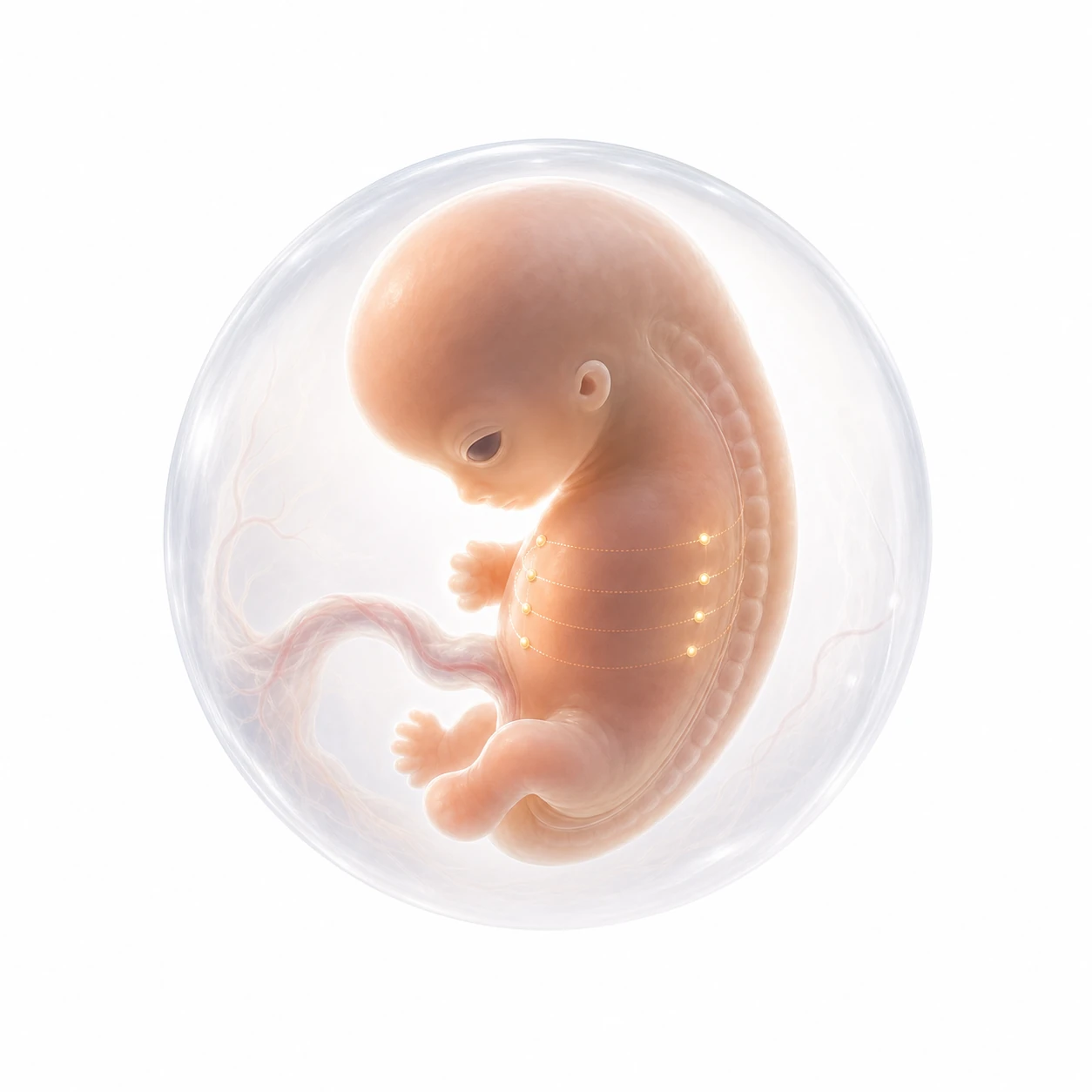
Why Do Men Have Nipples? hero image

The mystery

The answer involves a developmental blueprint that applies to all humans before sex differentiation begins, a biological principle called constraint, and the fact that evolution is considerably less tidy than people tend to imagine.

The short answer

Men have nipples because nipple development begins in early embryonic development before sex-determining hormones take effect, at a stage when the same developmental blueprint is followed by all human embryos regardless of their eventual sex.

The twist

Male nipples are not a design flaw or a vestigial remnant in the usual sense - they are simply the result of development following a shared early blueprint, and removing them would require significantly more genetic complexity than leaving them in place.

Common mistake

The most common explanation is that male nipples are vestigial remnants with no function whatsoever.

Everyone starts from the same template

Human development does not start by building a male or female body - it starts by building a human body, and adjusts from there.

The embryo follows one blueprint first

In the first weeks of development, all human embryos follow essentially the same developmental instructions regardless of their genetic sex, including the formation of nipple precursors, called mammary ridges, which appear in both XX and XY embryos.

Sex-specific development, driven by hormones like testosterone, begins later and diverges from this shared early template.

A human body does not start as a boy or a girl; it starts as a human, and nipples arrive before the distinction is made.

By the time testosterone acts, nipples are already present

In embryos that will develop as male, testosterone begins influencing development at around six to eight weeks, after the mammary ridges have already formed.

At that point, removing the existing structure would require extra developmental machinery with no real benefit - so evolution simply leaves it.

Evolution has no delete button; it can only build on what is already there.

They are not entirely without function

Male nipples do retain some sensitivity and nerve supply, and in rare medical contexts, some men produce small amounts of milk under specific hormonal conditions.

Biologically speaking, they are not entirely dormant structures - they simply lack the hormonal environment needed for full development.

Male nipples are not quite as functionless as they appear; they are simply working in an environment that never asked much of them.

Why developmental timing produces shared features

The sequence of early human development explains many features that seem puzzling at first glance.

1

01. All embryos follow a shared early blueprint

The earliest stages of human development are not sex-specific.

2

02. Mammary ridges form before sex differentiation

Nipple precursor structures appear at a stage when all embryos develop identically.

3

03. Hormones diverge development later

Testosterone and estrogen shift subsequent development in different directions.

4

04. Earlier structures remain as permanent features

Development that occurred before hormonal divergence is already incorporated into the body's structure.

What this reveals about evolutionary biology

Male nipples are a clean example of what biologists call a developmental constraint - a feature retained not because it is actively useful, but because removing it would require more complexity than keeping it.

Evolution is extraordinarily good at adding new features and modifying existing ones, but rarely bothers to fully remove something once it is woven into early developmental pathways.

Surprising facts about nipple development

Male lactation, while rare, does occur
Under certain hormonal conditions - some medications, some medical conditions - men can produce and secrete small amounts of milk.
Some mammals have male lactation as standard
Male Dayak fruit bats have been documented producing milk under natural conditions, suggesting the potential was never entirely erased.
Extra nipples are surprisingly common
Supernumerary nipples, additional nipple tissue along the embryonic mammary ridge, occur in both men and women at notable frequency.

Aren't they purely vestigial, like an appendix?

Myth

The most common explanation is that male nipples are vestigial remnants with no function whatsoever.

The comparison to vestigial structures like the appendix is intuitive but slightly inaccurate - they are better described as developmentally shared features than true vestiges.

Reality

They retain nerve connections and some sensitivity, and unlike truly vestigial structures, they are not vestiges of a lost function - they never fully developed in the first place due to developmental timing.

They retain nerve connections and some sensitivity, and unlike truly vestigial structures, they are not vestiges of a lost function - they never fully developed in the first place due to developmental timing.

Other shared features across sexes

The philtrum
The small groove above the upper lip forms identically in all embryos during facial development, regardless of sex.
Goosebumps
This vestige of fur-raising behavior is identical across all sexes for similar developmental constraint reasons.

Why this small question matters

The answer elegantly illustrates that biological development is cumulative and constrained by what came before, not optimally designed from scratch.

Understanding developmental constraint helps explain dozens of seemingly puzzling anatomical features that otherwise look like design errors.

Worth noting

A small feature with a large lesson

Male nipples are evolution's memo that development always proceeds forward from what existed before, never from a clean slate. The answer to a question everyone asks with a smirk turns out to be one of the clearest windows into how human bodies are built.

Quick answers

Common questions

Is the male nipple truly useless?

Not entirely - it retains nerve connections and sensitivity, and maintains the latent biological machinery needed for milk production under unusual hormonal conditions.

Why doesn't evolution remove male nipples entirely?

Because doing so would require adding complexity to the early developmental blueprint, which provides no survival advantage sufficient to drive that change.

Biology & The Body

Related questions

Not under normal conditions, but male lactation can occur in rare cases involving specific hormonal changes.

The developmental biologist's favorite example

Embryonic Development and Sexual Differentiation

The study of how shared developmental blueprints produce anatomical features common across all sexes in many species.

Related questions

Why do some people have extra nipples?

Additional nipple tissue can appear anywhere along the embryonic mammary ridge that runs from armpit to groin.

Other shared features across sexes

The philtrum

The small groove above the upper lip forms identically in all embryos during facial development, regardless of sex.

Other shared features across sexes

Goosebumps

This vestige of fur-raising behavior is identical across all sexes for similar developmental constraint reasons.

Aren't they purely vestigial, like an appendix?

They retain nerve connections and some sensitivity, and unlike truly vestigial structures, they are not vestiges of a lost function - they never fully developed in the first place due to developmental timing.

They retain nerve connections and some sensitivity, and unlike truly vestigial structures, they are not vestiges of a lost function - they never fully developed in the first place due to developmental timing.