Quick Facts
Quick Facts
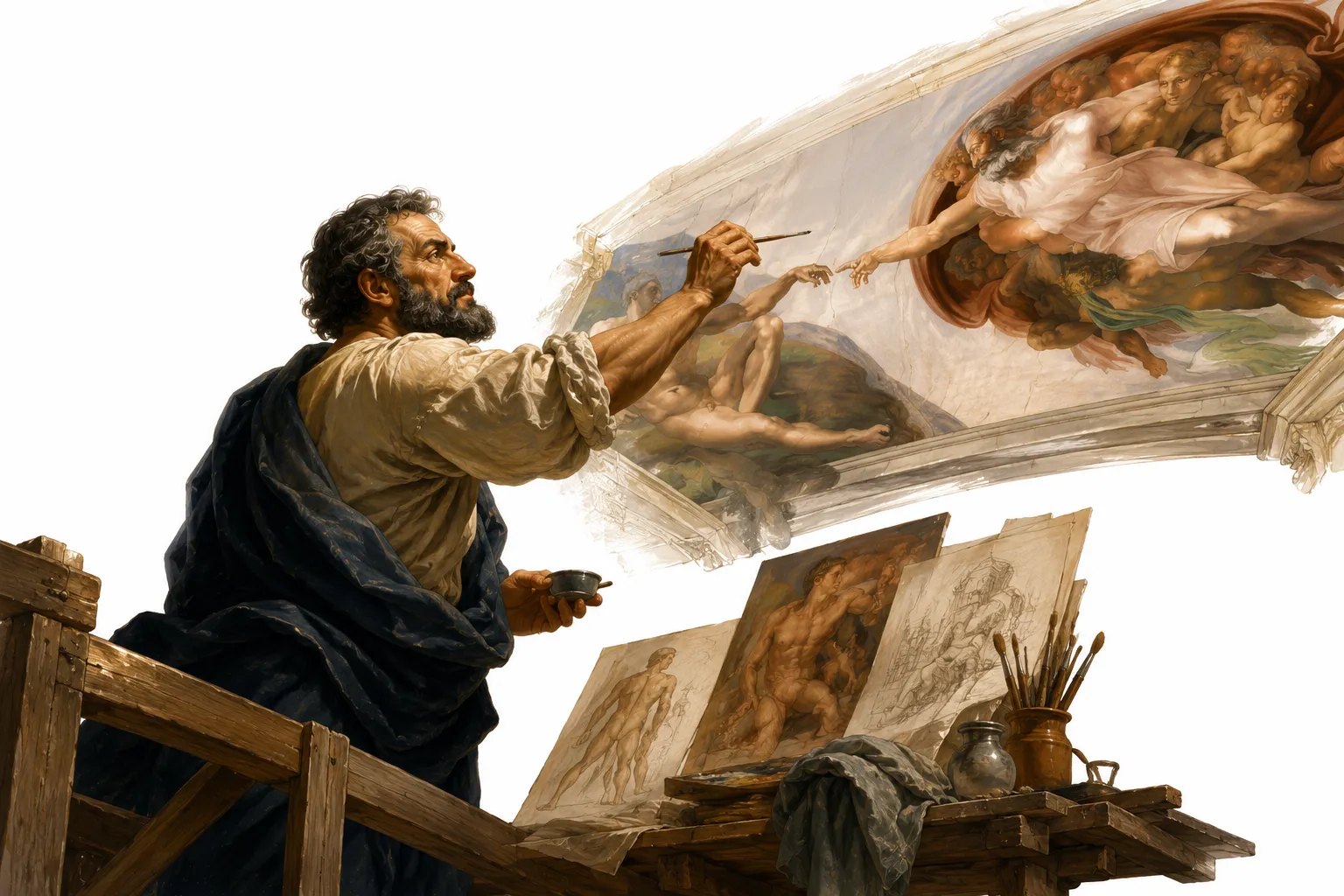
Michelangelo painted the ceiling while lying on his back on scaffolding.
He fired his assistants early in the project and worked almost alone.
The project took four years. He was 33 when he started and 37 when he finished.
He suffered from physical ailments as a result of the work, including a permanently tilted neck.
He later painted The Last Judgment on the altar wall, covering over 1,000 square feet.
Visual answer
The Making of the Sistine Chapel Ceiling
How a reluctant sculptor became a fresco painter.
1508
Michelangelo reluctantly accepts the commission. He is a sculptor, not a painter.
The Scaffolding
Michelangelo designed his own scaffolding system. It did not touch the floor, allowing church services to continue below.
The Work
He painted over 300 figures, including the famous Creation of Adam. He worked alone after firing his assistants.
1512
The ceiling is completed. Michelangelo has permanently damaged his health. He never forgave the Pope.
Story in brief
Story in Brief
1508
Pope Julius II commissions Michelangelo to paint the Sistine Chapel ceiling.
Michelangelo tries to refuse. He says he is a sculptor. The Pope insists.
1508-1512
Michelangelo paints the ceiling. He works almost alone, lying on his back on scaffolding. He suffers from neck and back pain.
1512
The ceiling is unveiled. It is an instant masterpiece.
Michelangelo becomes famous beyond sculpture. He resents it.
1536-1541
Michelangelo returns to the Sistine Chapel to paint The Last Judgment on the altar wall.
1564
Michelangelo dies at age 88. He is considered one of the greatest artists who ever lived.
The Sistine Chapel is his most famous work. The sculptor who hated painting left the world's most famous paintings.
The Story
How a Sculptor Created the World's Most Famous Fresco
Michelangelo did not want to paint the Sistine Chapel. He was a sculptor. He had just finished the David, a seventeen foot tall statue of pure perfection. He wanted more marble. The Pope gave him a ceiling.
Michelangelo tried to refuse. He wrote in a letter: 'I told him that I was not a painter.' The Pope did not care. He threatened Michelangelo's funding. He threatened his career. Michelangelo gave in.
For four years, Michelangelo lay on his back on scaffolding, paint dripping into his eyes. He developed a permanent crick in his neck. He could read letters only by holding them over his head. He wrote a poem about his suffering: 'I've grown a goiter from this torture.' When the ceiling was unveiled, it was clear that the suffering had been worth it. The Sistine Chapel ceiling is one of the greatest achievements in Western art. And Michelangelo hated every minute of making it.
Famous Quote
"After four tortured years, I have created a masterpiece. Tell the Pope I am finished."
, Michelangelo (paraphrased)
He wrote a poem complaining about his physical suffering: 'I've grown a goiter from this torture... my stomach's squashed under my chin.'
Evidence
What Michelangelo Actually Did
He painted the Sistine Chapel ceiling between 1508 and 1512.
StrongHe worked almost alone after firing his assistants.
StrongHe suffered physical ailments from the work.
StrongHe later painted The Last Judgment on the altar wall.
StrongKey Points
Key Points So Far
Michelangelo painted the Sistine Chapel ceiling from 1508 to 1512.
He was a sculptor and did not want the commission.
He worked almost alone, lying on his back on scaffolding.
The ceiling features over 300 figures, including the Creation of Adam.
He later painted The Last Judgment on the altar wall.
Analogy
Like Climbing Mount Everest in a Suit
The familiar part
Imagine climbing Mount Everest. It is hard. Now imagine doing it in a three piece suit. That is harder.
How it applies
Michelangelo painted the Sistine Chapel in conditions that were physically brutal. He was not equipped for the job. He was not trained for it. He did not want to do it. He did it anyway. And he created a masterpiece.
Where the analogy breaks
Mount Everest climbers do not write poems about their goiters. Michelangelo did.
Curiosity Notes
Details Most People Miss
Why this still matters
Why This Still Matters
The Sistine Chapel is still visited by millions of tourists every year. It is a masterpiece of art, a monument to human creativity, and a testament to the power of stubbornness. Michelangelo did not want to paint it. He did it anyway. He did it brilliantly. And he complained the entire time. That is the artist's life. Suffering, resentment, and occasional genius.
Key Findings
- ✓Core findingMichelangelo painted the Sistine Chapel ceiling from 1508 to 1512.
- ✓Strong evidenceHe was a sculptor and did not want the commission. He tried to refuse.
- ⚠Main consequenceHe worked almost alone, suffering physical ailments from the posture.
- ✓Wider legacyThe ceiling features over 300 figures, including the Creation of Adam.
- ★Bottom lineHe later painted The Last Judgment on the altar wall (1536-1541).
Final insight
A Last Thought
Michelangelo painted the Sistine Chapel because a Pope ordered him to. He did not want to. He hated every minute. He complained in poems. He suffered physically. And then he created a masterpiece. The lesson is uncomfortable: sometimes greatness comes from resentment, not inspiration. Michelangelo did not love the Sistine Chapel. He endured it. And endurance, it turns out, can be as powerful as love.
Quick answers
Common questions
How long did it take Michelangelo to paint the Sistine Chapel? +
About four years, from 1508 to 1512. He was 33 when he started and 37 when he finished. The work aged him considerably.
Did Michelangelo have assistants? +
He hired several assistants early in the project. He fired them after deciding their work was not good enough. He painted almost the entire ceiling himself.