Visual answer
The Neurochemistry of Post-Sex Sleepiness
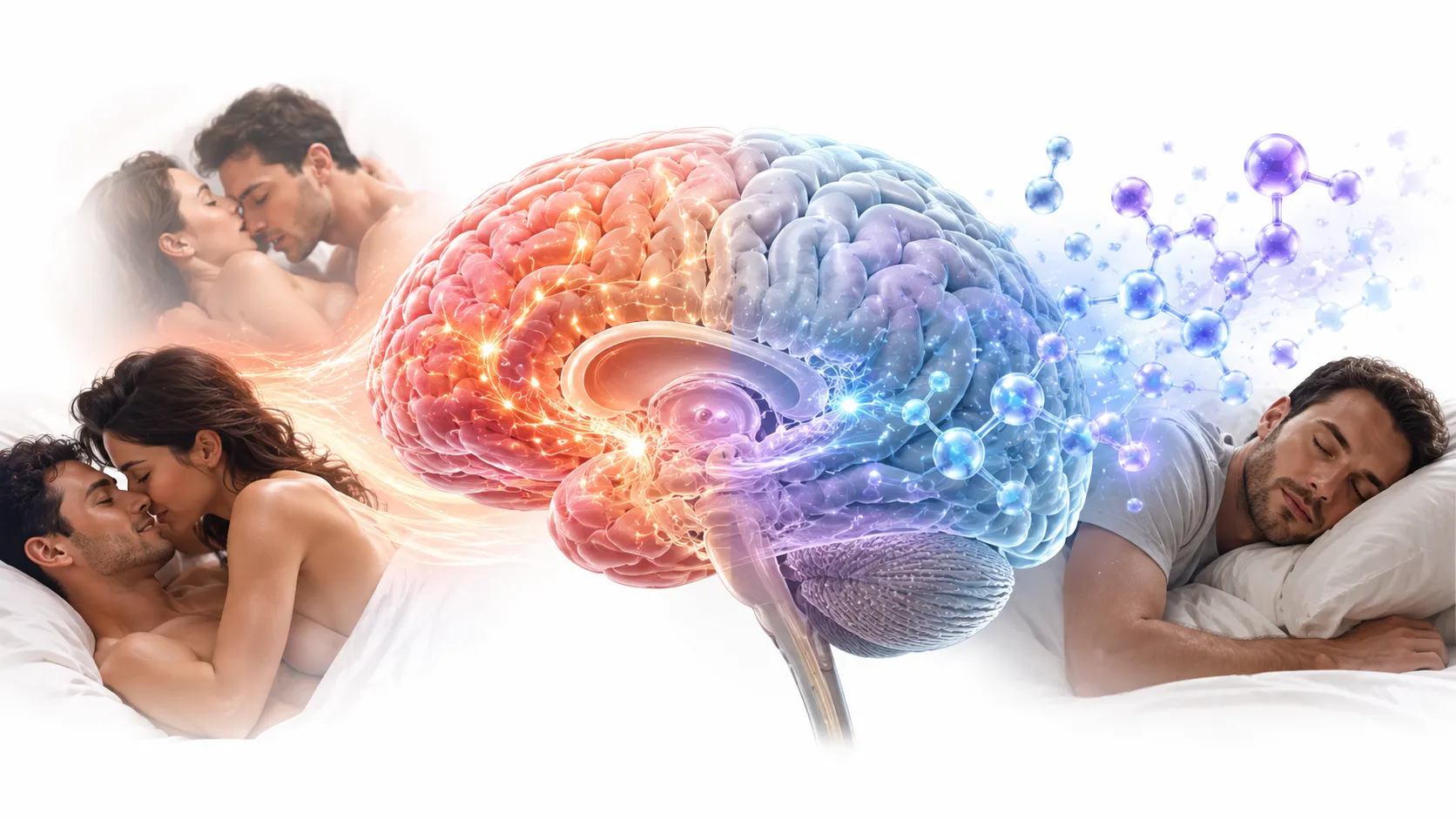
Several chemical events happen simultaneously after orgasm, nearly all of them promote sleep.
Oxytocin surge
Released from the hypothalamus during orgasm. Promotes bonding, reduces cortisol, and has direct calming effects on the nervous system.
Prolactin spike
Rises sharply after orgasm. Associated with sexual satiation and the refractory period. Naturally elevated during sleep.
Endorphin release
The brain's natural opioids create a wave of calm and mild euphoria, and opioids are sedating.
Norepinephrine drop
After the arousal-phase spike, norepinephrine levels fall. Since norepinephrine promotes alertness, its drop contributes to drowsiness.
The hormone cascade
The Chemistry of the Crash
Sex, particularly the arousal phase, is neurochemically activating. The sympathetic nervous system fires up. Heart rate rises. Norepinephrine and dopamine climb. The body is, in a very real physiological sense, aroused in the same way it would be during moderate physical exertion or mild stress.
Then orgasm hits, and the system reverses. The parasympathetic nervous system takes over, the 'rest and digest' mode. The chemicals that were driving arousal drop rapidly. What rises instead is an entirely different set.
Oxytocin peaks during orgasm and stays elevated afterward, reducing activity in the amygdala (the brain's threat-detection center) and lowering cortisol. Prolactin rises and remains elevated for over an hour. Endorphins, the brain's natural opioids, create a soft, warm calm.
Put those three together, subtract the norepinephrine that was keeping you alert, and factor in a slight body temperature rise followed by a cooling drop, and the neurological argument for sleep becomes compelling.
The temperature effect
Why Temperature Makes It Worse
The body's core temperature rises slightly during sexual activity and peaks around orgasm. What happens next is critical: the body dissipates that heat, and core temperature drops.
The brain interprets a dropping core temperature as a sleep signal. This is the same mechanism behind the sleep-inducing effects of a warm bath: heat the body, then let it cool, and the cooling phase triggers drowsiness. Sex is essentially doing the same thing metabolically.
This temperature coupling with sleep is ancient and deeply embedded. Evening naturally brings a drop in core body temperature that aligns with melatonin release and the onset of sleep. Any activity that mimics this pattern, exercise, a warm bath, sex, can trigger the same cascade.
Why men fall asleep faster
Why the Stereotype Has Some Science Behind It
The cultural cliché of the man asleep before the woman has had time to move is not pure fiction. Some research suggests that men experience higher prolactin surges after orgasm than women, which could contribute to stronger post-sex sedation.
There is also an evolutionary hypothesis worth noting, even if it remains speculative: in the ancestral context, staying alert after sex may have had more adaptive value for women (who face longer-term consequences of reproduction) than for men. This would select for different post-coital neurochemical profiles. The evidence for this is indirect.
What the research does consistently show is that post-sex sleepiness occurs in both sexes. It is not a male-exclusive phenomenon, it is a human one. The intensity, timing, and social interpretation differ.
Context also matters enormously. Anxiety, relationship dynamics, time of day, physical exhaustion, and alcohol consumption all modify the baseline neurochemistry. Post-sex sleepiness is not a fixed outcome, it is the default state when other factors are not overriding it.
Does sex improve sleep?
Does Sex Actually Improve Sleep Quality?
The subjective experience of falling asleep faster after sex is well-documented in survey research. But does it improve sleep quality, not just onset?
The evidence suggests it can. Oxytocin reduces nighttime cortisol, which disrupts sleep architecture when elevated. Prolactin naturally peaks during REM sleep and may support its depth and continuity. The physical relaxation that follows sexual activity can reduce the muscle tension that otherwise interferes with sleep.
One study found that adults who had sex with a partner before bed reported significantly better sleep quality than on nights they did not, an effect slightly weaker but still present for self-stimulation. The partnered effect was larger, possibly because of the additional oxytocin contribution from physical contact.
Sleep researchers are careful to note that correlation is imperfect here: people who sleep better may also have more sex, rather than the sex causing the sleep. Causation in both directions is plausible.
Is it rude to fall asleep?
Myth vs Reality
What people think
Falling asleep after sex means you are inconsiderate or uninterested
In many relationships, post-sex sleepiness becomes a source of hurt feelings, interpreted as indifference or lack of connection.
What actually happens
Post-sex sleepiness is a neurochemical response, not a social statement
The hormones released during and after sex are not optional. They are the same chemicals that govern bonding, relaxation, and the transition to sleep. Falling asleep after sex is, in neurological terms, a sign of a completed arousal-relaxation cycle, not a comment on the partner.
Quick answers
Common questions
Is it normal to feel wide awake after sex? +
Yes. Neurochemical responses vary between individuals and depend on context. If sex occurs during a time of day when alertness is naturally high, or if anxiety or excitement is present, the sedating chemicals may not dominate. Morning sex commonly produces more alertness than sleepiness, because the body's natural cortisol peak at that time counteracts the sedating hormones.
Does masturbation also cause sleepiness? +
Yes, though typically to a lesser degree than partnered sex. Orgasm still triggers prolactin and endorphin release. The oxytocin response may be somewhat lower without physical contact with another person, which is thought to amplify oxytocin release through touch alone.
Can sex help with insomnia? +
Some evidence suggests it can improve sleep onset and subjective quality, particularly if it reduces anxiety and raises oxytocin before bed. It is not a substitute for clinical insomnia treatment, but for people without sleep disorders, the neurochemical profile of post-sex relaxation is genuinely conducive to sleep.
Why do some people feel energized after sex instead of sleepy? +
Individual neurochemistry varies. The balance between the activating (dopamine, norepinephrine) and sedating (oxytocin, prolactin) systems after orgasm is not fixed. Personality, time of day, relationship context, and even genetic variation in hormone receptor sensitivity all affect the outcome.