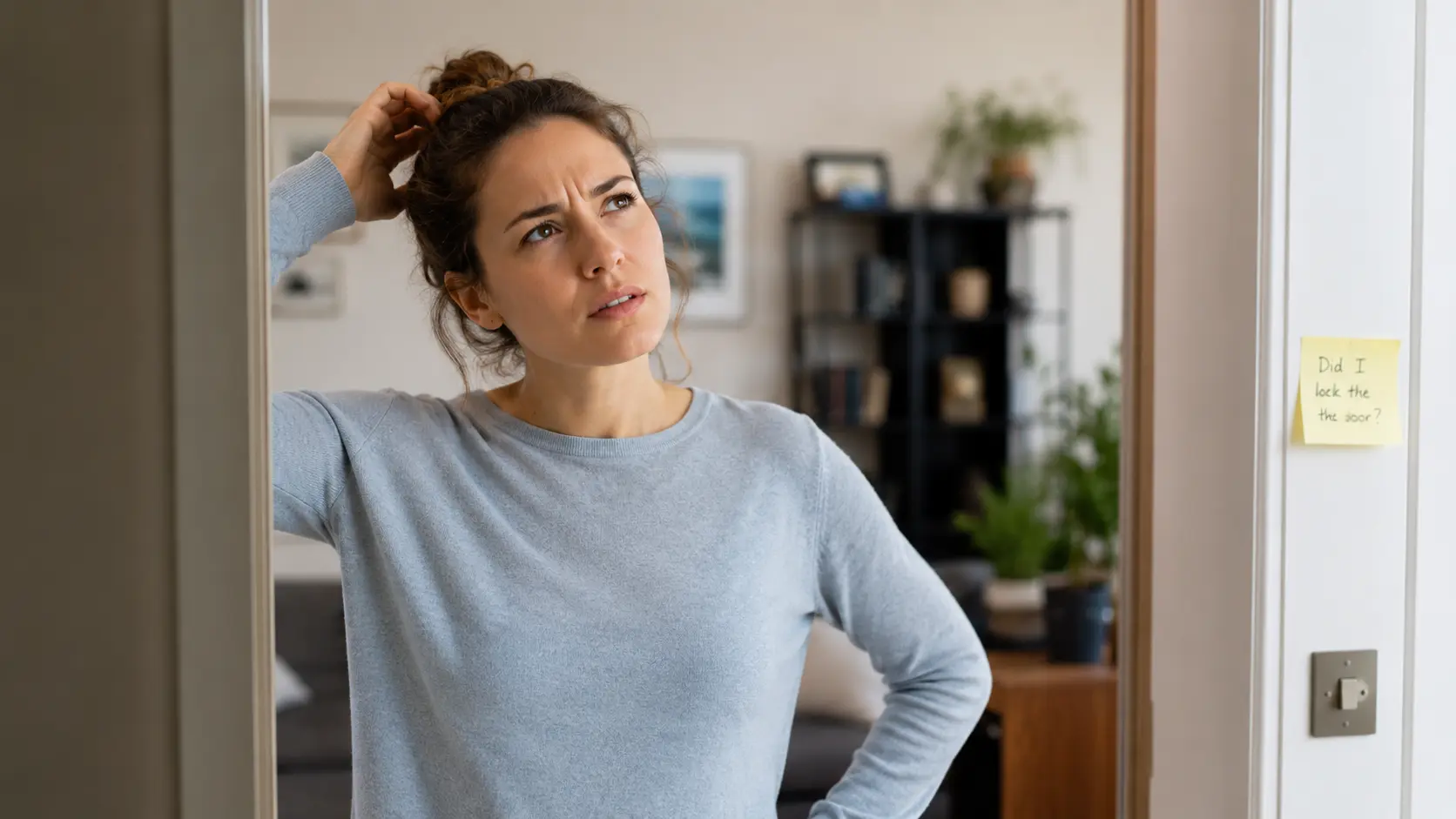
Visual answer
How a Password Moves From Conscious Memory to Muscle Memory
What changes in the brain after a password is repeated hundreds of times.
First uses: conscious declarative memory
The hippocampus encodes the password as an explicit sequence. You can recall it consciously, repeat it aloud, and write it down from memory.
Repeated use begins motor encoding
The basal ganglia and cerebellum start encoding the motor sequence of typing the password. This is faster and more automatic than declarative recall.
Procedural memory takes over
After enough repetition, the motor sequence becomes dominant. The fingers execute it without conscious instruction. The declarative trace fades from disuse.
Deliberate recall fails
When you try to retrieve the password verbally or mentally, you are accessing a system that no longer holds the information. The knowledge still exists but only in the motor system.
Why it happens
The More You Type It, the Less You Know It Consciously
This process is called proceduralization. As a task becomes automatic, the brain stops actively encoding it through the hippocampal system and routes it through motor learning pathways instead. The same thing happens with phone numbers you dial repeatedly, keyboard shortcuts, and your own signature. You cannot describe exactly what your hand does when you sign your name, but the hand can do it flawlessly.
The transition is accelerated by typing on a touchscreen, a specific keyboard, or a consistent login flow. The motor memory is context-specific. If you change your keyboard layout, forget your phone PIN when using a new phone, or are asked to type it on an unfamiliar device, the motor program fails because the sensory context is wrong.
The retrieval block is also bidirectional. If you try to remember a password you currently only know procedurally, you can disrupt your motor memory for it too. Expert typists sometimes cannot state the keyboard layout because thinking about it consciously interferes with the automatic process. This is known as the verbal overshadowing effect.
Myth vs reality
Myth vs Reality
What people think
Forgetting means the memory is gone
Most instances of forgetting a well-used password involve retrieval failure, not memory loss. The information is stored but the retrieval cue or pathway is temporarily blocked. This is why the password often returns on its own later in the day without any deliberate effort.
What actually happens
The memory exists in your motor system, not your verbal system
Daily-use passwords are stored as motor programs. They are intact and can be executed by the motor system, but they are not accessible to the verbal memory system. Trying to recall them verbally is trying to access a filing cabinet that does not hold the file.
Quick answers
Common questions
Why does the password come back after I stop trying? +
When you stop actively searching for it, cortisol drops and the prefrontal cortex resumes normal function. The retrieval block lifts. The return often feels sudden because the shift from blocked to available is relatively quick.
Can this happen with PIN numbers too? +
Yes. ATM PINs are a classic example. Many people know their PIN only as a finger sequence on a number pad and cannot state the digits aloud. Using a different ATM layout or keypad orientation disrupts the motor program entirely.
Should I be worried if this happens often? +
Forgetting well-practiced passwords temporarily is common and normal. Forgetting new passwords quickly, confusing passwords with each other, or general memory lapses increasing over time are different concerns worth discussing with a doctor.
Does writing the password down help maintain conscious memory? +
Yes. Periodic deliberate recall, including writing it out or saying it aloud, prevents complete proceduralization. It keeps a conscious declarative trace alongside the motor memory.
Why do I mix up similar passwords? +
Similar passwords share overlapping motor sequences. The brain stores patterns economically, and when two patterns are close, they interfere with each other at retrieval. This is called proactive interference and is one reason security experts advise against similar passwords across accounts.