Visual answer
The Female Mosquito's Reproductive Cycle
A female mosquito often needs a blood meal before each batch of eggs can develop.
Mating
A female usually mates once and can store sperm for multiple egg batches.
Blood meal
Blood provides amino acids and iron that help her body produce egg yolk proteins.
Egg development
Over the next two to three days, the eggs mature inside her abdomen.
Egg laying
She lays eggs on or near standing water, then may search for another blood meal.
Why blood matters
What Blood Actually Does for a Mosquito
To us, blood is life. To a female mosquito, it is something more specific: egg-building material.
The sugar she needs for energy comes from nectar. That is what keeps her flying. Blood serves a different purpose. It gives her body the protein building blocks needed to make eggs.
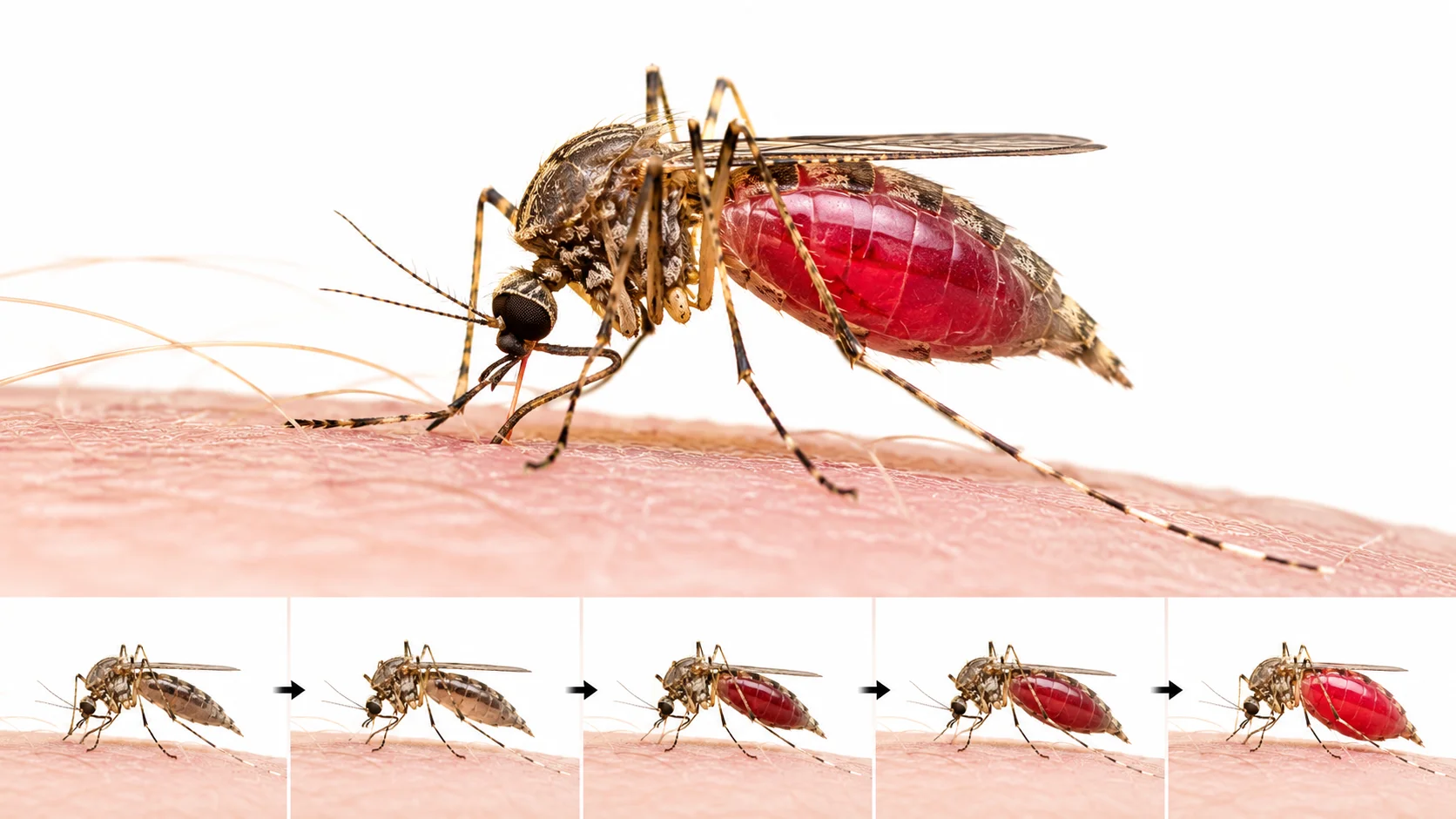
After a blood meal, her abdomen swells as the blood is digested and the nutrients are moved into developing eggs.
This process usually takes a few days. Then she finds water, lays the eggs, and may begin the search again.
That is the strange bargain of the mosquito bite. She takes almost nothing from you by volume, but biologically it may be enough to create the next batch.
Only females bite
Why Male Mosquitoes Do Not Bite
Male mosquitoes are not tiny vampires. They spend their short lives feeding on nectar and plant juices.
Their mouthparts are not built for piercing skin, and they have no need for blood because they do not make eggs.
Female mosquitoes also drink nectar for energy. In ordinary life, nectar is their fuel too.
The difference appears after mating. Once a female needs to produce eggs, nectar alone is not enough. She needs the richer ingredients found in blood.
That is why the mosquito whining near your ear at night is almost certainly female.
How they find you
How Mosquitoes Find You in the Dark
A mosquito does not need to see you clearly to find you.
The hunt often begins with carbon dioxide. Every breath you exhale leaves a drifting chemical trail, and mosquitoes are remarkably good at following it.
As they get closer, they switch to other clues. Body heat, moisture, movement, sweat chemicals, and the smell produced by skin bacteria all help guide them.
This is why some people seem to get bitten more than everyone else. They may simply give off a stronger combination of the signals mosquitoes are built to follow.
To a mosquito, you are not just a person. You are a warm, breathing, chemical lighthouse.
Why you get bitten
Why Some People Get Bitten More Than Others
If mosquitoes always find you first, you may not be imagining it.
People vary in how much carbon dioxide they release, how warm their skin is, how much they sweat, and which chemicals their skin produces.
The bacteria living on your skin also matter. They create tiny scent compounds, and some of those seem especially attractive to mosquitoes.
Blood type may play a role in some studies, but it is not the whole story. A mosquito is not making a simple blood-type decision. It is responding to a cloud of signals around your body.
That is why two people can sit in the same garden and have completely different evenings.
Disease spread
Why a Tiny Bite Can Spread Serious Disease
The dangerous part of a mosquito bite is not the amount of blood she takes. It is what she may inject.
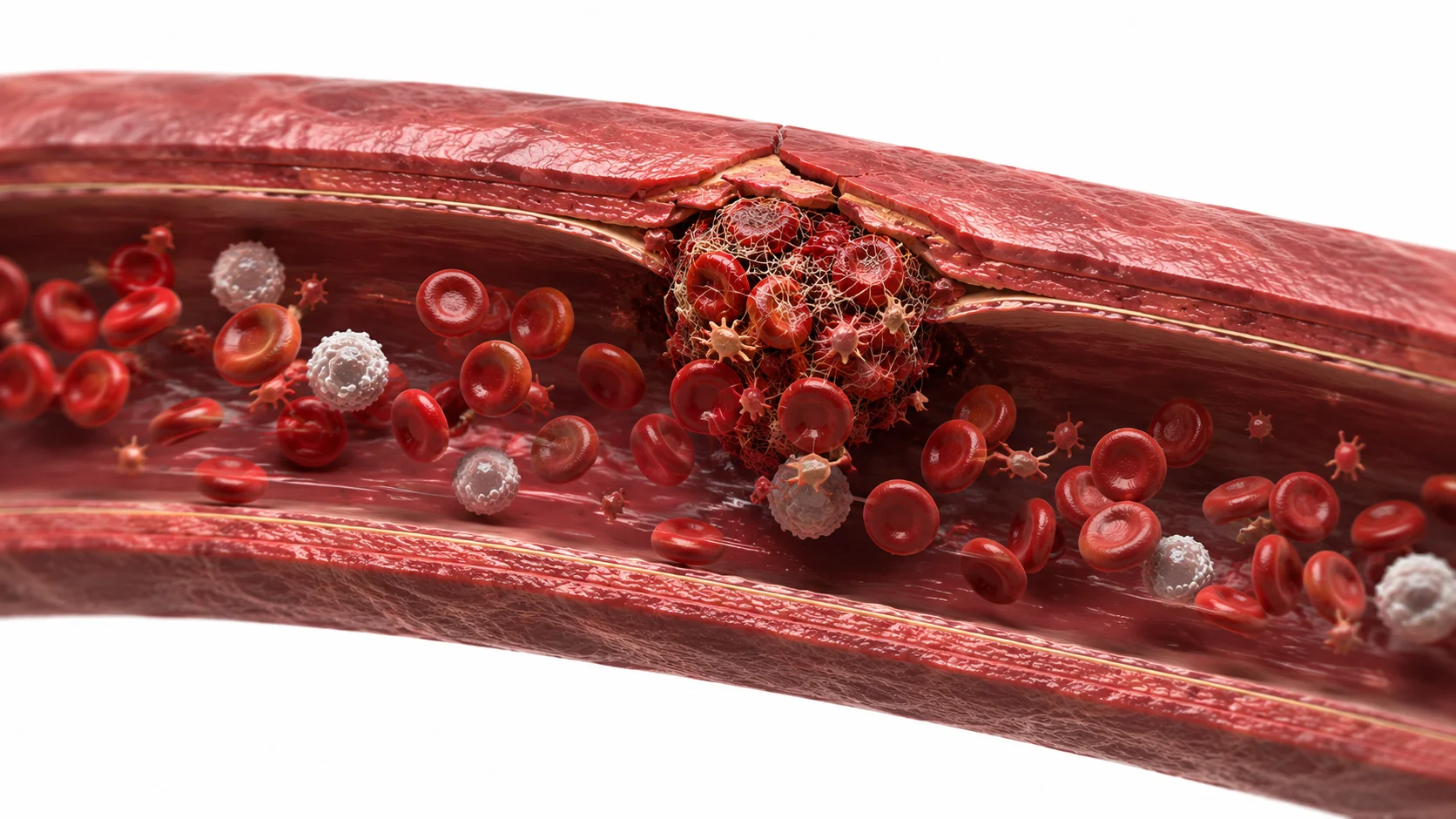
To keep blood flowing, the mosquito releases saliva into the skin. That saliva contains chemicals that slow clotting and make feeding easier.
If the mosquito is carrying a pathogen, such as a malaria parasite or dengue virus, that pathogen can enter the body through the same bite.
The mosquito is not trying to infect anyone. She is simply feeding. But her feeding method makes her an excellent delivery system for disease.
That is why mosquitoes are considered among the deadliest animals in human history. Their danger comes from biology, not size.
Blood type myth
Myth vs Reality
What people think
Mosquitoes bite you because you have sweet blood
People often explain mosquito bites with the idea of sweet blood, especially when one person in a group gets bitten much more than everyone else.
What actually happens
Mosquitoes are following scent, heat, breath, and skin chemistry
Blood type may have a small effect in some cases, but mosquitoes mostly find people through carbon dioxide, body heat, sweat chemicals, and scent compounds produced on the skin.
Quick answers
Common questions
Do all mosquitoes drink blood? +
No. Male mosquitoes do not drink blood. Only female mosquitoes bite, and usually because they need nutrients for egg development.
What do mosquitoes eat when they are not drinking blood? +
Mosquitoes mainly feed on nectar and other sugary plant fluids. This provides energy for flying and survival.
How much blood does a mosquito take? +
A mosquito takes only a tiny amount of blood, usually a few microliters. The real problem is not blood loss, but itching and possible disease transmission.
Why do mosquito bites itch? +
The itch comes from your immune system reacting to mosquito saliva. When a mosquito feeds, she injects saliva that helps prevent clotting. Your body treats those proteins as foreign and releases histamine, causing swelling and itching.
Can mosquitoes transmit HIV? +
No. HIV does not survive or multiply inside mosquitoes in the way malaria parasites can. Mosquitoes are not considered a route of HIV transmission.