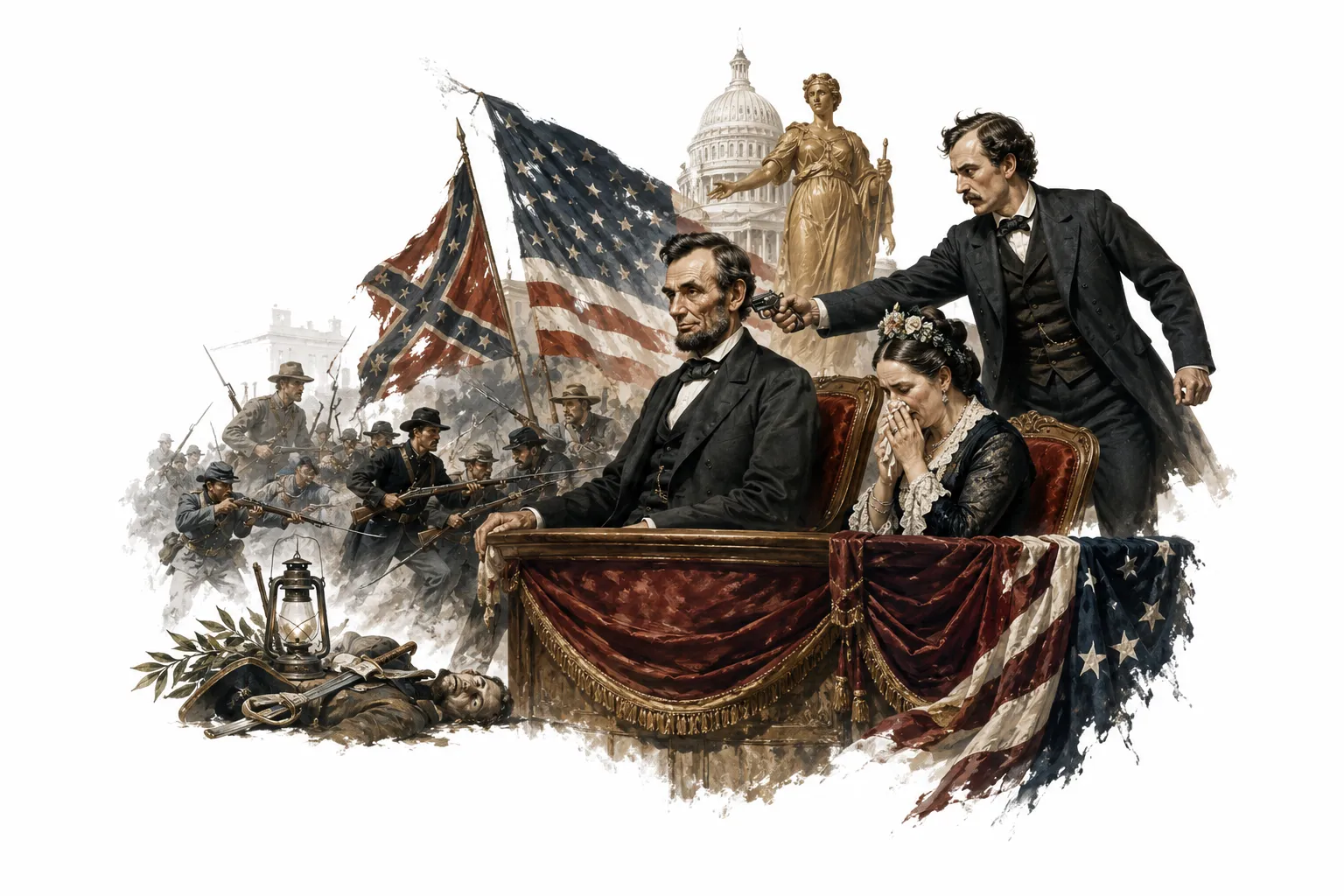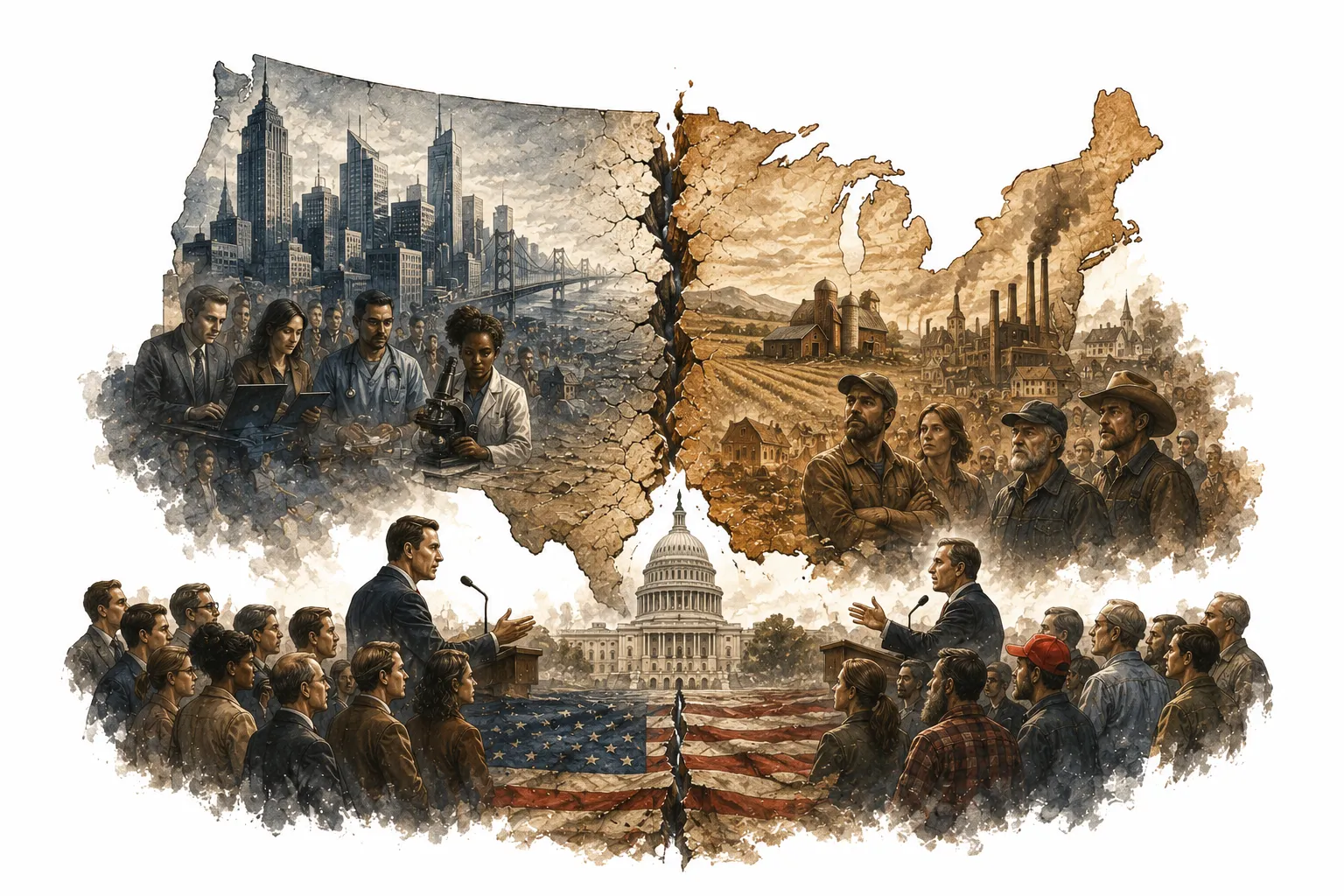
Quick Facts
Quick Facts
South Carolina was the first state to secede, on December 20, 1860.
Eleven states eventually joined the Confederacy.
Four slave states (Delaware, Maryland, Kentucky, Missouri) remained in the Union.
The Confederate attack on Fort Sumter had no casualties. The first major battle, Bull Run, was a shock.
More Americans died in the Civil War than in World War I and World War II combined.
Visual answer
How the Civil War Began
The chain of events from Lincoln's election to the attack on Fort Sumter.
November 6, 1860
Abraham Lincoln wins the presidency without a single Southern electoral vote.
December 20, 1860
South Carolina secedes from the Union.
January-February 1861
Six more states secede and form the Confederate States of America.
March 4, 1861
Lincoln is inaugurated. He vows to preserve the Union.
April 12, 1861
Confederate forces attack Fort Sumter in Charleston harbor.
April 15, 1861
Lincoln calls for 75,000 volunteers. Four more states secede. War has begun.
Story in brief
Story in Brief
1860
Abraham Lincoln is elected president.
December 1860
South Carolina secedes.
The first domino fell. Others would follow.
February 1861
The Confederate States of America is formed.
March 4, 1861
Lincoln is inaugurated.
April 12, 1861
Confederate forces attack Fort Sumter.
The first shots of the Civil War. No one died, but the war had begun.
April 15, 1861
Lincoln calls for volunteers to suppress the rebellion.
April-June 1861
Virginia, Arkansas, Tennessee, and North Carolina secede.
The Confederacy now had 11 states. The war would be long and bloody.
The Story
Let the Southerners Tell You Themselves
There is a persistent myth that the Civil War was about 'states' rights' or 'economic differences' or 'tariffs.' These myths are polite fictions designed to make the war seem less ugly. The people who started the war were not shy about their reasons. They wrote them down.
Mississippi's declaration of secession stated: 'Our position is thoroughly identified with the institution of slavery.' South Carolina complained about Northern states refusing to return escaped slaves. Texas declared that the 'African race' was 'rightfully held as an inferior race.'
The Southern states did not secede because of tariffs. They seceded because they feared Lincoln would restrict slavery, and a country without slavery was a country they did not want to live in. They said so. In writing. Repeatedly.
Famous Quote
"A house divided against itself cannot stand. I believe this government cannot endure permanently half slave and half free."
, Abraham Lincoln, 1858
Lincoln said this two years before he was elected president. He turned out to be right. The house divided itself by war.
Evidence
What the Historical Record Shows
Seceding states explicitly cited slavery in their declarations.
StrongThe Confederate Constitution protected slavery explicitly.
StrongLincoln's election triggered secession because he opposed slavery's expansion.
StrongTariffs and economic issues were secondary concerns.
StrongKey Points
Key Points So Far
Slavery was the primary cause of secession and the Civil War.
The seceding states said so themselves in their official documents.
Lincoln's election, without any Southern support, triggered secession.
The attack on Fort Sumter began the fighting.
Analogy
Think of It Like a Painful Divorce
The familiar part
Imagine a marriage where one partner owns something the other finds morally repugnant. They argue for years. Finally, one partner says, 'I am leaving and taking half the house with me.'
How it applies
The Southern states wanted to leave the Union and take their 'property' (enslaved people) with them. Lincoln said no. The argument became a war.
Where the analogy breaks
Divorces do not usually kill 750,000 people. The Civil War did.
Curiosity Notes
Details Most People Miss
Why this still matters
Why This Still Matters
The Civil War is still debated in America because its central issue, race and equality, was never fully resolved. The war ended slavery, but it did not end racism. Reconstruction failed. Jim Crow laws followed. The civil rights movement of the 1960s was, in many ways, a continuation of the Civil War by other means. The war is not ancient history. It is a wound that is still healing.
Key Findings
- ✓Core findingSlavery was the primary cause of the Civil War.
- ✓Strong evidenceThe seceding states said so explicitly in their declarations.
- ⚠Main consequenceLincoln's election triggered secession because he opposed slavery's expansion.
- ✓Wider legacyThe war began with the Confederate attack on Fort Sumter on April 12, 1861.
- ★Bottom lineThe war killed over 600,000 Americans, more than any other US conflict.
Final insight
A Last Thought
The Civil War started because one group of Americans could not accept that another group of Americans wanted to end the ownership of human beings. That is the uncomfortable truth. The war was not a misunderstanding. It was a choice. The Confederacy chose to fight rather than give up slavery. And 750,000 Americans died because of that choice. There is no way to make that story comfortable. There is only the obligation to tell it honestly.
Quick answers
Common questions
Was the Civil War really about slavery? +
Yes. The seceding states said so themselves. Read their declarations of secession. They mention slavery constantly. They mention tariffs almost never.
What was the Emancipation Proclamation? +
An executive order by Abraham Lincoln that declared enslaved people in Confederate states to be free. It did not free enslaved people in border states that remained in the Union. It was a war measure as much as a moral one.