Quick Facts
Quick Facts
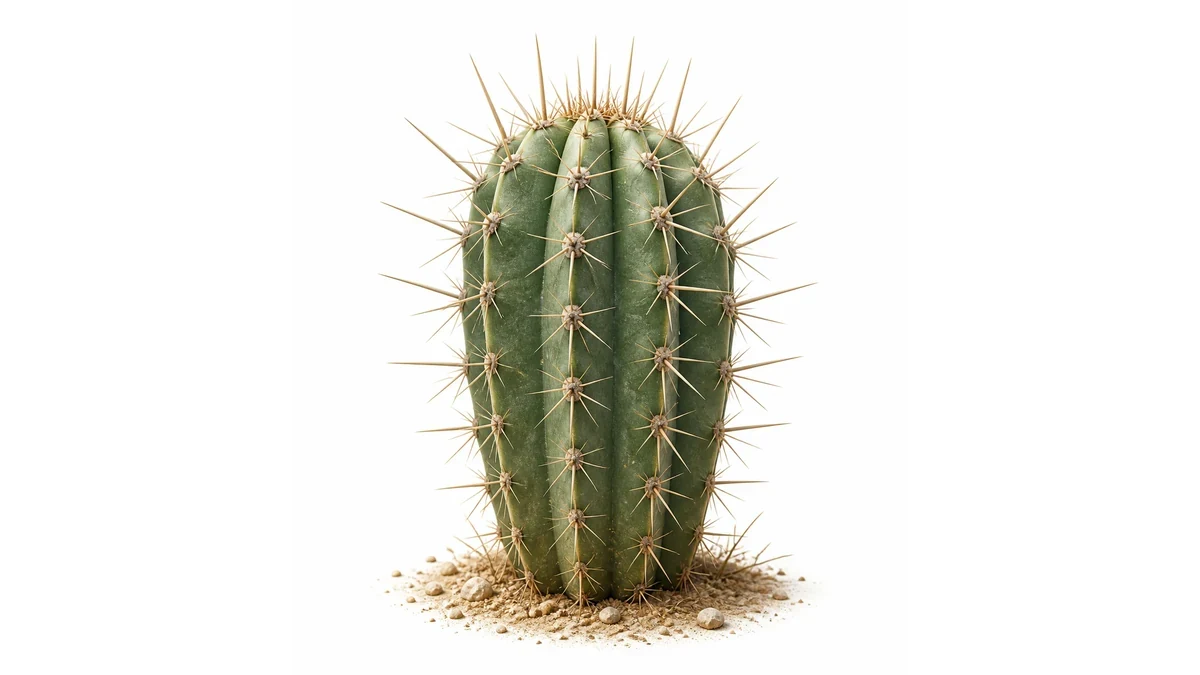
Cactus spines are modified leaves.
They deter herbivores from eating the cactus.
Spines provide shade, reducing water loss.
Some cacti have hooked spines that catch animals.
The spines are a desert adaptation.
Visual answer
Why Cacti Need Spines
The two functions of cactus spines.
Protection
Spines deter herbivores.
Shade
Spines provide shade, reducing water loss.
Modified Leaves
Spines are evolutionarily adapted leaves.
Desert Survival
The spines help the cactus survive in harsh conditions.
Story in brief
Story in Brief
Ancient Times
Cacti evolve in the Americas.
1800s
Scientists study cactus adaptations.
The function of spines is understood.
1900s
Cacti are popularized as houseplants.
People begin to appreciate their unique adaptations.
Today
We know cacti as masters of desert survival.
The cactus is a symbol of resilience.
The Story
Why Cacti Are Spiky
The cactus is a survivor. It lives in the desert, where water is scarce and temperatures are extreme. It has adapted to conserve water and protect itself.
The spines are modified leaves. In most plants, leaves are broad and flat, designed to capture sunlight and release water. In cacti, leaves have been reduced to spines. This reduces water loss and protects the plant from herbivores.
The spines also provide shade. The shadow of a spine can reduce the temperature of the cactus surface. This further reduces water loss.
The cactus is a fortress. The spines are the walls. The water is the treasure. And the desert is the enemy. The cactus survives.
Famous Quote
"The cactus is a plant that has learned to live with less."
, Unknown
The cactus is a master of survival in extreme conditions.
Evidence
Why Cacti Have Spines
Spines deter herbivores.
StrongSpines provide shade, reducing water loss.
StrongSpines are modified leaves.
StrongCacti evolved in desert environments.
StrongKey Points
Key Points So Far
Cacti have spines for protection and water conservation.
Spines are modified leaves.
They deter herbivores and provide shade.
The cactus is a master of desert survival.
Analogy
Like a Desert Fortress
The familiar part
Imagine a fortress in the desert. It has walls to protect the treasure inside.
How it applies
A cactus is a desert fortress. The spines are the walls. The water is the treasure. The heat is the enemy.
Where the analogy breaks
Fortresses have armies. Cacti have spines.
Curiosity Notes
Details Most People Miss
Why this still matters
Why This Still Matters
The cactus is a symbol of resilience. It survives in the harshest conditions. Its spines are not just defensive. They are adaptive. They are the cactus's way of saying, 'I am here, and I am not leaving.'
Key Findings
- ✓Core findingCacti have spines for protection and water conservation.
- ✓Strong evidenceSpines are modified leaves.
- ⚠Main consequenceThey deter herbivores and provide shade.
- ✓Wider legacyThe cactus is a master of desert survival.
Final insight
A Last Thought
The cactus is a lesson in adaptation. It lives where others cannot. It survives with less. And it protects itself with a coat of needles. The spines are not a choice. They are a necessity. They are the cactus's way of saying, 'I am here. I am tough. And I am staying.'
Quick answers
Common questions
Are cactus spines dangerous? +
They can be. Some spines are sharp and can cause injury. Handle cacti with care.
Do all cacti have spines? +
No. Some cacti have evolved without spines. But most have them.