Quick Facts
Quick Facts
Chlorophyll is the most abundant pigment on Earth.
Without chlorophyll, there would be no oxygen and no food.
Leaves contain other pigments too, like carotenoids (yellow) and anthocyanins (red).
In autumn, chlorophyll breaks down, and the other pigments become visible.
Some plants have variegated leaves with white or yellow patches.
Visual answer
How Chlorophyll Works
The molecule that makes leaves green.
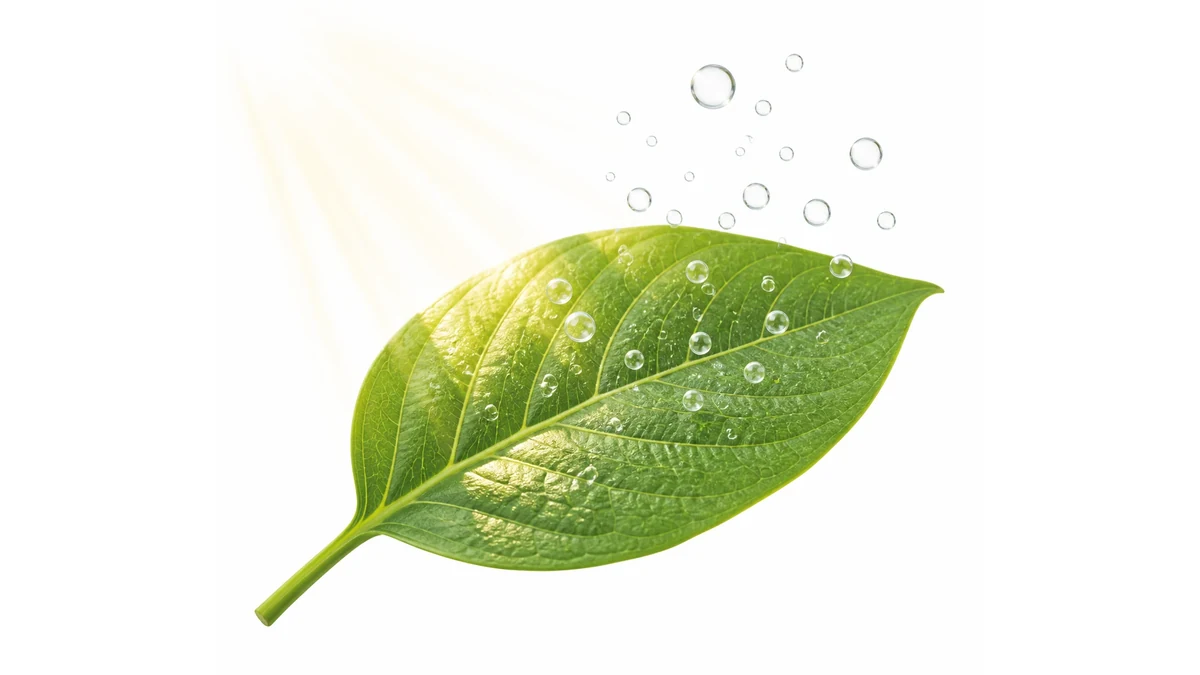
Sunlight
White light contains all colors.
Chlorophyll
The pigment absorbs red and blue light.
Reflection
Green light is reflected back to our eyes.
Photosynthesis
Absorbed energy is used to create sugar.
Story in brief
Story in Brief
1771
Joseph Priestley discovers that plants produce oxygen.
The first clue that plants are doing something important.
1817
Two French chemists name the green pigment 'chlorophyll.'
The molecule gets a name.
1905
Scientists figure out that chlorophyll absorbs red and blue light.
The reason leaves are green is finally understood.
Today
We know that chlorophyll is the most important pigment on Earth.
Without it, life as we know it would not exist.
The Story
Why Green Is the Color of Survival
Imagine for a moment that you are a leaf. You are small. You are thin. You are vulnerable. And your job is to turn sunlight into food. The tool you use is chlorophyll.
Chlorophyll is a pigment. It is a molecule that can absorb energy from light. But it does not absorb all light equally. It absorbs red and blue light very well. It absorbs green light poorly. So it reflects green light back.
Our eyes are designed to see the reflected light. So the leaf looks green. But the leaf is not trying to be green. It is just not using green. The color is a side effect.
And here is the best part: chlorophyll is so good at its job that it has been doing it for over 2 billion years. The color green is the color of survival.
Famous Quote
"Chlorophyll is the only molecule on Earth that can capture the energy of the sun and turn it into food. Everything else eats the food."
, Bill Bryson, A Short History of Nearly Everything
Bryson puts chlorophyll in perspective. It is the foundation of almost all life.
Evidence
Why Chlorophyll Reflects Green
Chlorophyll absorbs red and blue light most efficiently.
StrongGreen light is reflected, making leaves appear green.
StrongOther pigments (carotenoids, anthocyanins) produce other colors.
StrongAutumn colors appear when chlorophyll breaks down.
StrongKey Points
Key Points So Far
Leaves are green because of chlorophyll, a pigment that absorbs sunlight.
Chlorophyll absorbs red and blue light and reflects green.
The reflected green light is what our eyes see.
The color green is a side effect of the chemistry of photosynthesis.
Analogy
Like a Solar Panel That Rejects a Color
The familiar part
Imagine a solar panel that is designed to absorb most colors of light but rejects one. The rejected color is the color you see.
How it applies
That is chlorophyll. It is a tiny solar panel. It absorbs red and blue. It rejects green. The green is the color we see.
Where the analogy breaks
Solar panels are man-made. Chlorophyll is nature-made. But the principle is the same.
Curiosity Notes
Details Most People Miss
Why this still matters
Why This Still Matters
The color green is everywhere. It is the color of life. But it is not a choice. It is a chemical necessity. The next time you look at a tree, remember: you are looking at sunlight reflected back at you. The green is just the part that did not get absorbed.
Key Findings
- ✓Core findingLeaves are green because of chlorophyll.
- ✓Strong evidenceChlorophyll absorbs red and blue light, reflecting green.
- ⚠Main consequenceThe color is a side effect of photosynthesis.
- ✓Wider legacyAutumn colors appear when chlorophyll breaks down.
Final insight
A Last Thought
Green is the color of survival. It is the color of the molecule that turns sunlight into food. It is the color of the foundation of almost all life. And it is not even a choice. It is a side effect. The most common color in nature is not a decision. It is a compromise. That is the beauty of biology. It is all just chemistry that worked.
Quick answers
Common questions
Why are leaves green and not black? +
If leaves were black, they would absorb all light, including green. But chlorophyll is inefficient at absorbing green light. Evolution chose efficiency over total absorption.
Do all plants have green leaves? +
Most do. Some plants have red, purple, or variegated leaves. These plants still contain chlorophyll, but other pigments dominate.