1
01. Construction begins on uneven ground
The foundation soil varies in composition and compressibility across the tower's footprint.
History & Engineering
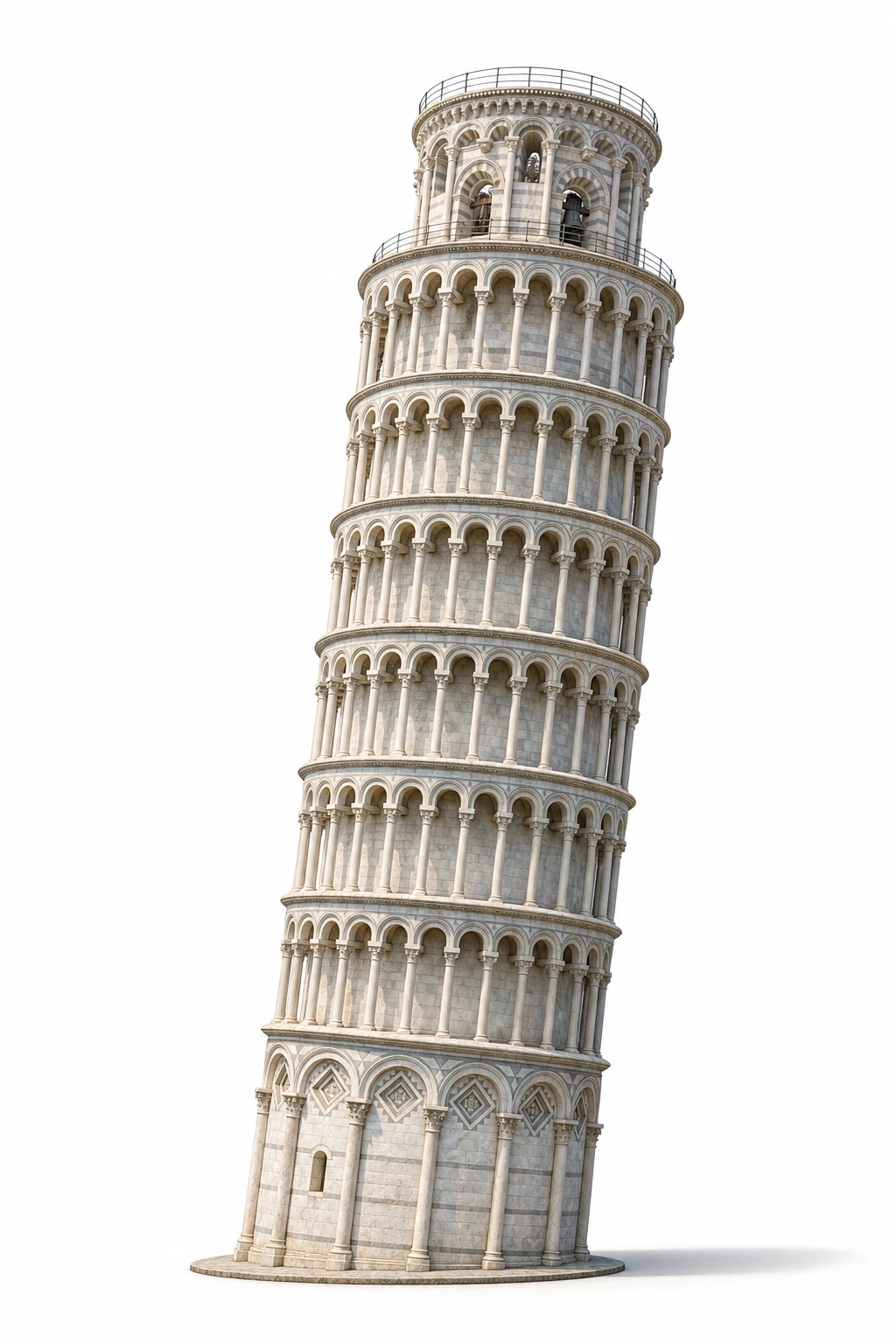
A construction mistake that somehow became the most famous building in Italy. The Leaning Tower of Pisa should not be famous. It should have been fixed, finished properly, or quietly demolished centuries ago. Instead, its embarrassing structural failure became one of the most recognizable landmarks on Earth, visited by millions every year specifically to see it fail. The answer involves soft ground, construction halts, and the accidental discovery that the lean was making it so famous that nobody dared straighten it completely.
Quick answer
The Leaning Tower of Pisa leans because one side was built on softer, less stable soil than the other, causing that side to sink more as construction added weight, tipping the tower progressively despite multiple attempts during its 200-year construction to correct the angle. The lean began almost immediately during construction, and engineers have since determined that the very same geological conditions that caused the lean also helped protect the tower during earthquakes by reducing resonance.
The mystery
The answer involves soft ground, construction halts, and the accidental discovery that the lean was making it so famous that nobody dared straighten it completely.
The short answer
The Leaning Tower of Pisa leans because one side was built on softer, less stable soil than the other, causing that side to sink more as construction added weight, tipping the tower progressively despite multiple attempts during its 200-year construction to correct the angle.
The twist
The lean began almost immediately during construction, and engineers have since determined that the very same geological conditions that caused the lean also helped protect the tower during earthquakes by reducing resonance.
Common mistake
Some visitors assume the lean was intentionally designed as an architectural statement.
History & Engineering
No, the 1990s intervention stabilized it and engineers estimate it is safe for at least the next two centuries.
The engineers who saved the lean
A team of geotechnical engineers who, between 1990 and 2001, successfully reduced the tower's lean to safe levels without eliminating it.
Related questions
Yes, several bell towers in Italy lean similarly, and the Big Ben tower in London has a small but measurable tilt.
Where differential settlement causes other problems
Several buildings in Mexico City have developed significant tilts due to differential settlement in the city's soft lacustrine soil.
Where differential settlement causes other problems
Modern tall buildings invest heavily in foundation design specifically to prevent differential settlement of the kind that tilted the Pisa tower.
Was the lean a deliberate artistic choice?
The lean was entirely unintentional, embarrassing to its builders, and multiple attempts were made to counteract it during construction.
Continue learning