Everyday Science

Why Does a Wet Towel Get Sticky?

The same force that lets water striders walk on ponds is quietly ruining your bathroom experience. A dry towel slides smoothly across your skin. The same towel, soaked through, suddenly clings stubbornly instead - bunching, dragging, refusing to glide the way it should. It feels like the towel has changed personality entirely. In a sense, the water inside it has given it one. The answer involves surface tension, capillary action, and the same molecular stickiness that lets insects walk across the surface of a pond.

Quick answer

A wet towel feels sticky mainly because of surface tension and capillary action - water molecules cling tightly to both each other and the towel's fibers, creating suction-like adhesion against skin and increasing friction between fibers that would otherwise slide freely past one another. The stickiness has nothing to do with dirt, soap, or detergent residue - even a perfectly clean towel becomes noticeably stickier the moment it gets wet.
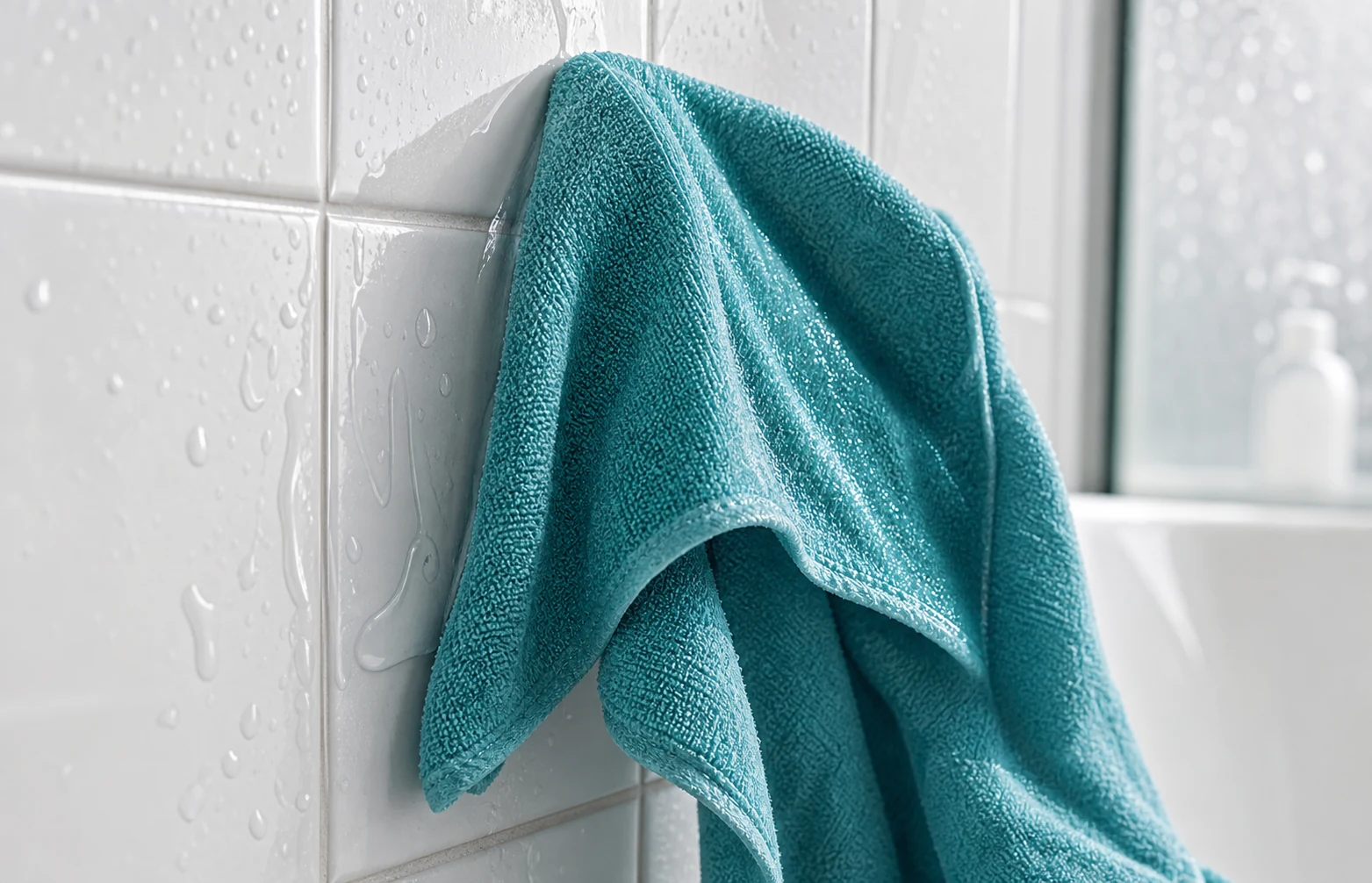
Why Does a Wet Towel Get Sticky? hero image

The mystery

The answer involves surface tension, capillary action, and the same molecular stickiness that lets insects walk across the surface of a pond.

The short answer

A wet towel feels sticky mainly because of surface tension and capillary action - water molecules cling tightly to both each other and the towel's fibers, creating suction-like adhesion against skin and increasing friction between fibers that would otherwise slide freely past one another.

The twist

The stickiness has nothing to do with dirt, soap, or detergent residue - even a perfectly clean towel becomes noticeably stickier the moment it gets wet.

Common mistake

Many assume leftover detergent or soap residue is the main cause of a sticky, clingy wet towel.

Water's clinginess is the whole story

A wet towel's sticky feeling comes down almost entirely to water's unusually strong attraction to itself and to nearby surfaces.

Surface tension creates a subtle suction effect

Water molecules are strongly attracted to one another through hydrogen bonding, creating a thin, elastic-like surface tension wherever water meets air.

When a wet towel presses against skin, that surface tension creates a mild suction effect, similar to how a wet glass briefly sticks to a countertop.

Water does not want to let go of itself, and your skin briefly gets caught in that reluctance.

Capillary action pulls fibers together

Water is drawn into the narrow spaces between a towel's individual fibers through capillary action, the same force that lets water climb up a thin straw.

This draws fibers closer together and increases friction between them, making the towel feel stiffer, clingier, and less able to glide smoothly.

Wet fibers stop sliding past each other politely and instead start grabbing on, one tiny capillary tug at a time.

Fabric texture amplifies the effect

Towels are designed with a looped, textured pile specifically to maximize water absorption, but that same texture also maximizes the surface area available for capillary stickiness once wet.

This is why textured terrycloth towels tend to feel noticeably stickier when damp compared to smoother fabrics.

The very feature that makes a towel good at drying you off is exactly what makes it cling once it's wet itself.

How a dry towel becomes a sticky one

A short sequence explains the transition from smooth fabric to clingy, damp cloth.

1

01. Water soaks into the towel's fibers

Moisture is absorbed throughout the fabric's woven or looped structure.

2

02. Capillary action draws fibers closer together

Water pulled into narrow gaps between fibers increases internal friction.

3

03. Surface tension forms at points of contact with skin

A thin film of water creates a mild adhesive, suction-like effect against the skin.

4

04. The combined effects produce a noticeably stickier feel

Increased fiber friction and surface adhesion together create the familiar clinginess of a wet towel.

Why this is the same force insects rely on

Surface tension, the same property making a wet towel feel sticky, is also strong enough to let lightweight insects like water striders walk across the surface of ponds without sinking.

It is a striking reminder that water's molecular stickiness, often invisible in daily life, is actually one of its most powerful and consequential physical properties.

Surprising facts about water's stickiness

Fabric softener changes this effect
Fabric softeners coat fibers with compounds that reduce friction, which is part of why softened towels feel less sticky when wet.
Water striders rely on the exact same force
Surface tension is strong enough to support these lightweight insects entirely on the surface of water.
Overdrying towels in the dryer affects absorbency
High heat can damage fiber structure over time, subtly altering how a towel absorbs water and feels when wet.

Isn't it just soap residue making the towel sticky?

Myth

Many assume leftover detergent or soap residue is the main cause of a sticky, clingy wet towel.

Stickiness is commonly associated with soap or residue in other contexts, making it a natural, if incorrect, first assumption here.

Reality

Even a perfectly rinsed, residue-free towel becomes sticky when wet, because surface tension and capillary action are the true underlying causes.

Even a perfectly rinsed, residue-free towel becomes sticky when wet, because surface tension and capillary action are the true underlying causes.

Where similar water adhesion effects appear

Wet playing cards sticking together
Surface tension causes damp cards to cling to one another in a similar suction-like way.
Wet hair clumping together
Water's surface tension pulls individual strands of hair together, producing the familiar clumped, wet-hair effect.

Why this small annoyance is worth understanding

Understanding surface tension and capillary action explains a wide range of everyday textile and fluid behaviors beyond just bathroom towels.

This same physical understanding informs fabric engineering, from moisture-wicking athletic wear to absorbent medical textiles.

Worth noting

A small daily reminder of water's strength

A sticky wet towel is a small, slightly annoying reminder that water's molecular attraction to itself is far stronger, and far more consequential, than it usually gets credit for. The same stubborn clinginess that ruins a good towel also quietly lets insects stroll across an entire pond.

Quick answers

Common questions

Does towel material affect how sticky it feels when wet?

Yes, textured materials like terrycloth tend to feel stickier when wet than smoother, tightly woven fabrics.

Can washing technique reduce towel stickiness?

Using less detergent and occasional fabric softener, along with avoiding overdrying, can help reduce excessive stiffness and stickiness.

Everyday Science

Related questions

Surface tension creates a thin, elastic-like film strong enough to support their lightweight bodies.

The physics behind water's clinginess

Surface Tension and Capillary Action

Two closely related physical principles describing how strongly water molecules attract one another and adhere to nearby surfaces.

Related questions

Why does fabric softener make towels feel less sticky?

It coats fibers with a slick compound that reduces friction and the strength of capillary effects.

Where similar water adhesion effects appear

Wet playing cards sticking together

Surface tension causes damp cards to cling to one another in a similar suction-like way.

Where similar water adhesion effects appear

Wet hair clumping together

Water's surface tension pulls individual strands of hair together, producing the familiar clumped, wet-hair effect.

Isn't it just soap residue making the towel sticky?

Even a perfectly rinsed, residue-free towel becomes sticky when wet, because surface tension and capillary action are the true underlying causes.

Even a perfectly rinsed, residue-free towel becomes sticky when wet, because surface tension and capillary action are the true underlying causes.