1
01. Deliberate ritual defacement
Targeted damage to the nose and face neutralized spiritual or political power.
Art & History
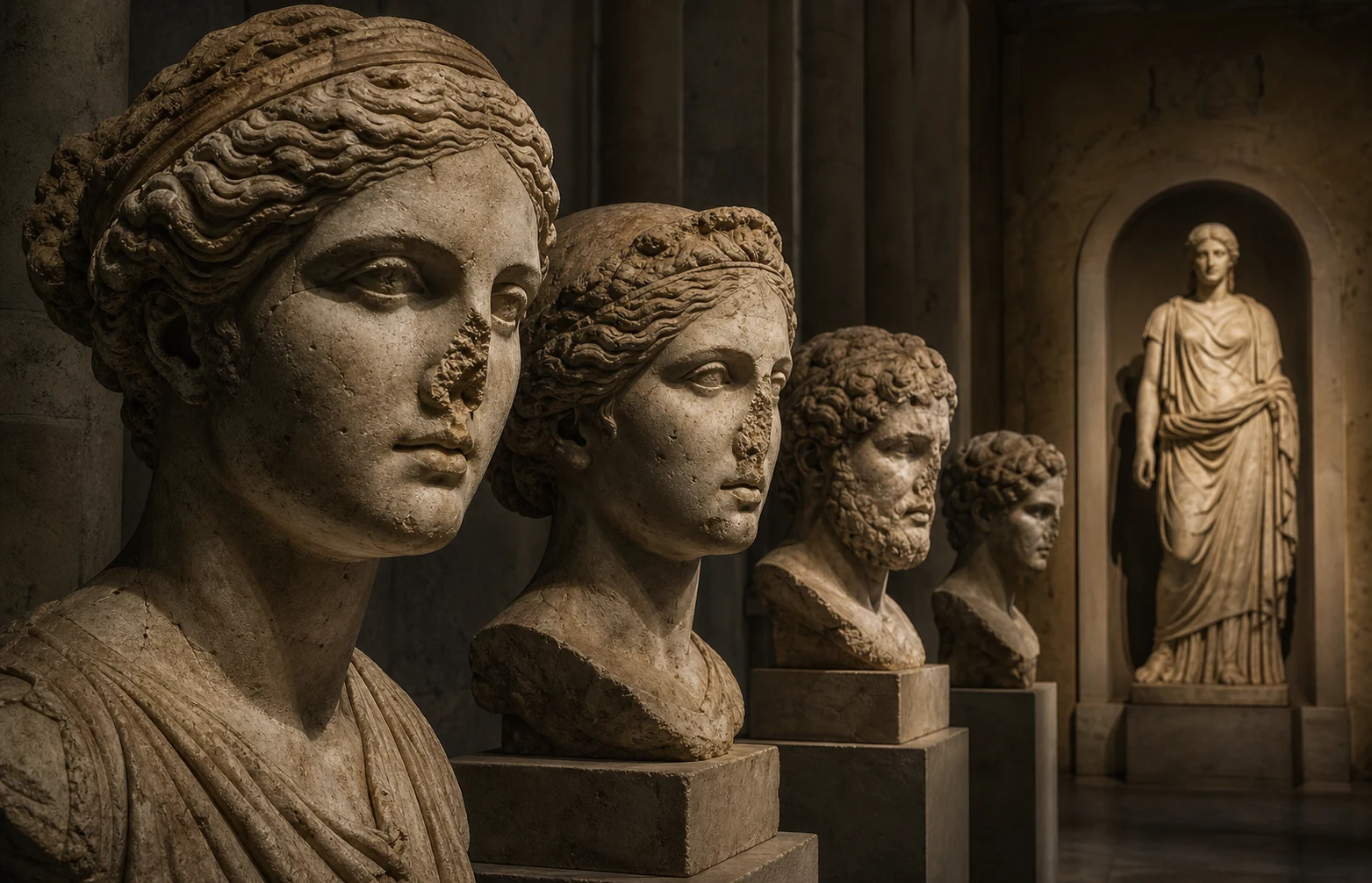
Walk through any ancient gallery and count the noses. You will not get far. There is a specific melancholy in a museum of ancient sculpture: emperors, gods, athletes, and philosophers staring with blank marble eyes and no noses. It looks like history itself went through the gallery with a hammer and a grudge. Someone did. Many someones, actually. Many missing noses were removed on purpose - for reasons involving power, images, and the afterlife.
Quick answer
Statues lose noses through deliberate defacement, structural vulnerability, religious iconoclasm, political erasure, and souvenir vandalism. Time explains some damage, but intentional destruction explains much more than people think. In ancient Egypt, a statue without a nose was a statue that could not breathe - spiritually dead.
The mystery
Many missing noses were removed on purpose - for reasons involving power, images, and the afterlife.
The short answer
Statues lose noses through deliberate defacement, structural vulnerability, religious iconoclasm, political erasure, and souvenir vandalism. Time explains some damage, but intentional destruction explains much more than people think.
The twist
In ancient Egypt, a statue without a nose was a statue that could not breathe - spiritually dead.
Common mistake
Most people assume missing noses are simply the result of stone erosion.
Art & History
Nothing documented. The nose was already missing before his expedition.
The erased pharaoh
One of Egypt's most successful rulers, later systematically erased by Thutmose III.
Also worth asking
Technically yes, but many museums prefer to preserve damage as history.
Noseless in the modern world
Their destruction in 2001 followed the same iconoclastic logic: images hold power, so power must be neutralized.
Noseless in the modern world
Modern monument removal mirrors old debates over memory, power, and public images.
Wasn't it just time doing it?
Some are accidental, but many show marks and patterns consistent with deliberate defacement.
Continue learning