1
01. Vertical elevation signals status
Thrones, altars, judges, and crowns all use height to mark authority.
History & Symbolism
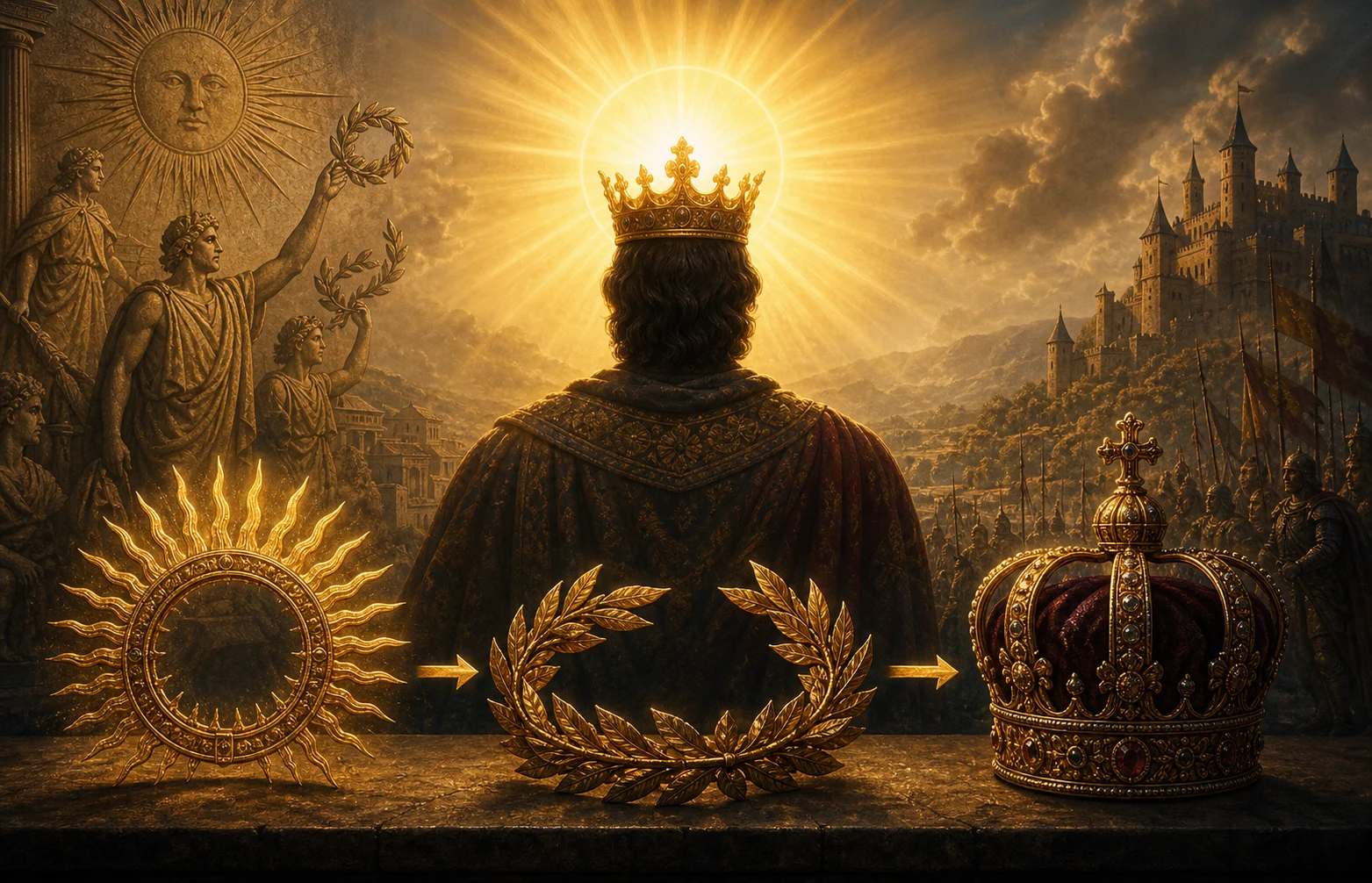
The answer goes back much further than medieval Europe - all the way to the sun. Before crowns were made of gold and jewels, they were made of leaves. Before they were leaves, they were made of light - or the idea of it. The ring of gold around a head appears across cultures because something deep in human cognition is doing the work. The crown represents power because it mimics something humans instinctively understood: the halo of the sun.
Quick answer
Crowns became royal symbols because they evoke solar radiance, vertical status, circular eternity, and divine sanction. Corona literally means crown in Latin, which is why the sun's outer atmosphere is called the corona.
The mystery
The crown represents power because it mimics something humans instinctively understood: the halo of the sun.
The short answer
Crowns became royal symbols because they evoke solar radiance, vertical status, circular eternity, and divine sanction.
The twist
Corona literally means crown in Latin, which is why the sun's outer atmosphere is called the corona.
Common mistake
Crowns are often understood primarily as displays of riches.
History & Symbolism
A Copper Age crown from the Nahal Mishmar area, dating to about 3500 BC.
The crown that started an empire
On Christmas Day in 800, Pope Leo III crowned Charlemagne Emperor of the Romans.
Related curiosities
Not all, but head adornment as authority marker is nearly universal.
Crowns in the modern world
Garlands, jackets, medals, and jerseys are displaced crowns marking distinction.
Crowns in the modern world
The distinctive academic hat marks a transition in a secular coronation.
Isn't the crown just about wealth?
Wealth matters, but the older symbolism is solar, sacred, circular, and status-based.
Continue learning