Visual answer
What Happens to Bone in the Digestive Tract
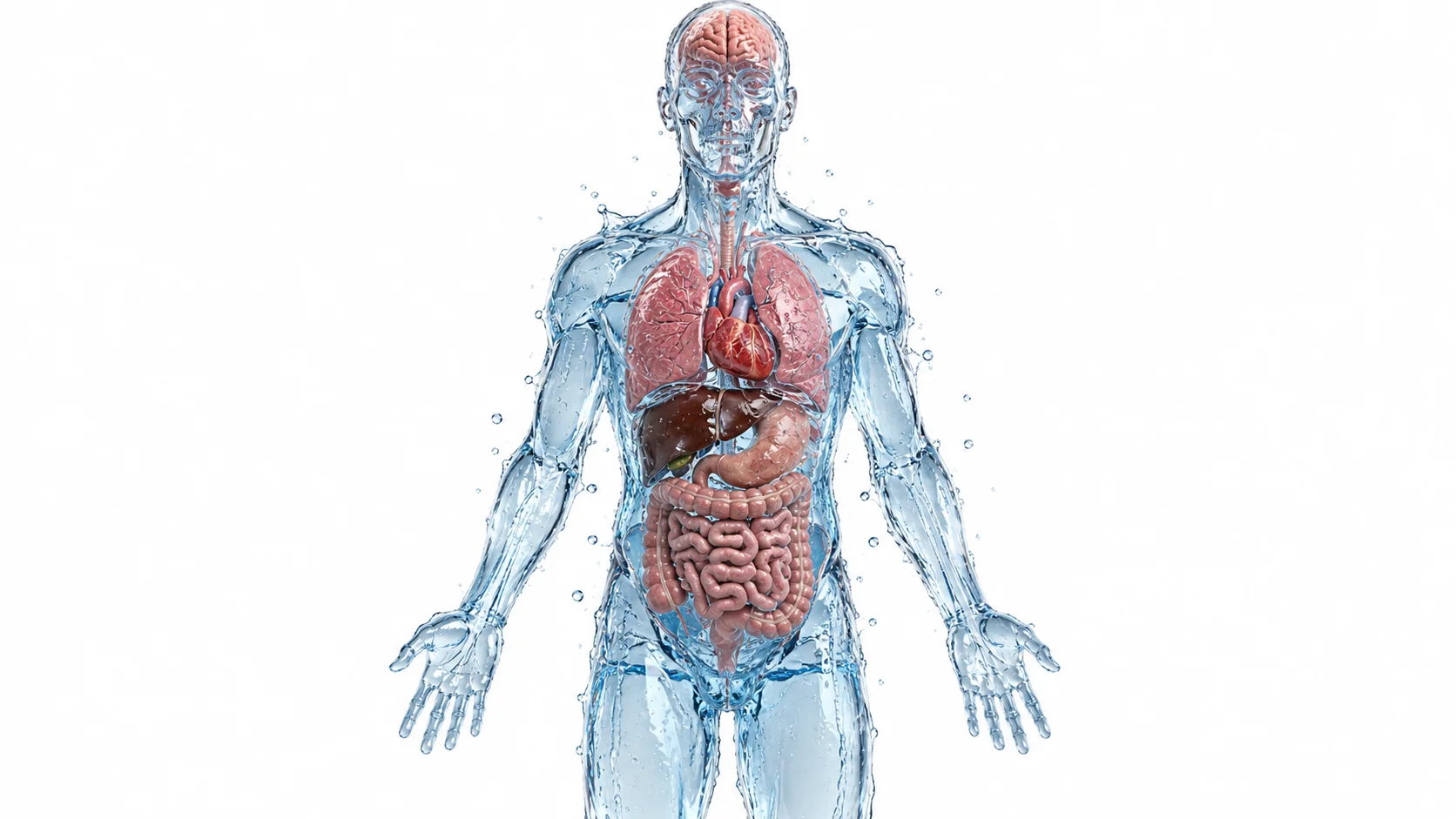
A swallowed bone faces a series of chemical and mechanical challenges from mouth to exit.
Mouth
Teeth can crush soft or cooked bone. Dense raw bone typically survives chewing intact.
Stomach
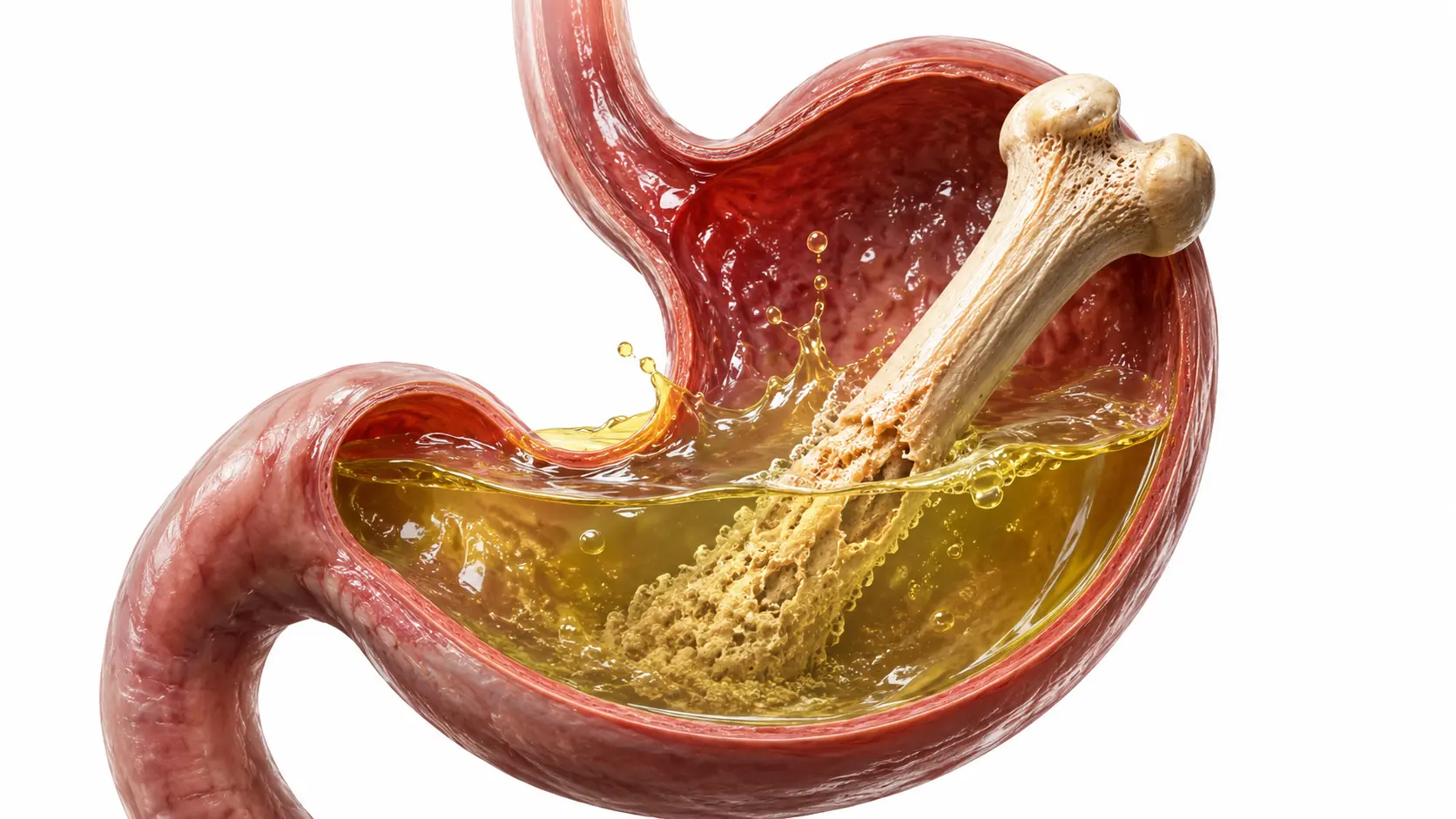
Hydrochloric acid and enzymes attack the bone surface. Soft bone may dissolve partially here. Hard bone resists.
Small intestine
Any dissolved calcium and phosphorus is absorbed here. Fragments that survive may irritate the intestinal wall.
Large intestine
Indigestible fragments continue through. Sharp pieces risk perforation, the main danger of swallowed bone.
What bone is made of
Understanding What You Are Actually Trying to Digest
Bone is not a single substance. It is a composite material, roughly 70% mineral (primarily hydroxyapatite, a crystalline calcium phosphate compound) and 30% organic matrix, dominated by collagen.
The mineral component is what makes bone hard and what resists acid most effectively. Hydroxyapatite is genuinely tough chemistry. It does not dissolve quickly in stomach acid the way a piece of meat would.
The collagen component is far more digestible. Stomach acid and proteases, enzymes that break down protein, can attack the organic matrix. This is why cooked bone softens: heat denatures the collagen, making it easier for acid and enzymes to penetrate deeper into the mineral structure.
This also explains why bone broth works. Hours of simmering in slightly acidic water extracts both gelatin (from the collagen) and dissolved minerals into the liquid, effectively doing the digestion outside the body, before consumption.
What actually happens
So What Actually Happens When You Swallow a Bone?
A small, soft, cooked fish bone is unlikely to cause problems. Stomach acid will attack its surface over the several hours food typically spends there. Enzymes will work on the collagen. It may dissolve entirely, or pass in a softened, non-threatening state.
A larger cooked chicken bone is more concerning. The ends, soft and cartilaginous, may break down. The shaft, harder and denser, may not. Chewing can produce sharp splinters, which is where real danger appears: sharp bone fragments can puncture the esophagus, stomach lining, or intestinal wall.
A raw dense bone, the kind you might give a dog, is essentially indigestible to a human. The stomach acid simply does not have enough time or potency to make meaningful progress on compact, uncooked cortical bone.
The key variable is always the same: surface area versus time. Finely ground bone in a powder can be absorbed reasonably well. A large intact fragment simply cannot be chemically attacked fast enough before the digestive system needs to move it on.
Evolutionary context
We Were Not Built for This, But Some Animals Were
Humans are omnivores who evolved eating meat from carcasses, which means some incidental bone consumption is plausible in our evolutionary history. Early humans also used tools to crack bones and access marrow, itself an incredibly calorie-dense food. Marrow consumption may have been more nutritionally significant than the bone itself.
The animals that evolved to actually digest bone are a different story. Hyenas have stomach acid approaching a pH of 1, about the same as battery acid, and a gut that produces bone-digesting enzymes in quantities humans cannot match. Their feces frequently contain white calcium-rich material: digested bone mineral.
Bone-eating worms (Osedax) discovered on whale falls on the ocean floor have an even stranger solution: they drill into bone using acid-secreting tissues and host bacteria that ferment the lipids inside. Extreme digestion, evolved over millions of years for a specific ecological niche.
Humans sit somewhere in the middle: capable of extracting minerals from soft and cooked bone, ill-equipped for the rest.
Dangerous or not?
Myth vs Reality
What people think
Swallowing a bone is always a medical emergency
Many people assume that swallowing any bone automatically requires a hospital visit. This creates unnecessary panic around every accidentally swallowed fish bone.
What actually happens
Small soft bones often pass without incident; sharp fragments are the real risk
Most small, cooked, smooth bones pass through safely. The genuine danger is sharp fragments or large pieces that can puncture tissue. If there is pain, difficulty swallowing, or a sensation of something lodged, that warrants medical attention.
Bone as nutrition
When Bone Actually Is Nutritious
There is a reason traditional cuisines around the world developed bone-based cooking. Long-simmered stocks, marrow dishes, and oxtail soups are not just flavor traditions, they are efficient nutrient extraction methods.
Bones are a rich reservoir of calcium, phosphorus, magnesium, and trace minerals. They also contain collagen that, when broken down by cooking, becomes gelatin, a protein source that supports joint and gut health.
Ground bone meal has been used in some cultures as a mineral supplement. Some studies on bone broth have found measurable calcium and phosphorus content, though the quantities vary considerably depending on cooking time, water acidity, and bone type.
The body can absolutely absorb these nutrients once they are freed from the bone's rigid mineral matrix. The challenge is always getting them out. Cooking does most of that work far more efficiently than digestion alone.
Quick answers
Common questions
Is it dangerous to swallow a chicken bone? +
It depends on the size and shape. Soft cooked bone ends often dissolve. Splintered or sharply broken pieces carry real risk of puncturing the esophagus or intestinal wall. If you swallow a piece and feel pain or difficulty swallowing, seek medical advice.
Can dogs digest bones better than humans? +
Yes. Dogs have shorter digestive tracts, more acidic stomachs, and digestive enzymes better suited to breaking down raw bone. Even so, large or splintered bones can injure dogs too, particularly cooked bones, which splinter more sharply.
Does bone broth actually contain useful nutrients? +
Yes, measurably so. Long-simmered bone broth contains calcium, phosphorus, magnesium, gelatin, and collagen-derived amino acids. Quantities are modest but real. Adding a small amount of acid (vinegar) to the water increases mineral extraction.
What is the most digestible form of bone? +
Finely ground bone powder or bone meal, the mineral is physically broken into particles small enough for gastric acid to work on efficiently. Whole soft bones from small fish (like sardines, often eaten bones and all) are also well-tolerated.