Quick Facts
Quick Facts
Caesar had been warned by a fortune teller to 'beware the Ides of March'.
He ignored multiple warnings on the morning of his death.
Over 60 senators were involved in the plot.
Only one of them, Brutus, was considered a close friend.
The assassination did not save the Republic. It destroyed it.
Visual answer
How the Assassination Unfolded
The key events that led from Caesar's rise to the Ides of March.
Caesar Wins a Civil War
After defeating Pompey, Caesar returns to Rome as the undisputed leader.
He Is Made Dictator
First for 10 years, then for life. This alarms the senators.
Conspirators Form a Plan
Led by Brutus and Cassius, over 60 senators agree to kill him.
The Ides of March
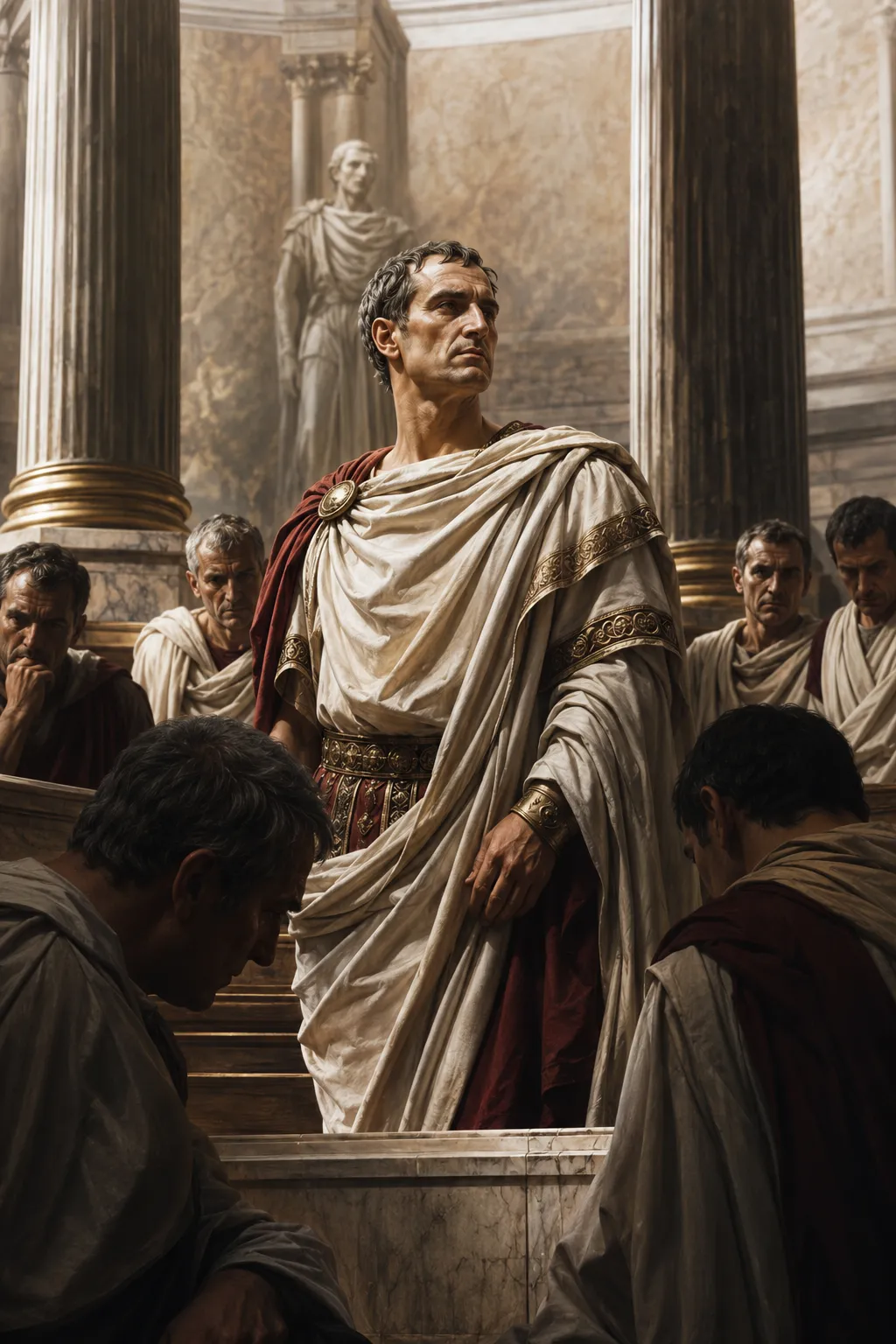
Caesar is stabbed 23 times at the Senate meeting.
Civil War Erupts Again
Octavian (Caesar's heir) and Mark Antony hunt down the killers.
Story in brief
Story in Brief
49 BC
Caesar crosses the Rubicon and starts a civil war.
46 BC
Caesar is appointed dictator for 10 years.
44 BC
He is appointed dictator for life.
This is when the senators truly panicked. They wanted a temporary leader, not a permanent one.
Feb 44 BC
Caesar is offered a crown. He refuses it publicly.
March 15, 44 BC
Caesar is assassinated at the Senate.
44-42 BC
Civil war breaks out between Caesar's killers and his supporters.
27 BC
Octavian becomes the first Roman emperor, Augustus.
The Republic that Brutus wanted to save was gone forever.
The Story
They Killed Caesar to Save Rome. It Did Not Work.
The senators who killed Caesar were not bad people. That is the strange part. They genuinely believed they were heroes saving the Roman Republic from a tyrant.
The problem was that Caesar was incredibly popular with ordinary Romans. When the assassins emerged from the Senate and announced, 'The tyrant is dead,' they expected cheering crowds. Instead, they found confused silence, then panic, then rage.
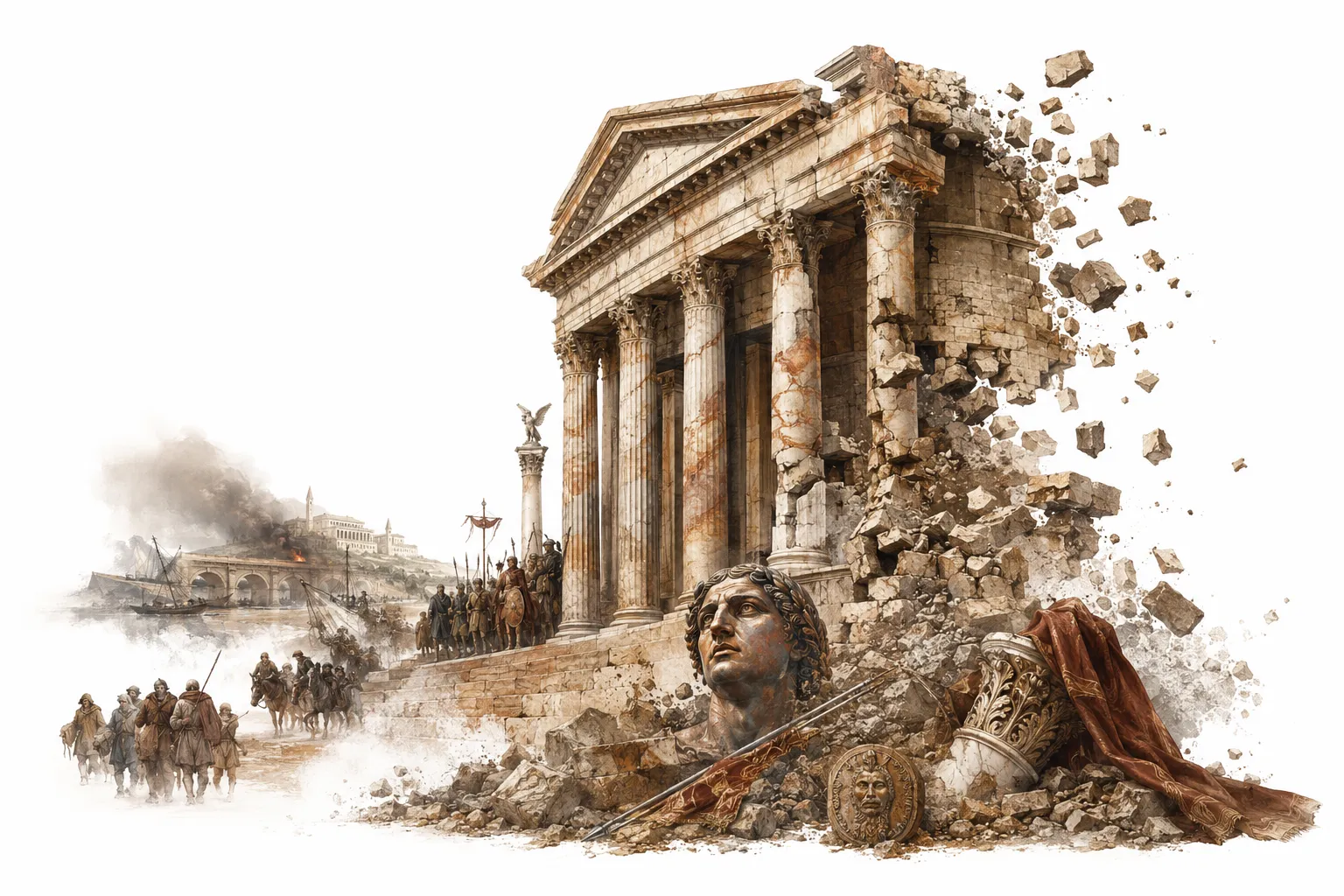
Within days, the conspirators had to flee for their lives. Within a few years, they were all dead or exiled. And the Republic they died trying to protect was replaced by an empire ruled by Caesar's adopted son.
Famous Quote
"Et tu, Brute? Then fall, Caesar."
, William Shakespeare, Julius Caesar
Shakespeare gave Caesar these famous last words. The real Caesar probably said something in Greek, but Shakespeare's version stuck.
Evidence
Why the Senators Turned Against Caesar
Caesar was made dictator for life.
StrongHe showed signs of wanting to be king.
ModerateThe senators feared losing their power and status.
StrongKey Points
Key Points So Far
Caesar was assassinated by over 60 Roman senators.
They feared he was becoming a permanent king.
The assassination failed to save the Republic.
It led to another civil war and the rise of the Roman Empire.
Analogy
A Spectacular Backfire
The familiar part
Imagine setting fire to your own house to get rid of a spider.
How it applies
The senators destroyed the Republic trying to 'fix' it. Caesar was the spider. The Republic was the house. Both burned.
Where the analogy breaks
Unlike a house fire, the senators could not call for help. They just had to watch as everything they loved turned to ash.
Curiosity Notes
Details Most People Miss
Why this still matters
Why This Still Matters
The story of Caesar's assassination is still told because it asks a question that never gets old: when does protecting a system become more important than the people in it? The senators chose their idea of the Republic over a living, breathing human being. And they lost both.
Key Findings
- ✓Core findingCaesar was assassinated on March 15, 44 BC, the Ides of March.
- ✓Strong evidenceOver 60 senators were involved in the plot.
- ⚠Main consequenceThey feared Caesar was becoming a permanent king.
- ✓Wider legacyThe assassination failed to save the Roman Republic.
- ★Bottom lineIt led to the rise of the Roman Empire under Augustus.
Final insight
A Last Thought
The senators stabbed Caesar 23 times. Each wound was meant to save the Republic. Instead, each wound was a nail in its coffin. The lesson, if there is one, is uncomfortable: sometimes the cure is worse than the disease.
Quick answers
Common questions
Did Caesar really say 'Et tu, Brute'? +
Probably not. Shakespeare made those words famous. The real Caesar likely said something in Greek, and some historians think he said nothing at all.
What happened to Brutus? +
Brutus fled Rome after the assassination. Two years later, he lost a battle to Caesar's supporters and killed himself.