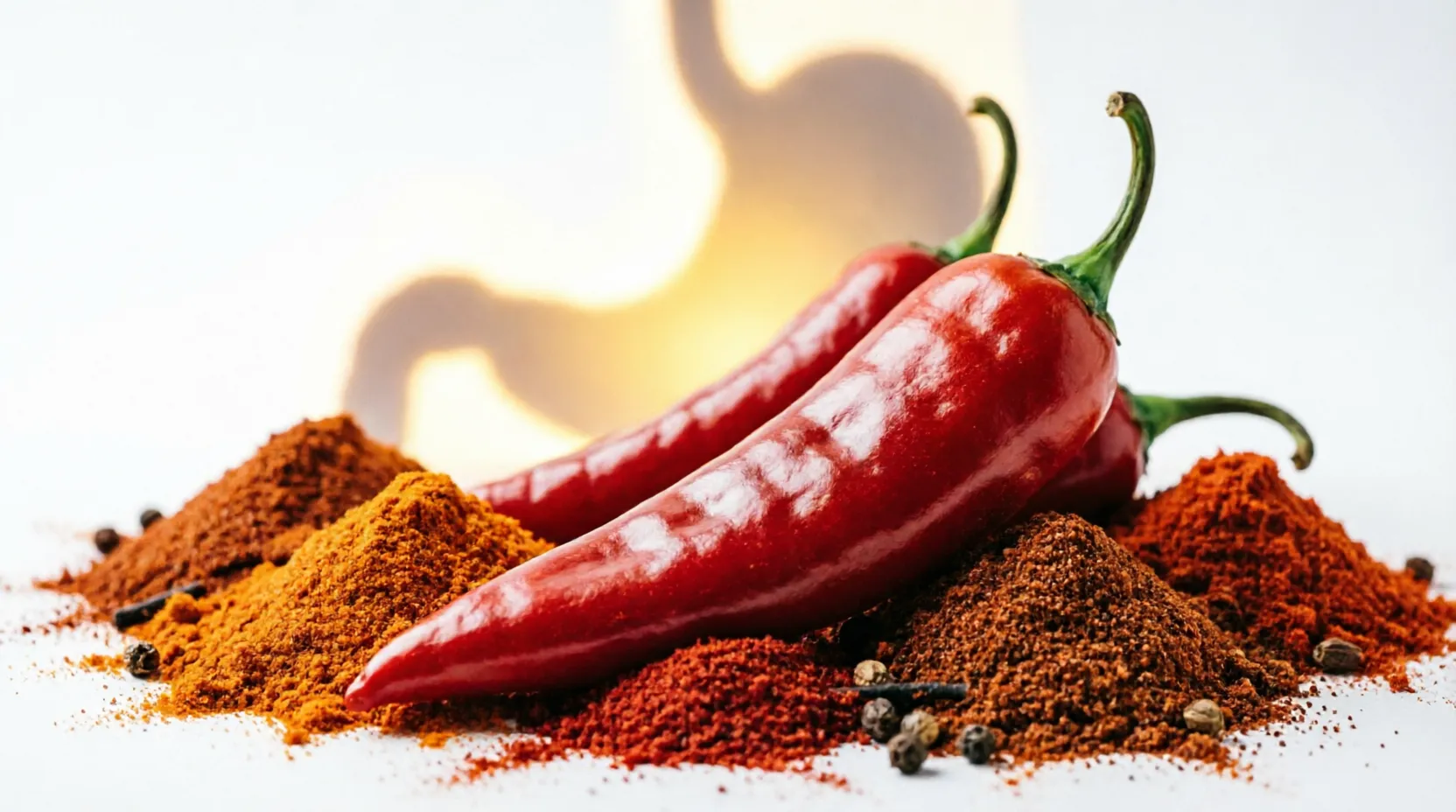
Visual answer
How Capsaicin Reaches Your Nose and Triggers Mucus
From capsaicin binding TRPV1 in the mouth to trigeminal activation in the nasal passages.
Capsaicin activates TRPV1 in the mouth
Capsaicin molecules bind to TRPV1 heat receptors on trigeminal nerve endings in the oral mucosa. The receptor signals burning heat to the brain. This causes the burning sensation in the mouth.
Capsaicin vapor reaches the nasal cavity
Volatile capsaicin compounds enter the nasal passages through the posterior nasal space during eating. Nasal tissue is warm and moist, enhancing absorption of the vapor onto receptor-bearing tissue.
Trigeminal nerve fires a heat alarm
The trigeminal nerve, which innervates the nasal mucosa, activates its TRPV1 receptors in response to capsaicin. It signals perceived heat threat to the brainstem.
Glands produce mucus to flush the threat
The brainstem triggers parasympathetic activation of nasal glands through the vidian nerve. Serous (watery) mucus is produced rapidly to dilute and flush the perceived irritant. This is the runny nose.
The capsaicin receptor
Capsaicin Does Not Cause Damage. It Just Pulls the Wrong Fire Alarm.
TRPV1 receptors are part of a sophisticated threat detection system. They respond to genuine tissue-damaging heat, but they also respond to acid (which is why heartburn burns), some inflammatory lipids, and capsaicin. All three activate the same receptor because they are all, in different contexts, signals of potential tissue damage. Capsaicin is the exception that causes the response without the damage.
The intensity of the burn is proportional to capsaicin concentration and the density of TRPV1 receptors in the tissue exposed. Lips and tongue have moderate receptor density. The back of the throat and nasal passages have high receptor density. This is why spicy food often feels worse going down than in the mouth, and why hot sauce or pepper vapors reaching the nasal passages produce more intense reactions than eating the same compound.
Capsaicin tolerance develops through a real mechanism. Repeated capsaicin exposure causes TRPV1 receptors to desensitize and temporarily decrease in number. This is called receptor downregulation. Chili-adapted cultures and spicy food enthusiasts have genuinely higher capsaicin tolerance, not just psychological toughness. The change is measurable in receptor sensitivity studies.
Myth vs reality
Myth vs Reality
What people think
Drinking water stops the spicy burning
Capsaicin is hydrophobic and does not dissolve in water. Drinking water spreads the capsaicin molecules further around the mouth without removing them from TRPV1 receptors. Many people report the burning gets momentarily worse immediately after drinking water.
What actually happens
Fat and casein in dairy products actually displace capsaicin from receptors
Milk and yogurt work because the fat dissolves the oily capsaicin and the casein protein physically binds to capsaicin molecules. Casein in particular has been shown to act as a detergent that strips capsaicin from TRPV1 receptors more effectively than any other common food component.
Quick answers
Common questions
Why does spicy food make your eyes water? +
The trigeminal nerve branches extend to the lacrimal gland system around the eyes. Capsaicin stimulation of the trigeminal nasal branches can trigger reflex lacrimation through the same parasympathetic pathway that produces nasal mucus. It is part of the same broad threat response.
Why do some people enjoy spicy food more than others? +
Genetic variation in TRPV1 receptor sensitivity, density, and downstream pain processing determines baseline spice tolerance. Cultural adaptation matters too, as regular exposure desensitizes receptors. The enjoyment component likely involves the endorphin release that follows strong TRPV1 activation.
Does spicy food actually raise body temperature? +
Yes, measurably. Capsaicin activates thermoreceptors that the hypothalamus interprets as heat. This triggers sweating and peripheral vasodilation, the same responses as mild actual heat exposure. This is why eating very spicy food can make you visibly sweat.
Why does spicy food sometimes cause a burning sensation later on? +
The lower gastrointestinal tract also contains TRPV1 receptors. Capsaicin that survives digestion reaches the colon and rectum and activates these receptors during passage. This is entirely normal and explains why very spicy food can cause discomfort during bowel movements the following day.
Does a runny nose from spicy food have any benefit? +
Probably not a protective benefit, since capsaicin is not actually harmful. However, gustatory rhinitis can temporarily clear nasal congestion in people with stuffy noses by the same mucus-flushing mechanism. Some people deliberately use spicy food as a decongestant for this reason.