Visual answer
Why Silence Can Trigger Social Uncertainty
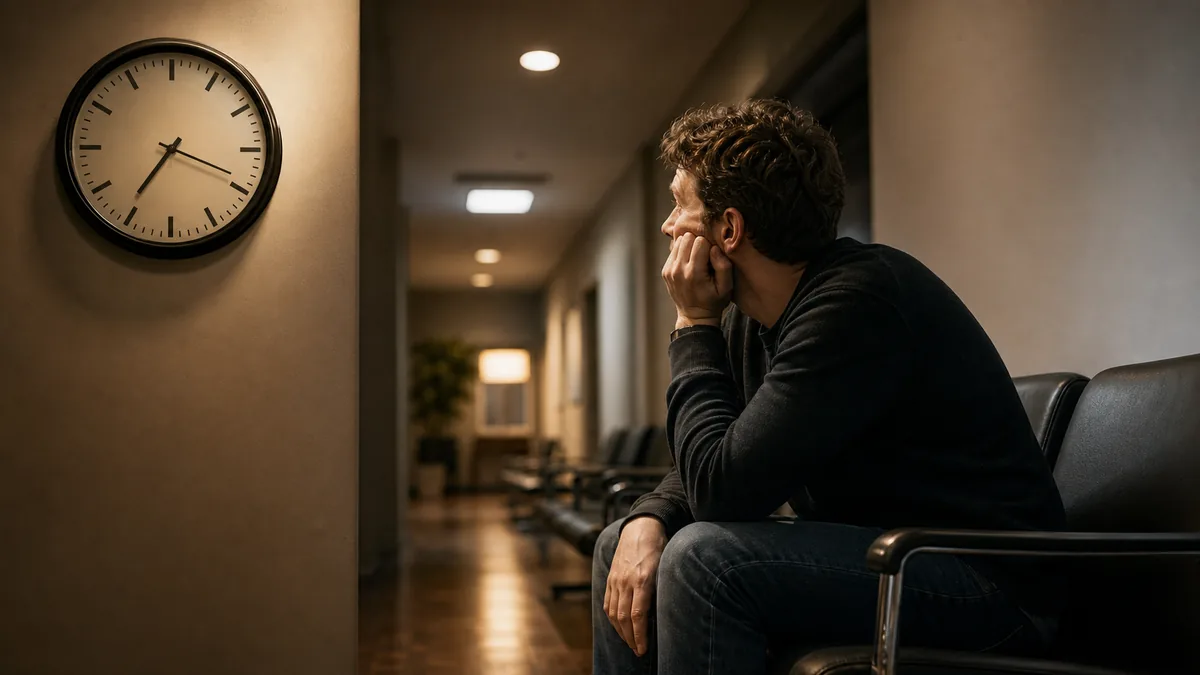
An unexpected pause can make people monitor themselves and the other person more closely.
Notice the pattern
The visible detail hints at a practical reason behind the everyday design or behavior.
Identify the mechanism
The core cause is shown with simple arrows so the relationship is easy to follow.
See the effect
The diagram connects the cause to what you actually notice in real life.
Remember the takeaway
The final step reduces the idea to the simple answer behind the article.
Conversation has a
Conversation has a rhythm
In most cultures, conversation has an expected flow. People take turns, and gaps between turns are typically very short, often under a second. When a gap stretches longer, both people notice. The silence stands out because it breaks the expected pattern.
Silence is read
Silence is read as a social signal
Humans are very good at reading cues in conversation. Silence can communicate agreement, disagreement, disapproval, boredom, sadness, or discomfort. Because it is ambiguous, people tend to assume something negative is being signalled, even if nothing is. This uncertainty creates anxiety.
The social threat
The social threat interpretation
From an evolutionary perspective, being rejected or excluded from a social group was a serious threat. Anything that signals possible rejection, including a prolonged silence from someone you are talking to, activates a mild threat response. This is why awkward silences trigger physical discomfort rather than just mild inconvenience.
Silence feels longer
Silence feels longer than it is
Research suggests people overestimate how long a conversational silence lasted. A silence that felt like ten seconds was often closer to four. The self-consciousness that silence triggers makes time stretch, amplifying the discomfort.
Silence between close
Silence between close friends feels different
With people you know well and trust, silence is often comfortable. You do not need to interpret it as a signal because you already have enough social information about that person. Comfortable silence is a sign of closeness rather than awkwardness.
Misconception
Common Misconception
What people think
Silence feels awkward because we always need to say something.
Silence feels awkward because we always need to say something.
What actually happens
Reality
Silence feels awkward because it is ambiguous. When you cannot interpret what a pause means, your brain fills the gap with anxiety. With trusted people, the same silence is comfortable because you do not need to interpret it.
Quick answers
Common questions
Is awkward silence universal across cultures? +
The experience varies. Some cultures are more comfortable with longer pauses in conversation than others. What counts as awkward silence depends on shared expectations about conversational pacing.
Can you become more comfortable with silence? +
Yes. Mindfulness practices and gradual exposure to quiet moments in social situations can reduce the automatic anxiety response. Reframing silence as neutral rather than negative also helps.
Why do some people feel compelled to fill silence with talking? +
For some people, silence in conversation triggers significant social anxiety. Talking, even about something inconsequential, provides immediate relief from that anxiety and restores the conversational rhythm.