Quick Facts
Quick Facts
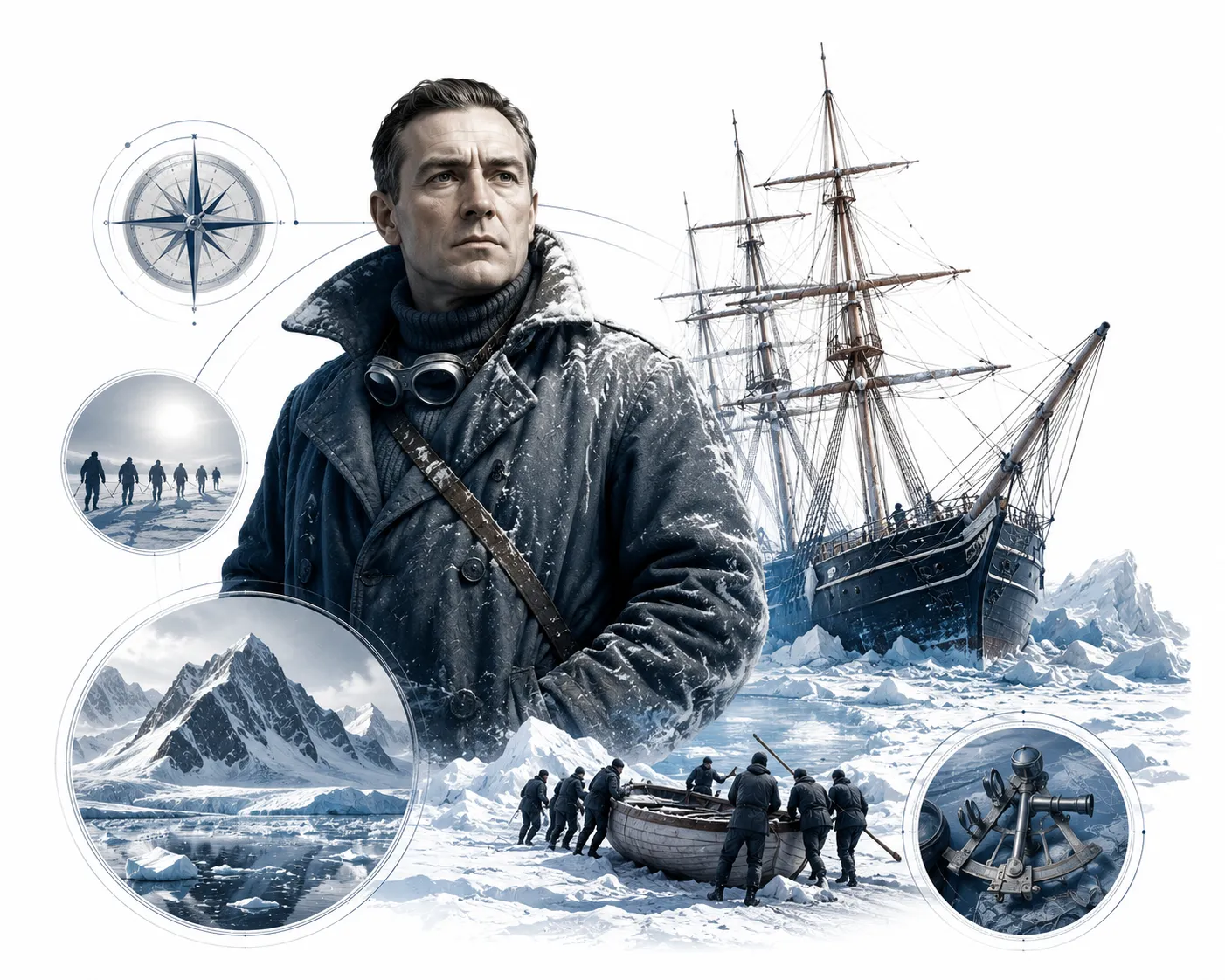
The Endurance was crushed by ice and sank in November 1915.
The crew camped on the ice for months, drifting on a floe.
Shackleton sailed 800 miles to South Georgia in a 22 foot lifeboat, the James Caird.
He then crossed the mountains of South Georgia on foot, without sleep, for 36 hours.
He rescued his entire crew. Not a single man was lost.
Visual answer
The Incredible Journey of Shackleton's Crew
How 27 men survived 22 months in Antarctica.
1914, December
Endurance enters the Weddell Sea. It becomes trapped in ice.
1915, November
Endurance is crushed and sinks. Crew camps on ice.
1916, April
Crew sails lifeboats to Elephant Island.
1916, April-May
Shackleton sails the James Caird 800 miles to South Georgia.
1916, May
Shackleton crosses South Georgia's mountains on foot to reach a whaling station.
1916, August
Shackleton returns to Elephant Island and rescues the remaining crew. All 28 men are safe.
Story in brief
Story in Brief
1914, August
Shackleton's expedition departs England. The goal is to cross Antarctica.
1915, January
The Endurance becomes trapped in pack ice in the Weddell Sea.
1915, November
The Endurance is crushed and sinks.
The crew is stranded on the ice with no ship. Their goal is now survival.
1916, April
The ice floe melts. The crew launches lifeboats and reaches Elephant Island.
They are on land. But Elephant Island is remote. No one will find them.
1916, April 24
Shackleton and five men sail the James Caird, a 22 foot lifeboat, 800 miles across the Southern Ocean to South Georgia.
1916, May
Shackleton lands on South Georgia. He crosses the island's mountains on foot, without sleep, for 36 hours.
He reaches a whaling station. The outside world knows they are alive.
1916, August 30
Shackleton returns to Elephant Island and rescues the 22 men left behind.
Every man is saved. Shackleton has lost no one.
The Story
How to Lose Your Ship and Save Your Crew
Ernest Shackleton wanted to cross Antarctica on foot. That was his goal. He never got close. His ship, the Endurance, was trapped in ice before it even reached the continent. It drifted for months. Then it was crushed. The crew watched their home sink beneath the ice.
For 22 months, Shackleton kept 27 men alive on the ice. They camped on drifting floes. They ate seals and penguins. They slept in tents. No one died. When the ice melted, they sailed lifeboats to Elephant Island, a barren rock in the Southern Ocean. No one would find them there.
Shackleton and five men sailed a 22 foot lifeboat, the James Caird, 800 miles across the Southern Ocean to South Georgia. It was one of the greatest small boat voyages in history. They landed on the wrong side of the island. Shackleton and two others crossed the mountains on foot, without sleep, for 36 hours. They reached a whaling station. The world learned that Shackleton was alive. Four months later, he returned to Elephant Island and rescued the rest of his crew. Every single man survived.
Famous Quote
"I have often said that optimism is the true moral courage."
, Ernest Shackleton
He lived this philosophy. He kept his crew optimistic for 22 months in hell. That is courage.
Evidence
Why Shackleton Is Remembered
He saved every member of his crew against impossible odds.
StrongThe James Caird voyage is one of the greatest small boat journeys in history.
StrongHis leadership is studied as a model for crisis management.
StrongHe failed his original goal but succeeded in survival.
StrongKey Points
Key Points So Far
Shackleton's ship, Endurance, was crushed by Antarctic ice.
He and 27 men were stranded for 22 months.
He sailed 800 miles in a small boat to get help.
He crossed a mountain range on foot without sleep.
He rescued every single man. Zero deaths.
Analogy
Like a Captain Who Never Abandons Ship
The familiar part
Imagine a ship sinking. The captain ensures every passenger is in a lifeboat. Then he gets in the last lifeboat himself.
How it applies
Shackleton was that captain. But his ship sank in the most hostile place on Earth. He still got everyone out. He still got everyone home.
Where the analogy breaks
Most captains do not have to cross a mountain range on foot to find help. Shackleton did.
Curiosity Notes
Details Most People Miss
Why this still matters
Why This Still Matters
Shackleton's story is still told because it is the ultimate example of leadership under pressure. He kept 27 men alive in hell. He did not lose one. Business schools teach his methods. Military academies study his decisions. Shackleton is not just an explorer. He is a case study. His failure taught us more than most successes. That is why we remember him.
Key Findings
- ✓Core findingShackleton's ship, Endurance, was crushed by Antarctic ice.
- ✓Strong evidenceHe and 27 men were stranded for 22 months.
- ⚠Main consequenceHe sailed 800 miles in a small boat to get help.
- ✓Wider legacyHe crossed a mountain range on foot without sleep.
- ★Bottom lineHe rescued every single man. Zero deaths.
Final insight
A Last Thought
Ernest Shackleton is famous because he failed. He did not cross Antarctica. He did not reach the South Pole. He got his ship crushed and his crew stranded. And then he saved every single one of them. That is not a success. It is a miracle. Shackleton's real legacy is not exploration. It is leadership. He showed that failure is not the end. Survival is the goal. And sometimes, survival is more impressive than success.
Quick answers
Common questions
How did the Endurance crew survive? +
They ate seals and penguins. They burned blubber for fuel. They stayed optimistic. Shackleton kept them busy with routines, games, and work. Morale was as important as food.
What happened to the Endurance? +
The ship was crushed by ice and sank in November 1915. The wreck was discovered in 2022, over 100 years later, 10,000 feet below the surface of the Weddell Sea.