Visual answer
How Mono no Aware works as an emotional experience
It is not one feeling but a layered response to a specific kind of beauty.
A beautiful or moving thing
Cherry blossoms, a sunset, a child growing up, a conversation ending. Something real and present.
The awareness that it will end
Not just knowing it abstractly but feeling it in the moment. This is already slipping away.
The emotional resonance
The awareness does not kill the beauty. It intensifies it. The ending makes the present moment more vivid.
Gentle acceptance
Mono no Aware does not resist or rage. It says yes to the whole thing, beauty and passing both.
What it means
What does Mono no Aware actually translate to
Mono means things. No is a possessive particle. Aware in classical Japanese means an emotional response, a deep feeling in the chest, something like the English word moved but more specific. Literally: the pathos of things.
The scholar who gave this idea its formal name was Motoori Norinaga, an 18th century Japanese scholar who spent decades analysing the Tale of Genji, the 11th century novel by Murasaki Shikibu that many consider the world's first novel. He argued that the emotional core of all great Japanese literature was this quality: the awareness that things are passing, and the tender sadness mixed with gratitude that this awareness produces.
Norinaga contrasted it with Chinese philosophical writing, which he felt prioritised moral instruction and rational analysis. Japanese sensibility, he argued, lived in the direct emotional response to the world. Mono no Aware was not a lesson to learn. It was a feeling to inhabit.
The English translations that get used most often are the pathos of things, an empathy toward things, and the ahness of things. None of them are quite right. The ahness version is actually the most honest because it points at the untranslatability directly. It is the small sound you make when something beautiful is almost gone.
Cherry blossoms
Why cherry blossoms are the defining symbol of Mono no Aware
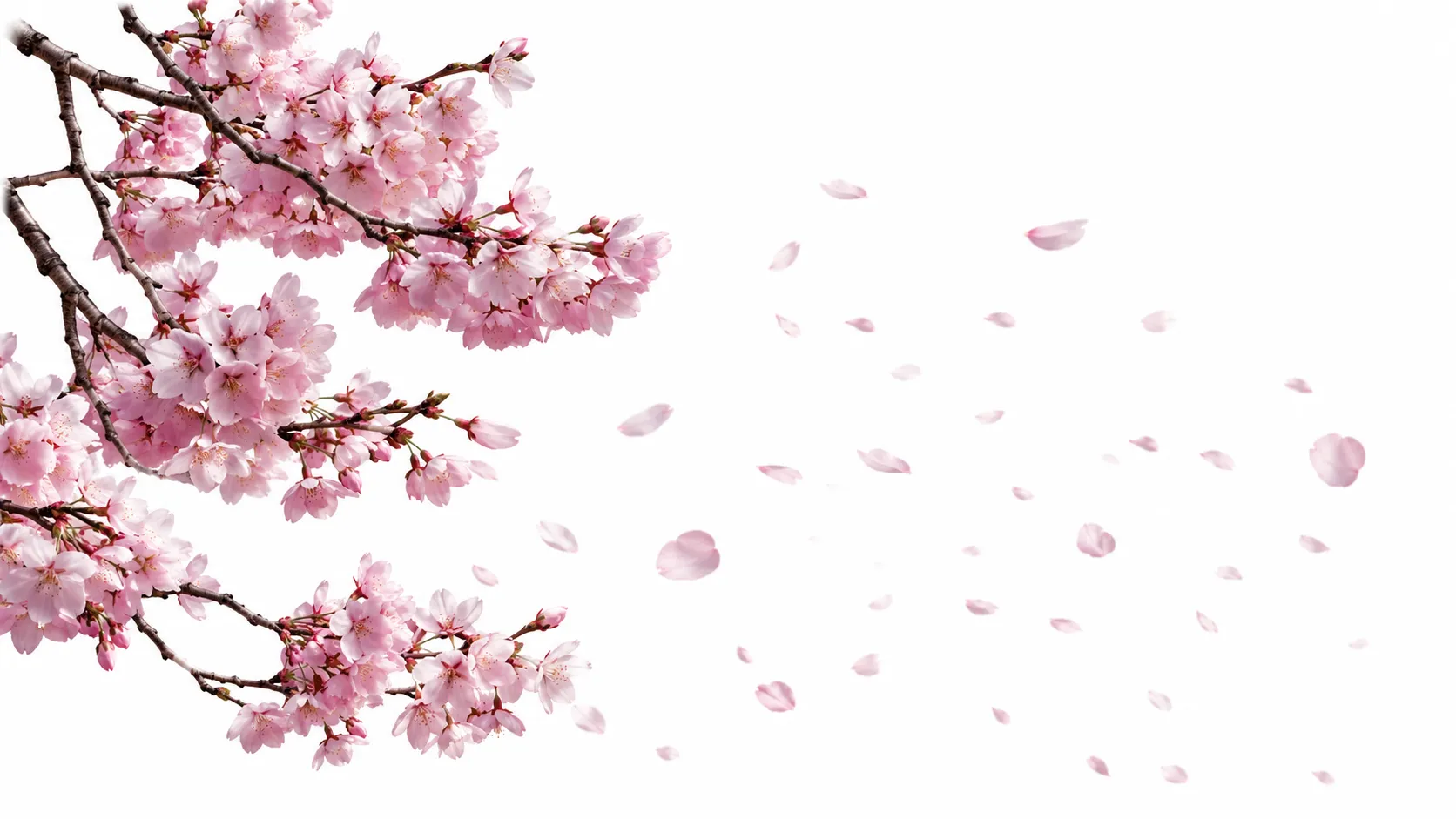
Sakura, the Japanese cherry blossom, blooms for roughly one to two weeks in spring. The bloom is spectacular, then it is over. This timing is not incidental to why the Japanese have centred their national identity around it. It is the whole point.
Hanami, the tradition of gathering beneath blooming cherry trees to eat, drink, and sit together, has been practised in Japan for over a thousand years. The Imperial court held hanami parties as early as the 7th century. The point is not just to see pretty flowers. It is to witness the brief perfection and feel the ache of knowing it will be gone before the week is out.
A cherry tree that bloomed and fell yesterday, or bloomed and stayed for a month, would carry none of this. The transience is the whole point. You cannot have Mono no Aware about something permanent.
The Japanese Meteorological Corporation tracks the sakura front each year, a wave of bloom that travels north across the country as spring progresses. People plan travel around it. That is how seriously the experience is taken. Not just the beauty but the scheduled, anticipated, finite beauty.
Not sadness
Myth: Mono no Aware is just sadness with a fancy name
What people think
Mono no Aware is a poetic word for being sad about things ending.
In Western summaries it gets described as melancholy or wistfulness, which suggests a purely negative emotional state.
What actually happens
Mono no Aware contains beauty as an essential ingredient, not just loss.
Pure sadness says: I wish this were not ending. Mono no Aware says: the fact that it is ending is part of why it is beautiful. Remove the ending and you do not get happiness. You lose the whole experience. The transience is not a problem to be solved. It is what creates the depth of the feeling.
Not nostalgia
Myth: Mono no Aware is the same as nostalgia
What people think
Mono no Aware is looking back fondly at things that have passed.
Nostalgia fits the description: a bittersweet feeling about things that are gone.
What actually happens
Mono no Aware is present-tense. Nostalgia is past-tense.
The crucial distinction is timing. Nostalgia is felt about things already gone. Mono no Aware is felt in the moment of witnessing something beautiful while knowing it will soon be gone. You are watching the petals fall right now. You are with the dying person today. It is the awareness in the present moment of future absence, not the memory of past presence. That makes it fundamentally different.
Not only nature
Myth: Mono no Aware only applies to nature and seasons
What people think
Mono no Aware is an environmental or seasonal feeling about flowers and weather.
The cherry blossom association makes it seem nature-specific.
What actually happens
Mono no Aware can be felt about people, relationships, stages of life, and entire civilisations.
Watching your child stop being a child. The last time you will see someone you love. A city neighbourhood being demolished. The closing of a place that shaped you. A conversation you know is ending. All of these can carry Mono no Aware. The concept is about impermanence itself, not about any specific category of thing that is impermanent.
Studio Ghibli
Why Studio Ghibli films are full of Mono no Aware
Hayao Miyazaki has never made a film that does not carry this quality. It is arguably the defining emotional texture of Ghibli films, and the reason they resonate with adults in a way most animation does not.
In Grave of the Fireflies, directed by Isao Takahata, the entire film is structured around the awareness of ending. You know from the opening scene that the children will die. The beauty of their brief happiness is inseparable from this knowledge.
In My Neighbour Totoro, the Satsuki and Mei's mother is ill. The film never pretends this is not happening. But rather than making the film dark, it gives every ordinary joyful scene an undertow of preciousness. The summer, the countryside, the childhood, all of it carries the awareness that it will not last forever.
In Spirited Away, Chihiro's growth is explicitly framed as a loss: she enters childhood and leaves it. Her memory of the spirit world fades as she walks away at the end. The ending is not triumphant. It is tinged with something harder to name.
Miyazaki has spoken in interviews about his conviction that children can handle complexity and melancholy in stories, that the attempt to protect children from the awareness of loss is itself a failure of care. Mono no Aware is not hidden in his films. It is the point of them.
Buddhist connection
How Mono no Aware connects to Buddhist impermanence
Buddhism's foundational insight is anicca: the doctrine of impermanence. All conditioned phenomena are impermanent. Attachment to impermanent things is the root of suffering. Understanding impermanence is the beginning of liberation.
Mono no Aware arrives at a similar place from a different direction. Buddhism tends to approach impermanence intellectually, as a fact to be understood and used as a basis for practice. Mono no Aware is an emotional and aesthetic response to the same reality. It does not analyse impermanence. It feels it.
The overlap is in the posture: both traditions say that the correct response to impermanence is not resistance or denial but something like open-eyed acceptance. The Buddhist sits with impermanence in meditation. The person in a state of Mono no Aware sits under the cherry tree.
Where they differ is in the emotional tone. Buddhist teaching tends to work toward equanimity: a calm, stable state that is not disturbed by arising and passing phenomena. Mono no Aware keeps the ache. It does not try to move past the feeling of loss. It holds the feeling and says this is part of being alive and it is beautiful.
Similar words worldwide
Mono no Aware vs other untranslatable feeling words from around the world
Mono no Aware (Japanese)
Bittersweet awareness of impermanence in the present moment. Beauty intensified by knowing it will end.
Saudade (Portuguese/Brazilian)
A longing for something or someone loved and lost, or perhaps never had. More past-focused than Mono no Aware.
Hiraeth (Welsh)
Homesickness for a home that may no longer exist, or may never have existed. Grief and longing intertwined.
Sehnsucht (German)
A deep longing or craving for something undefined. Often spiritual or transcendent in its object.
Toska (Russian)
Vladimir Nabokov described it as a longing with nothing to long for. Anguish, melancholy, restlessness.
Ya'aburnee (Arabic)
Literally may you bury me. Said to someone loved, expressing the hope to die first so you do not have to live without them.
Surprising facts
Eight things about Mono no Aware that most people do not expect
1. Motoori Norinaga spent over thirty years writing a commentary on the Tale of Genji. That single act of prolonged attention to a text about this quality of feeling is itself a demonstration of Mono no Aware.
2. The concept predates Norinaga by centuries. He named and theorised it, but the feeling permeates Japanese literature from the 8th century Man'yoshu poetry collection onward.
3. Research in positive psychology shows that what psychologists call mortality salience, the conscious awareness that things and people will die, reliably increases how much people value and enjoy present experiences. Mono no Aware is a formalised cultural practice of exactly this.
4. The word aware in modern Japanese has shifted to mean pitiful or pathetic. In classical Japanese, when Norinaga used it, it meant something closer to an emotional response so strong it produces a sound. The oh or ah that escapes you involuntarily.
5. Japanese schools teach Mono no Aware as a formal concept in literature class. It is considered essential cultural literacy, not just aesthetic theory.
6. The Tokyo National Museum has exhibitions explicitly curated around Mono no Aware, grouping objects together not by period or medium but by this quality of feeling they produce.
7. Western visitors to Japan often report feeling Mono no Aware without having a name for it. The cherry blossom season provokes it reliably across cultural backgrounds. The feeling is apparently not culturally locked.
8. Neuroscience research on mixed emotions finds that the simultaneous presence of positive and negative feelings is associated with greater psychological flexibility and better wellbeing outcomes than purely positive emotion. Mono no Aware is a 1,200-year-old optimisation of this cognitive pattern.
Quick answers
Common questions
What is Mono no Aware? +
Mono no Aware is a Japanese aesthetic concept describing the bittersweet emotional response to beautiful things that are impermanent. It is the ache of witnessing something precious while knowing it will end. The literal translation is the pathos of things.
Who coined the term Mono no Aware? +
The 18th century Japanese scholar Motoori Norinaga named and theorised the concept while writing extensively about the 11th century novel the Tale of Genji. He identified Mono no Aware as the central quality of Japanese literary and aesthetic sensibility.
Why do cherry blossoms represent Mono no Aware? +
Sakura bloom for only one to two weeks. The brevity is the point. The beauty of the blossom and the certainty of its rapid falling are inseparable. A flower that bloomed for months would not produce the same feeling. The transience creates the depth of the experience.
How is Mono no Aware different from sadness? +
Sadness says: I wish this were not ending. Mono no Aware says: the ending is part of what makes this so beautiful. The feeling contains both appreciation and loss simultaneously, and the two are not in conflict. Remove the sadness and the beauty also diminishes.
How is Mono no Aware different from nostalgia? +
Nostalgia is felt in retrospect, about things already gone. Mono no Aware is felt in the present moment while something beautiful is still happening but already passing. It is future-aware present-tense feeling, not past-tense longing.
How does Mono no Aware appear in Studio Ghibli films? +
It runs through almost all Ghibli films as an undertow beneath the surface story. Characters face loss, growth, and change with openness rather than resistance. The endings are rarely triumphant. They are tender and tinged with something that is not quite sadness and not quite peace. Miyazaki treats this emotional register as appropriate for children, not too much for them.
Can Mono no Aware be felt about people? +
Yes, and arguably this is when it is most powerful. Watching a parent age, a child grow up, a friendship entering its final chapter. Any human relationship carries an awareness of its impermanence if you let yourself feel it. Mono no Aware is not nature-specific. It is impermanence-specific.
How does Mono no Aware relate to Buddhist impermanence? +
Both centre on the truth that all things pass. Buddhism approaches this intellectually and uses it as a foundation for practice toward equanimity. Mono no Aware is an emotional and aesthetic response to the same truth. It keeps the ache rather than moving past it. Same insight, different relationship to the feeling.