1
Variable ratio reinforcement
Likes, messages, and new posts arrive unpredictably, creating a powerful reward schedule similar to the one used by slot machines. Pull-to-refresh is structurally close to pulling a lever.
Digital & Society
The studies are in. The results are not what the optimists or the pessimists expected. In 2018, Stanford and NYU researchers paid about 2,000 Facebook users to deactivate their accounts for four weeks, then compared them with a control group. The findings were mixed in exactly the way real life tends to be: people felt slightly better, used their time differently, and became less exposed to political information. Quitting social media produces measurable effects on wellbeing, mood, polarization, information access, and time use. Not all of them are what you would expect.
Quick answer
Social media abstinence studies generally find reduced anxiety and depression symptoms, improved subjective wellbeing, less FOMO, better sleep, less political exposure, and more available time. The tradeoff is reduced access to social information and weaker connection with distant acquaintances. The Stanford/NYU Facebook study found deactivation made people slightly happier but also significantly less politically informed.
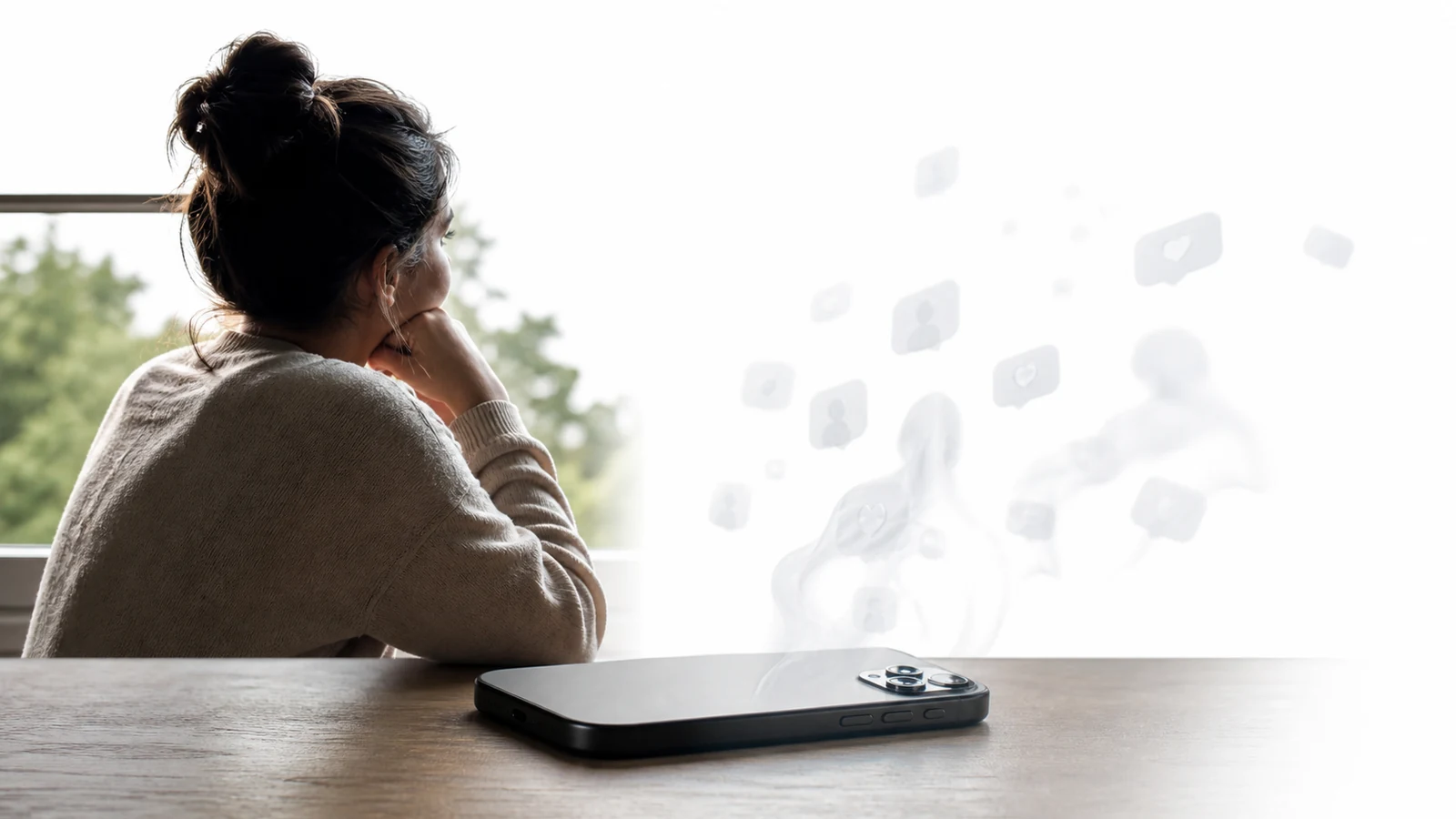
The short answer
Social media abstinence studies generally find reduced anxiety and depression symptoms, improved subjective wellbeing, less FOMO, better sleep, less political exposure, and more available time.
Variable ratio reinforcement
Likes, messages, and new posts arrive unpredictably, creating a powerful reward schedule similar to the one used by slot machines.
Curiosity twist
The Stanford/NYU Facebook study found deactivation made people slightly happier but also significantly less politically informed.
Common mistake
Rising social media use proves that social media directly caused rising adolescent depression.
Digital & Society
Use it for active connection rather than passive scrolling, set use windows, keep it away from bedtime, remove apps from the home screen, and take periodic breaks to recalibrate.
Experiments in quitting
A 2016 Danish experiment found that people assigned to stop Facebook for one week reported higher life satisfaction, less negative affect, more present-moment focus, and less envy.
Is social media making us depressed?
The correlation is real and the mechanisms are plausible, but causation and effect size remain debated. The honest answer is that social media likely has a real effect for some people, especially heavy passive users, but the average effect is smaller than public debate often suggests. Why people think this: The timing is compelling, and the mechanisms are easy to understand, so public discussion often moves faster than the evidence can justify.
Continue learning

Digital & Society
Another big-question explanation in the same collection.

Body & Brain
Another big-question explanation in the same collection.

Body & Brain
Another big-question explanation in the same collection.