1
Habitat loss
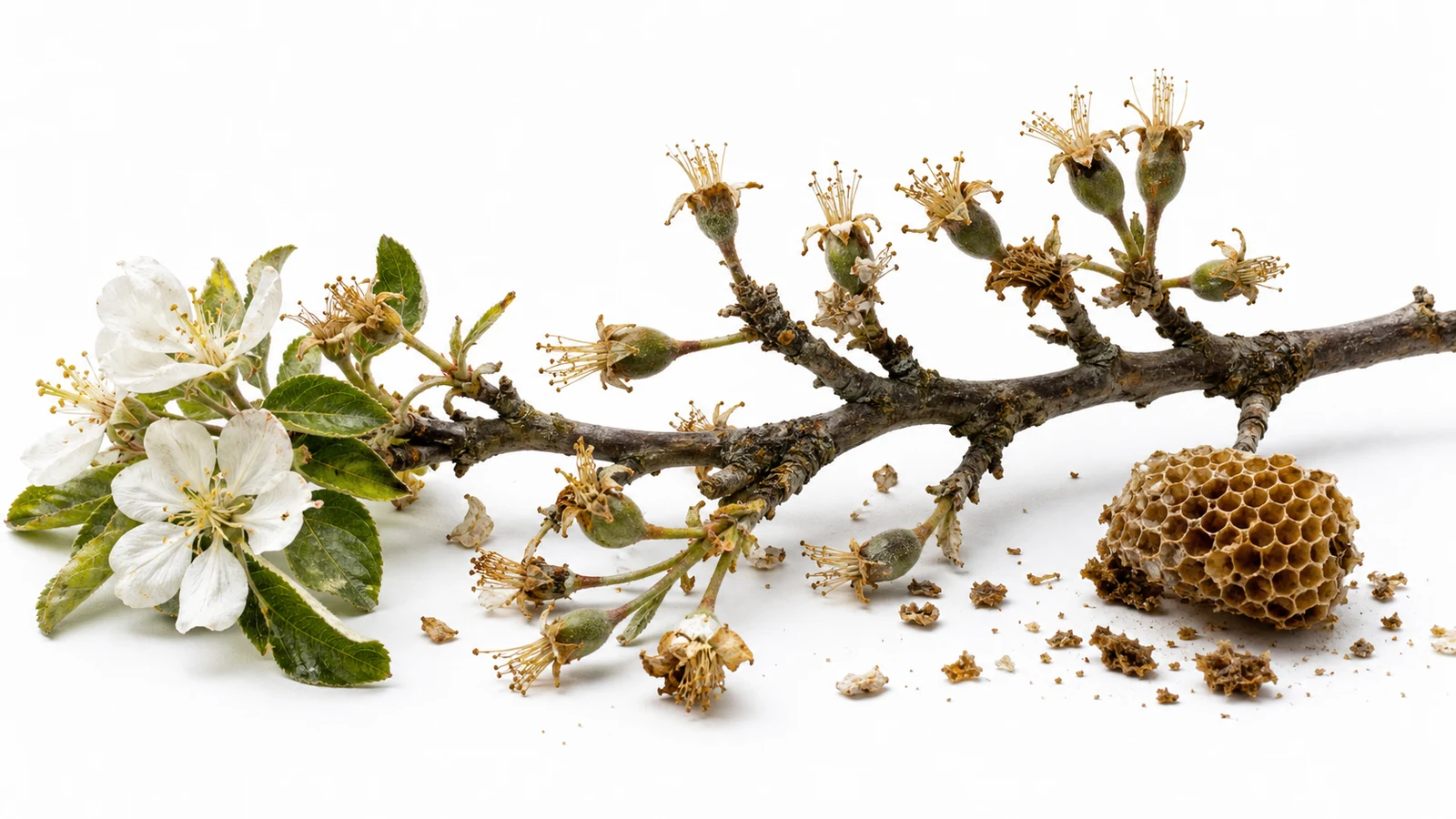
Agricultural intensification removes wildflower meadows, hedgerows, field margins, and nesting sites. In the UK, most wildflower meadows have disappeared since the 1930s.
Earth & Space
The famous Einstein quote about bees is probably fake. The science behind it is not. The quote that humans would have only four years left if bees disappeared is probably not Einstein's. But the question is real. Bees are central to crop diversity, wild plant reproduction, and the ecosystems that support food webs. A world without bees would not starve immediately. It would become less nutritious, less diverse, more expensive, and ecologically poorer.
Quick answer
If all bee species disappeared, many flowering plants and pollinator-dependent crops would fail or yield far less. Staple grains such as wheat, rice, and corn would survive, but fruits, vegetables, nuts, berries, coffee, and many micronutrient-rich foods would become scarcer and more expensive. Honeybees are not native to North America. The continent's thousands of native bee species often pollinate specific plants more effectively.
The short answer
If all bee species disappeared, many flowering plants and pollinator-dependent crops would fail or yield far less.
Habitat loss
Agricultural intensification removes wildflower meadows, hedgerows, field margins, and nesting sites.
Curiosity twist
Honeybees are not native to North America.
Common mistake
All bees are disappearing globally and will soon vanish.
Earth & Space
Plant native wildflowers, avoid pesticides, leave some bare soil for ground-nesting bees, and support habitat preservation.
Bees in the economy
The almond industry rents bee colonies at enormous scale, showing what happens when free ecosystem pollination is no longer enough.
Are bees actually going extinct?
Managed honeybee numbers are relatively stable globally because beekeepers replace colonies. The deeper crisis is wild bee diversity and native species decline, which is harder to measure and harder to reverse. Why people think this: Colony collapse disorder made honeybees the public face of a broader pollinator problem.
Continue learning
Earth & Space
Another big-question explanation in the same collection.
Earth & Space
Another big-question explanation in the same collection.
Earth & Space
Another big-question explanation in the same collection.