1
01. Elevation reduces the baseline temperature
Starting from a higher elevation than most deserts, the Gobi begins with a colder baseline temperature before any other factor is even considered.
Geography
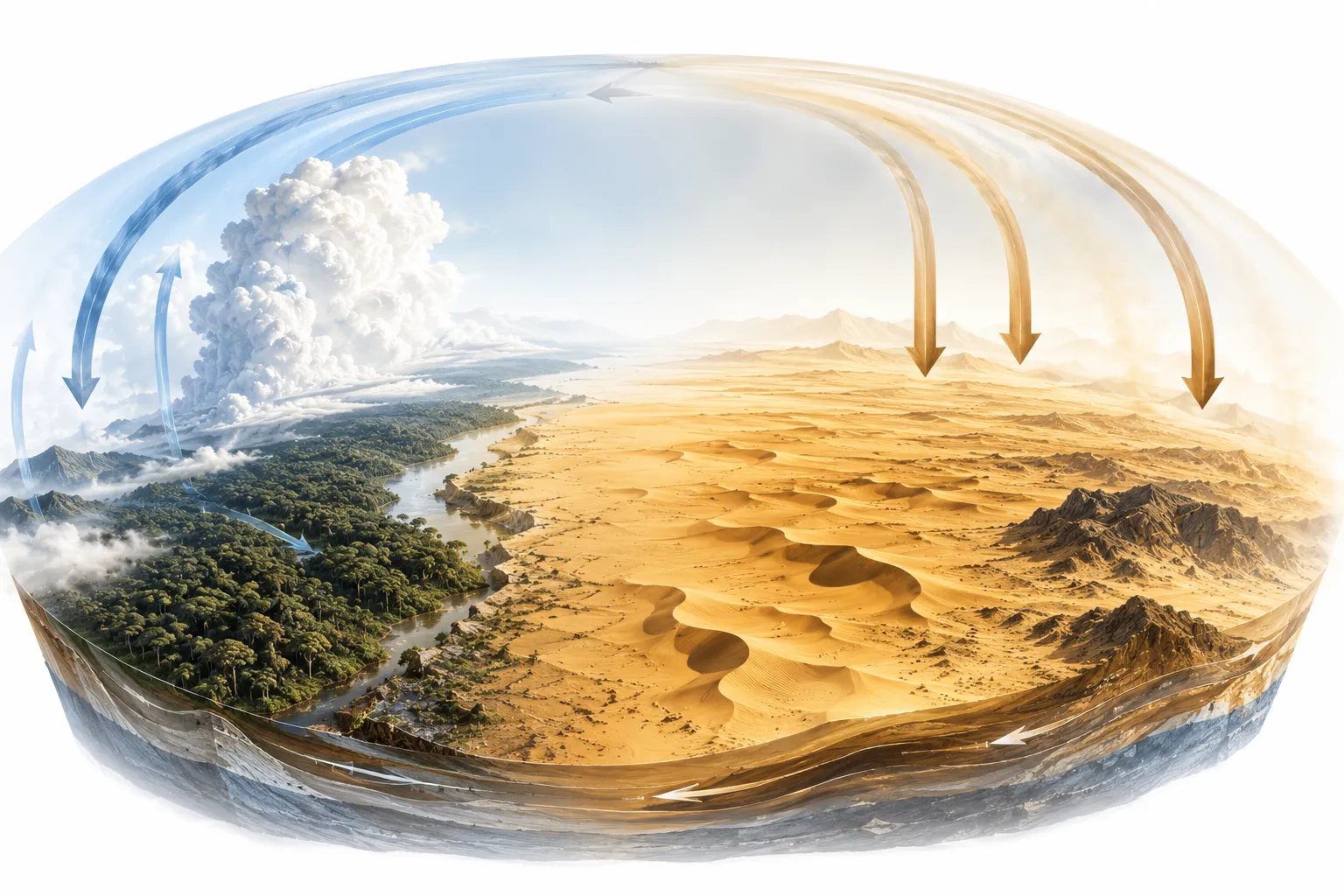
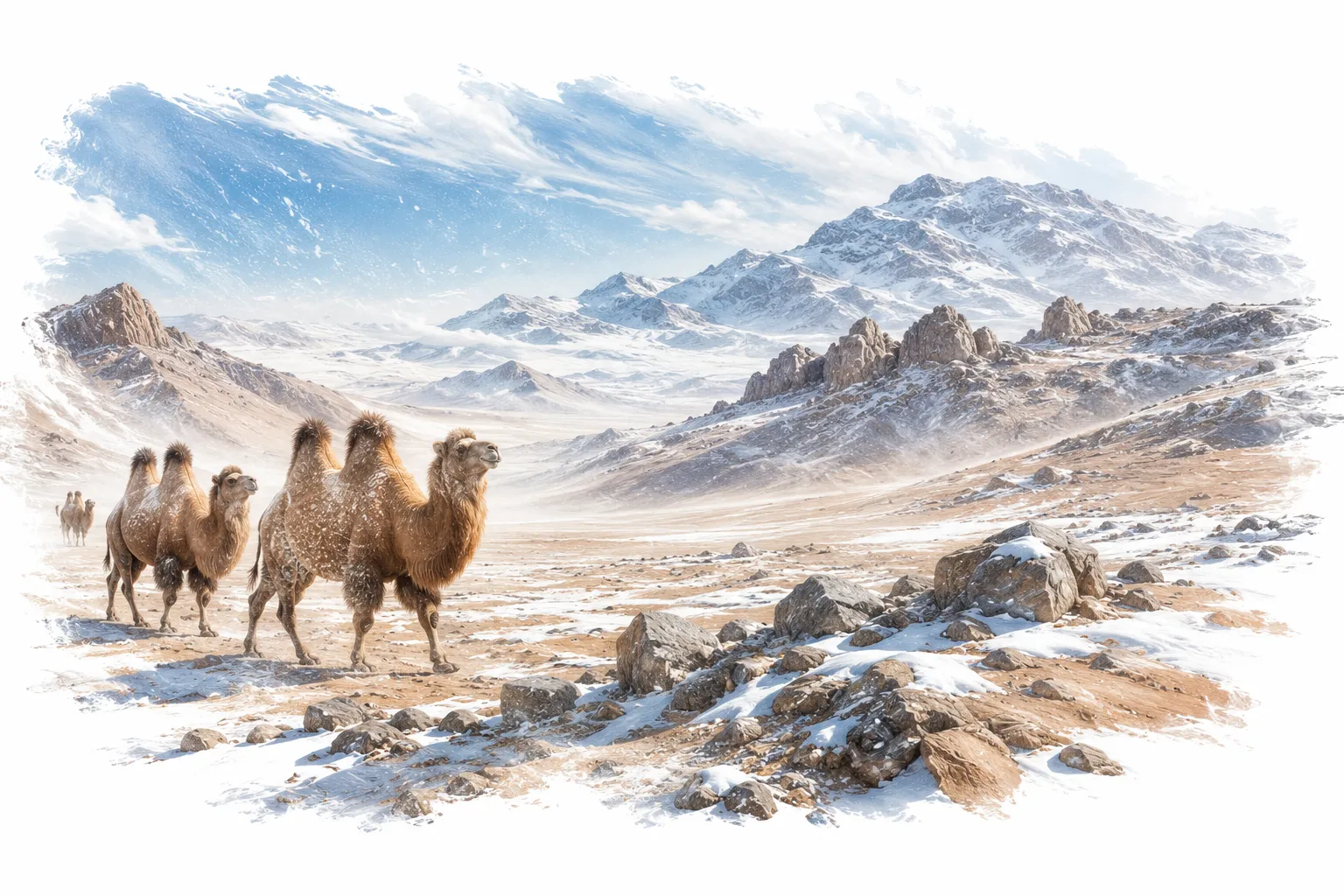
Proof that a desert doesn't need heat to qualify — it just needs a serious shortage of rain. Mention the word desert, and most people picture heat: shimmering sand, relentless sun, a landscape that could fry an egg on a rock. The Gobi Desert quietly breaks that image, with winter temperatures that regularly plunge well below freezing. It is, by every technical definition, a desert. It is also, for a large part of the year, bitterly cold. The explanation involves altitude, latitude, and a mountain range tall enough to block moisture from ever arriving.
Quick answer
The Gobi Desert is cold because of its high elevation, high northern latitude, and distance from any ocean, combined with the Himalayas and Tibetan Plateau blocking moist air from reaching it. What makes a desert a desert isn't temperature at all — it's rainfall. The Gobi qualifies purely on dryness, regardless of how cold it gets.
The mystery
The explanation involves altitude, latitude, and a mountain range tall enough to block moisture from ever arriving.
The short answer
The Gobi Desert is cold because of its high elevation, high northern latitude, and distance from any ocean, combined with the Himalayas and Tibetan Plateau blocking moist air from reaching it.
The twist
What makes a desert a desert isn't temperature at all — it's rainfall. The Gobi qualifies purely on dryness, regardless of how cold it gets.
Common mistake
Because it's called a desert, many assume the Gobi shares a climate similar to hot deserts like the Sahara or Arabian Desert.
Geography
The Sahara sits near the equator under a warm, dry air mass, while the Gobi sits at a much higher latitude and elevation, resulting in vastly different temperature profiles despite both being classified as deserts.
The explorer who helped map the Gobi's fossil riches
An early 20th-century American explorer and naturalist whose Central Asiatic Expeditions into the Gobi uncovered some of the first known dinosaur egg fossils, drawing global attention to the region.
Where the Gobi's cold climate matters
Traditional Mongolian herding practices are specifically adapted to the Gobi's extreme seasonal temperature swings, including specialized livestock breeds suited to harsh winters.
Where the Gobi's cold climate matters
Researchers studying the Gobi's rich fossil beds must plan expeditions carefully around its brutal winter cold and summer heat, limiting practical fieldwork to narrow seasonal windows.
Is the Gobi Desert located mostly in a hot, tropical region?
The Gobi is a cold desert located across northern China and southern Mongolia, at a latitude and elevation that produce winters as harsh as many temperate or subarctic regions.
Continue learning