Myth vs Reality
Aglets exist for function, styling is secondary
The aglet predates fashion hoodies by millennia. The metal finish is an aesthetic choice applied on top of a functional requirement that cannot be removed.
Everyday Objects
Those little metal tips on your drawstrings have a name, a very specific job, and a history that goes back to ancient Rome.
Quick answer
The metal or plastic tips at the end of hoodie drawstrings are called aglets. The word comes from the Latin 'acus,' meaning needle. Aglets do two things. First, they bind the end of the cord, preventing it from fraying or unravelling when pulled. A raw fabric cord end fluffs and splits with repeated use, quickly becoming impossible to thread. Second, they act as a threading tool. When a drawstring is pulled out, especially during washing, you need to feed it back through the narrow channel inside the hood. The rigid, tapered aglet acts exactly like the eye of a needle, making this easy. Without it, threading a soft cord end through a tight fabric tunnel is genuinely difficult.
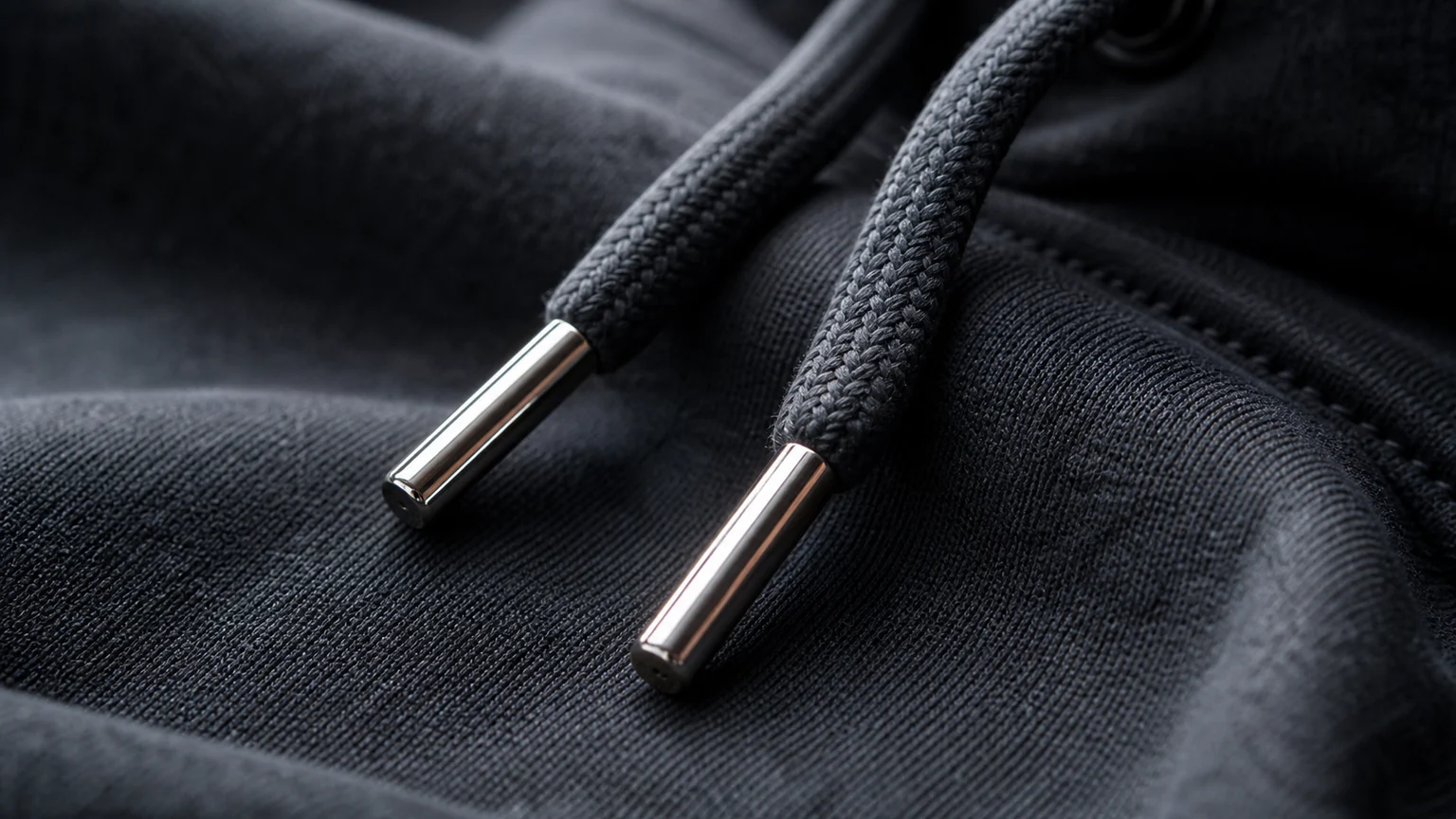
They are called aglets
The term comes from the Latin 'acus' (needle). Aglets have been used on laces and cords for over 2,000 years.
They prevent fraying
The metal or plastic tip binds the cord end, stopping it from unravelling with repeated pulling and washing.
They are threading tools
The rigid, tapered tip allows you to guide the drawstring back through the hood channel after it has been pulled out.
Myth: they are purely decorative
The metallic finish looks like styling, but the function predates the fashion by thousands of years.
Everyday Objects
Once the tip is gone, the cord end begins to fray with every pull. The threads spread and the end quickly becomes too wide to rethread through the hood channel. Replacing or re-sealing the aglet early saves the drawstring.
Myth vs Reality
The aglet predates fashion hoodies by millennia. The metal finish is an aesthetic choice applied on top of a functional requirement that cannot be removed.
Continue learning