1
Survey the route
Engineers map trenches, slopes, fishing zones, anchor risks, and seismic hazards.
Inventions & Technology
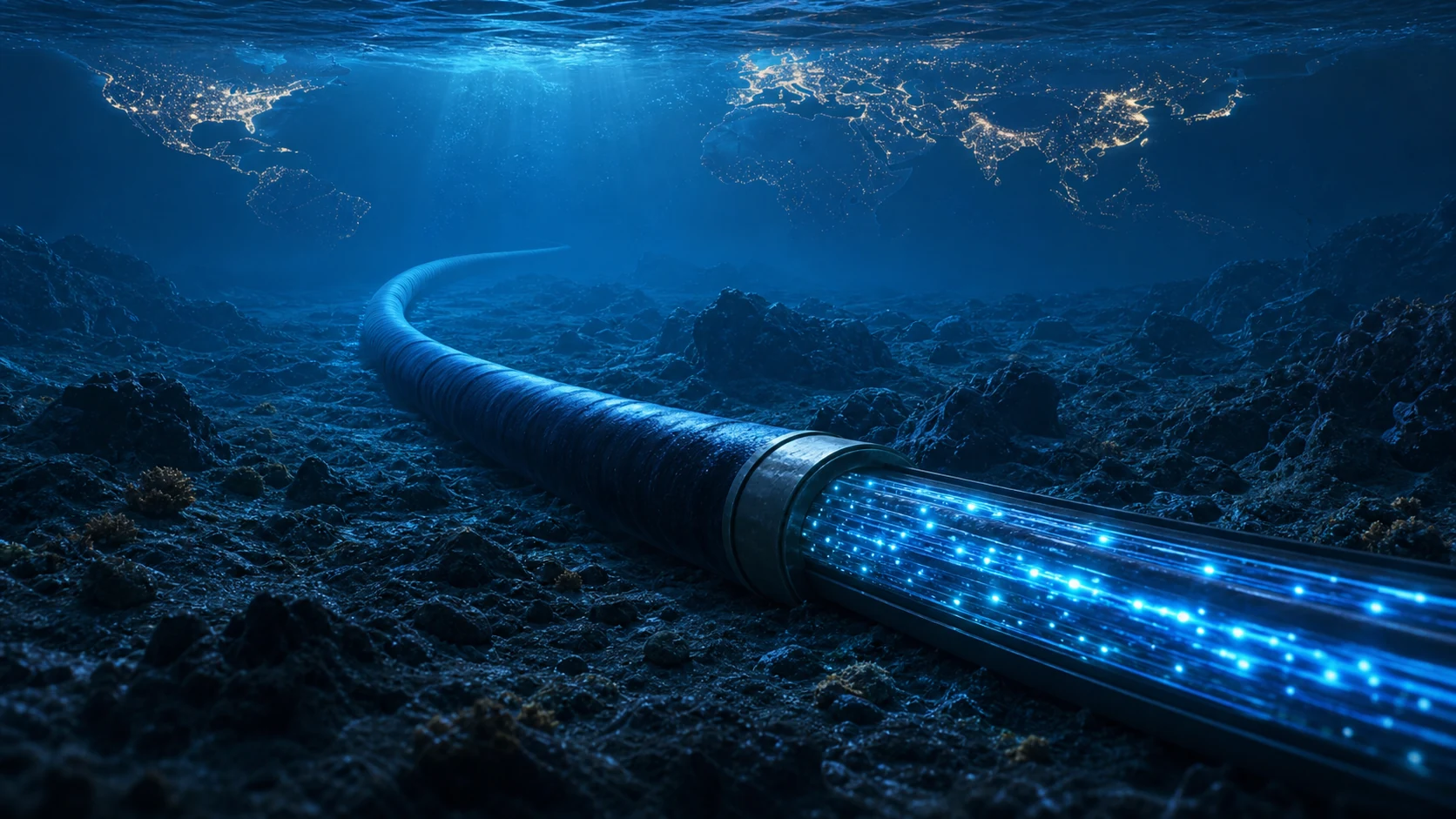
The internet does not travel through air. It travels along 1.3 million kilometers of cable on the ocean floor. International data usually crosses oceans through fiber optic cables, not satellites.
Quick answer
Undersea cables send data as pulses of laser light through glass fibers. Repeaters amplify the light across ocean distances, allowing enormous capacity at low latency. The global internet feels wireless, but its backbone is physical glass lying on the seafloor.
The hook
Undersea cables carry most international internet traffic.
The hidden mechanism
Data travels as light pulses in fiber optic strands.
The twist
Repeaters amplify signals every tens of kilometers.
Common mistake
Satellites carry only a small share of global data volume.
Inventions & Technology
The internet crosses oceans as light inside glass cables that most people never see.
The Common Misunderstanding
The real explanation is more interesting because it shows the system, pressure, and tradeoffs behind the event.
Continue learning

Science & Discovery
Another curiosity-driven explanation about ideas, science, or technology changing the world.
Inventions & Technology
Another curiosity-driven explanation about ideas, science, or technology changing the world.
Inventions & Technology
Another curiosity-driven explanation about ideas, science, or technology changing the world.